Kamis, 18 November 2021

Biochar for Chicken Farming

With the fast growth of the human population in the world and in line with the need for food or more specifically protein in the form of meat and eggs, the chicken farming industry has become a heavy burden. The projection of protein demand in 2050 is estimated to increase by 69% and almost half of it will come from chicken farms. The main focus of research and development in chicken farming today is how to meet the protein needs above. And that is only possible by developing new technologies to increase the efficiency of the use of feed nutrients in these chickens.

In 2017, global animal feed production has exceeded 1 billion tonnes for the first time and the livestock industry sector accounts for almost half of it, namely 44% of the total feed production or means more than 440 million tonnes alone. With the growth in world population, there is no doubt that the need for feed will also continue to increase. In addition, there is a real environmental impact on the dependence of soybeans from the United States and Brazil as a source of protein for these poultry or chicken farms. Environmental problems are also getting bigger with the presence of nitrogen compounds from the farm in the water flow and pollution of ammonia gas emissions (NH3). In addition, the use of feed with excessive protein content increases the tendency for disease to occur and increases the need for water by the chickens, which causes the problem of dung to become wet and soggy.

 There has also been an increase in the use of other protein sources as ingredients for chicken feed, such as legume, peas and so on. But currently its use is still limited due to the compatibility of amino acids, mycotoxins and ease of pelletization. Feed pellet technology is a spectacular 20th century invention that continues to evolve today, for more details read here. The use of low protein feed and the high absorption of these nutrients can be a solution to the problem of ammonia pollution. Biochar can be added as a feed supplement (feed additive) to increase the efficiency of the feed conversion. Biochar in the internal body of the chicken will be able to deactivate a number of toxins and activate microbes either in the chicken intestine or improve the digestive system of the animal. This can be indicated by the rapidly increasing vitality of livestock.

Meanwhile, external factors that affect the health and productivity of chickens are the cleanliness of the cage. Feed factors and house hygiene including air circulation are very important to maintain the survival and productivity level of the chicken farm. The more population with a high density of chicken farms, the greater the pressure on disease. The high nutrient or protein content in chicken manure plus humid conditions is an ideal location for a number of germs to breed. In addition, ammonia emissions are also very damaging to the environment because they will form nitrous oxide (N2O), acidifying soil and eutrophication of waters.

The use of biochar as a feed additive and treatment of manure will minimize the two main problems mentioned above, namely livestock health and environmental pollution. In the end, with the health of the livestock is maintained, the level of livestock productivity is also well maintained. The quality of biochar for feed additives is also different from that of manure treatments. This is of course because the main uses and purposes are different. Biochar for the feed additive needs to be designed in such a way that the grade as a feed additive is met, such as by using selected biomass raw materials, modern pyrolysis technology so that control of the production process can be carried out properly from handling to packaging. As for the use of livestock manure treatment, the quality of biochar is lower, including the use of biomass raw materials, pyrolysis technology and so on. For more details, like the diagram below.

 According to a number of studies, adding up to 0.6% biochar in feed increases chicken growth by an average of 17% and it is recommended to mix 0.4-0.6% biochar in the daily feed. Broiler chickens that were given biochar supplements reportedly increased their body weight by 5-10%. If 0.5% of biochar is used as a source of chicken feed additives for world chicken or poultry feed production, the potential need for biochar is 220,000 tonnes annually. And if the chicken manure is used for energy production in the biogas unit, the addition of biochar increases methane (CH4) production and the compost quality of the digestate.     

Production of Electricity and Biochar from Pineapple Plantation Waste

Besides being able to be processed into briquettes or in more detail, read here, pineapple plantation waste can also be used for electricity and biochar production. The use of biochar on pineapple plantation land will increase fertility and improve soil quality so that it will also increase the productivity of the pineapple fruit. The use of biochar on dry land such as pineapple plantations will be more effective so that the benefits will be even more real. Biochar that can last up to hundreds of years in the soil will provide long-term benefits for pineapple plantation owners. The era in the future that tends towards efficient agriculture or precision agriculture will also produce less waste or even zero waste. Agricultural wastes that have been a lot of environmental problems will be reduced and processed into added value, environmentally friendly and sustainable materials such as biochar production.

In large pineapple plantations, the amount of pineapple waste produced is also large. Besides producing biochar, pyrolysis of pineapple waste will also generate electricity. Electricity as a form of energy that is easily converted to various other forms of energy is certainly very useful, especially the pineapple industry. Pineapple processing can use the electricity generated, thereby reducing or even eliminating the need for external electricity. But it is possible that if the pineapple industry needs heat more than electricity, the excess energy from pyrolysis does not need to be converted into electricity but only heat is enough and this is easier and simpler. Of course, these things also further reduce the production costs of these pineapple-based products, thus providing even greater profit.

 There are many products from the pineapple industry, including candied pineapple, pineapple jam, pineapple paste, pineapple chips, pineapple juice, pineapple juice probiotics, pineapple jelly, canned pineapple, and dried fruit. As one fruit that is quite popular throughout the world, the demand for pineapple is also increasing. With the prediction of the world's population reaching nearly 10 billion by 2050, the need for food, especially fruit, will also increase. Pineapple peels are also commonly used as animal feed, especially cattle, and cow dung is used for biogas production. The addition of biochar to cow dung for biogas will increase biogas production, more details can be read here and the sideproduct in the form of digestate which is then composted will be of better quality in the presence of biochar. Biochar makes the nutrients in compost not easy washed but is released slowly (slow release fertilizer).  

Rabu, 17 November 2021

Benefits of Palm Oil Company When Produce Biochar

There are at least four things that become motivation for biochar production, namely as in the chart above. There are a number of slices that make the impact of biochar application multi-benefits, which is very much in line with today's world problems, namely climate change and global warming. Biochar has also been accepted as an instrument to reduce the concentration of CO2 in the atmosphere which causes the two big problems above, namely in 2018 biochar was included in the Intergovermental Panel on Climate Change (IPCC) as one of the negative emissions technologies (NETs). Biochar application is a carbon negative scenario because biochar can absorb CO2 from the atmosphere. This is slightly different from the use of biomass fuels such as wood pellets, wood briquette and palm kernel shell (PKS) in industrial boilers or power plants, which are carbon neutral scenarios. Indeed, basically there are 3 big scenarios to reduce the concentration of CO2 in the atmosphere, namely increasing the efficiency of equipment that uses fossil fuels, using carbon neutral fuels and carbon negative scenarios such as biochar.

Palm oil trees are known to require a lot of water and fertilizer to maintain the life sustainability and productivity of their fruit, so practical efforts in the form of increasing fertilizer nutrient efficiency and increasing fruit productivity are important. Besides that, palm oil mills produce a lot of biomass waste, especially empty fruit bunches (EFB ) and mesocarp fiber, which are very potential for biochar raw materials. The biochar is then applied in palm oil plantations which can be used with chemical fertilizers or with compost / organic fertilizers.

Pyrolysis and gasification technologies are commonly used for the production of the biochar. Apart from producing biochar by pyrolysis or gasification, energy is also produced which can be used for the business development of the palm oil industry or for electricity production. Production of PKO (Palm kernel oil) from kernel processing at KCP (kernel crushing plant) or production of torrefied PKS from PKS processing with torrefaction can be done by utilizing excess energy from the production of biochar. Most of the palm oil mills or CPO mills do not have kernel processing or KCP to produce PKO. And by making torrefied PKS, the caloric value of PKS will increase, it is easy to downsizing (increased grindability), for example in the use of cofiring and does not absorb water (hydrophobic property). In general, palm oil mills will have many advantages, both economically / financially and environmentally, with this biochar production.

Apart from being used for business development like the diagram above, excess energy from pyrolysis or gasification can also be used as boiler fuel in the palm oil mill. In this way the energy to heat the boiler, which is usually with palm kernel shell and mesocarp fiber, can be replaced by energy from pyrolysis or gasification. After that, all of the palm kernel shells / PKS can be sold or exported, thus providing additional profits for the palm oil company. The need for biomass fuel, especially palm kernel shell / PKS, is predicted to increase, both in the domestic market and in the export market. Japan is currently the largest consumer or user of palm kernel shells and it is predicted that the demand will also increase. Japan will also impose stricter standards on imports of palm kernel shells to ensure environmental sustainability by applying the GGL (Green Gold Label) certification which will be effective starting April 2023. This is like the wood pellets with FSC certification. If anyone is interested in an economic analysis of the use of biochar in palm oil business, please contact us.  

Biochar to Increase Biogas Production

Charcoal (biochar) is the raw material for the production of activated carbon. The production of activated charcoal itself goes through two main processes, namely carbonization (pyrolysis) and activation. The surface area of charcoal (biochar) is also smaller than that of activated carbon, but larger than the raw biomass. The carbonization process increases the surface area of the raw biomass. The ratio of surface area between raw biomass, charcoal and activated charcoal is approximately 25 m2 / gram, 200 m2 / gram, 2000 m2 / gram. The larger the surface area of the biomass material that is inserted into the biogas reactor, the greater the penetration of bacteria into the substrate so that the fermentation process that occurs is more perfect so that biogas production will increase. Biochar itself does not participate in fermentation because the main component is stable carbon, while hemicellulose, cellulose and lignin have been decomposed during the carbonization process.

Another example is the addition of biomass briquettes to the biogas reactor, briquetting processs with high pressure and heat also open pores or expand the surface of the biomass, so that biogas production also increases, for more details, read here. The addition of biomass briquettes to the biogas reactor will also increase the C / N ratio, even biochar and activated charcoal have high carbon (C) content.

Charcoal (biochar) has been widely used in the agricultural world to repair damaged soil / soil amendment and thus increase fertility. Good soil fertility will also increase agricultural production. The biochar becomes a home for soil microbes, so that organic materials or compost will break down more completely and be absorbed by plants more as plant nutrients. The charcoal (biochar) pores are the home for these microbes. The more pores, the more microbes will inhabit the biochar as their “house”. The same principle applies to the biogas unit. Another bonus of using biochar is that it absorbs CO2 from the atmosphere, thereby contributing to lowering the greenhouse gases that cause climate change and global warming.

Research in Germany shows that adding 5% biochar to a biogas reactor increases methane production by 5% - based on the dry matter of biochar to the substrate. But when the amount of biochar became 10%, it turned out that no more methane was added. This shows that the optimum condition for adding biochar is the amount of 5%. The microbes in the biochar increase the volume of microbes in the reactor so that the production of biogas or especially methane also increases up to 5%. Biochar itself is not decomposed in the fermentation process. 

Meanwhile, the addition of biomass briquettes per 1 tonne of briquettes will increase biogas production by 400 Nm3. This is because in the biomass briquettes, both cellulose, hemicellulose and lignin have not been decomposed, thus adding to the substrate in the biogas reactor. Whereas in biochar, both cellulose, hemicellulose and lignin have been decomposed during the thermal carbonization process, so there is practically no additional substrate, but only microbial addition occurs in the biochar pores.

The important thing about the addition of biochar is that the compost or digestate produced is of better quality with the addition of the biochar. Biochar will make the compost which is produced as a slow release organic fertilizer. This further encourages biochar production, especially for palm oil companies that care about environmental issues and even strive for zero waste conditions.

 Palm oil mills have the potential to apply biogas and biochar units. Solid wastes such as empty bunches and mesocarp fiber can be used for biochar production. Palm oil mills can even replace the furnace in the boiler with a gasifier or pyrolyser. This becomes more profitable because in addition to heat energy being used for production of steam which is used for power generation and sterilization of fresh fruit, biochar will also be produced. The biochar produced is then used to increase biogas production and improve the quality of the compost, as well as a fertilizer mixture in palm oil plantations. And even the potential use of biochar to save fertilizer on large palm oil plantations, for more details can be read here.     

Sabtu, 23 Januari 2021

Production of Electricity and Charcoal from Banana Trunk Waste


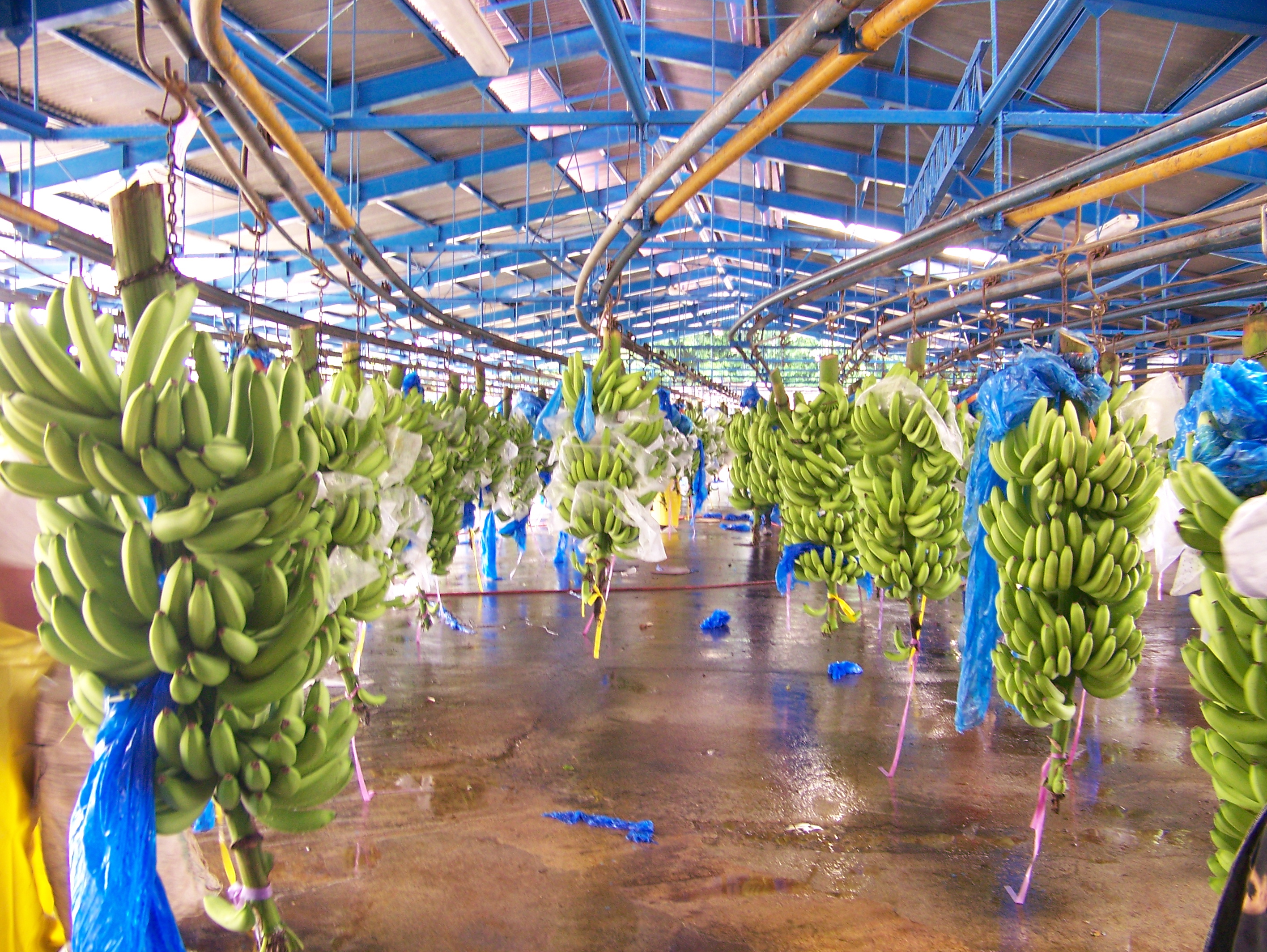
Banana trees only bear fruit once. After this fruit, the banana tree dies and the trunk becomes waste. Meanwhile, banana production from the plantation is continued by its seedlings. To maintain the quality of banana production, controlling the number of banana saplings is important, especially in plantations that are professionally managed. The more banana trees, especially if the number is not controlled, the quality and quantity of bananas produced will decrease.

After the bananas are harvested, the trunks are just left in the banana plantation. Even though banana trunks can be used for electricity and charcoal production, namely by continuous pyrolysis technology. The electricity produced can be used for banana packaging production operations which are usually export-oriented and charcoal can be used to maintain the fertility of the banana plantation land itself or for fuel, for example by making briquettes. The process of removing banana trunks from the plantation should also be easy because you can take advantage of the means used to transport bananas from the plantation, of course, with a few modifications. After the banana trunks are collected in a place, then the size is reduced (downsizing) and the moisture content is reduced so that can continue processed with the pyrolysis unit.


Large banana plantations generally manage plantation covering thousands or tens of thousands hectares. With these conditions, the resulting banana trunk waste is also very large, or comparable to the banana harvest. Costa Rica is a country that is well-known as a banana producing country. In a number of countries in Southeast Asia such as Indonesia, Malaysia and the Philippines, there are also a number of large banana plantations. By utilizing banana stem waste or adding waste from the plantation, besides overcoming environmental problems and preventing banana tree disease so that the productivity of the banana plantation is maintained, it also provides other benefits. The use of charcoal (biochar) for the banana plantation. Besides being able to save on the use of fertilizers, it will also increase the productivity of the banana fruit itself, as can also be done in oil palm plantations, for more details can be read here. A number of practices using charcoal for agriculture (biochar) can increase crop productivity by up to 40%.

Senin, 28 Desember 2020

Water Hyacinth Pyrolysis For Electricity And Charcoal Production


Map of distribution of global water hyacinth infestation
Water hyacinth has become a global concern as the most disturbing and invasive aquatic weed. The impact of water hyacinth losses covers the environment, economy and even social conditions experienced by many countries as a result of the water hyacinth attack. Economically, the losses due to water hyacinth are also very large, reaching hundreds to thousands of millions of dollars. Pyrolysis of water hyacinth for electricity and charcoal production is one solution to overcome the water hyacinth attack. In this way, it is hoped that the growth of water hyacinth can be controlled and reduce the environmental impact significantly. This is because the speed of attack from the fast growth of water hyacinth can be balanced with the speed of the biomass requirement for the pyrolysis process that produces electricity and charcoal.


The electricity generated in addition to operate or running the pyrolysis unit can also be used for various needs of the surrounding community. Meanwhile, the charcoal produced can be used for energy and agricultural applications, or in general the motivation for charcoal (biochar) production is as shown in the scheme below. And to facilitate handling both storage, transportation and use, the charcoal can be compressed / densified into pellets or briquettes. The need for energy or fuel for the surrounding community for cooking and so on, can use the charcoal that has been compressed into the pellets or briquette. If the community previously used firewood obtained from the forest illegally, then the charcoal pellet or briquette is also a solution to the problem of forest destruction.


The use of water hyacinth as a bioenergy is the best option and is most recommended by prominent experts and researchers around the world. Pyrolysis is one way or method of bioenergy production. It is true that water hyacinth also provides environmental benefits, namely phytoremediation, but with uncontrolled development, the aspects of the losses incurred are far greater than the benefits obtained. This requires good management so as to produce optimal benefits. In a number of cases even the water hyacinth creates silting which causes the volume and discharge of water, even though the water is used for hydroelectric power plants. This causes the hydropower plant to have less water supply and disrupt its operation. So that the use of water hyacinth for electricity production with pyrolysis will again increase the supply of electricity produced and at the same time overcome the volume and discharge of water for the hydropower plant. Basically, maintaining a balance between the environment and economic aspects must be made in such a way as to become a sustainable activity so that it is in line with the bioeconomic era. Bioeconomics is defined as knowledge-based production and using biological resources or living things to produce products, processes and services in the economic sector within the framework of a sustainable economic system.

Jumat, 03 April 2020

Fertilizer Savings in Palm Oil Plantations with Biochar and Compost from Biogas Waste

Although Indonesia is the largest CPO producer in the world with an area of ​​approximately 13 million hectares of palm oil plantations, but it is estimated that less than 10% have a biogas facility from POME (Palm oil mill effluent). Whereas by utilizing POME for biogas production, besides being able to be converted into electricity or heat, it also produces organic fertilizer in the form of compost and liquid organic fertilizer. The compost can be used as fertilizer in oil palm plantations, where the cost of fertilizer for palm oil operations is the highest cost component. It is estimated that every 10,000 hectares costs approximately Rp. 35.75 billion (around US$ 2.25 million) for fertilizer and for more details, you can read here. The use of compost will certainly reduce the need for fertilizer.
Palm oil utilization scheme for optimizing CPO production
Besides that, solid wastes such as palm oil empty fruit bunch, fiber and palm oil frond are also very potential for the production of energy (electricity and heat) and biochar. Energy production in the form of electricity and heat is by burning pyrolysis byproducts in the form of syngas and biooil into the furnace to heat the boiler. And because the syngas and liquid fuels used in the furnace, so that the combustion process is more perfect and clean emissions. Steam generated from the boiler will then drive the steam turbine and generator so as to produce electricity. Low pressure steam from steam turbine is then used for sterilization or boiling the fresh fruit bunches (FFB). While biochar will be used together with compost and chemical fertilizers to make fertilizer effective in the palm oil plantations so that it becomes a slow release fertilizer. Costs for fertilization are also expected to be significantly reduced, for example by up to 50% by this way. Although biochar is not a fertilizer, it has a function that makes fertilizer use effectively because it holds fertilizer nutrients from leaching, for example from rain water, also maintains moisture and so on.
PKS loading for export in Indonesia
PKS (palm kernel shell) can even be sold or exported. This is because previously or in general the palm kernel shells used to fuel boilers with fiber, have been substituted with products from the pyrolysis process namely syngas and biooil. The need for palm kernel shells for both the domestic / local and export markets continues to increase all the time. Palm kernel shells / PKS are environmentally friendly fuels because they come from biomass so they are carbon neutral fuels. The use of PKS as a fuel is widely used by a number of industries starting as a heat source for the drying process such as spray dryers in detergent and ceramic plants, boilers in food industries such as soy sauce factory, to power plants such as in Japan, can be read in more detail here. In the world of biomass fuel commodity trading, especially in the international market, PKS is the main competitor of wood pellets. Although the specifications are not much different, the price of PKS is also cheaper because it comes from palm oil mill waste and does not need complex processing units such as wood pellets. And basically with the scheme of utilizing palm oil mill wastes as above, it will maximize the profit from the palm oil mill or CPO mill.