Tampilkan postingan dengan label Palm Oil Mill. Tampilkan semua postingan

Senin, 10 Maret 2025

Cogeneration in Palm Oil Mills with Pyrolysis, Initial Steps in Biochar Production and Implementation

The analogy is like cofiring carried out in coal-fired power plants by mixing biomass fuels with a certain ratio as an effort to decarbonize the energy sector in power plants. While in palm oil mills, cogeneration with pyrolysis is an innovative initial step to enter the carbon negative era with the application of biochar, the main product of pyrolysis. And because all palm oil mills use biomass fuel for their mill operations, they are already based on carbon neutral fuel, unlike coal-fired power plants which are based on carbon positive fuels because they come from fossils.

Unlike cofiring which mixes coal and biomass fuels with a certain ratio and then burns them together in a furnace such as pulverized combustion, cogeneration is done by producing energy separately but the energy output is for the same use or especially the same boiler. This is done because the types of fuels may be different, such as solid fuels with liquid fuels or the technology for producing the energy is different. With this cogeneration, it means that not all energy is produced from one energy source or energy from cogeneration is a secondary energy source to meet total energy needs, and in the case of cogeneration in this palm oil mill, energy from combustion is still the primary energy.

Then why not just do full pyrolysis? It is easier, gradually for palm oil mills to adopt pyrolysis technology and its characteristics. Because (slow) pyrolysis aims to maximize solid / biochar, the by-products in the form of excess energy (syngas and biooil) as a source of boiler fuel, the calorific value is not as much as combustion which is indeed intended to maximize heat. Only about 1/3 of the excess energy contributes (cogeneration) as boiler fuel. In other words, if full pyrolysis is carried out directly, the amount of biomass as raw material for pyrolysis becomes 3 times greater or the pyrolysis unit becomes very large so that all palm oil mill biomass waste is used, and the mill cannot sell its palm kernel shells.

What are the benefits obtained by palm oil mills if they carry out cogeneration with pyrolysis for biochar production? Among the biochar products, it can save fertilizer use in oil palm plantations, overcome the problem of empty oil palm bunches (EFB) so that palm oil mills can achieve zero waste, palm kernel shells (PKS) that have been used for boiler fuel can be sold to increase income, the productivity of fresh fruit bunches (FFB) of palm oil increases, the application of biochar in palm oil plantations is also a climate solution (carbon sequestration / carbon sink) so that it can get carbon credit compensation and with good waste management, even zero waste and the application of biochar in palm oil plantations, palm oil companies will get a good image in terms of the environment and sustainability.  

Optimizing Pyrolysis and Biochar in the Palm Oil Industry

Indonesia's CPO production currently reaches around 50 million tons per year with a land area of ​​around 17.3 million hectares. This means that the average CPO production per hectare is only 2.9 tons or per million hectares produces 2.9 million tons. If biochar is used and there is a 20% increase, it means there is an increase of 10 million tons of CPO per year and this is equivalent to saving around 3.5 million hectares of land, or the use of biochar will slow down forest clearing (deforestation) for palm oil plantations.

The average speed of Indonesian palm oil plantation area is 6.5% per year or equivalent to about 1 million hectares per year for the last 5 years, while the increase in palm oil fruit production or FFB (fresh fruit bunches) is only 11% on average. Even the largest expansion of palm oil land occurred in 2017, which increased by 2.8 million hectares. By opening 1 million hectares of forest, national CPO production only increased by 11%, while without the need to open forests, namely with the application of biochar, there could be a 20% increase in productivity. And the 20% increase in FFB yield (fresh fruit bunches) using biochar is a low estimate.

With the number of palm oil mills in Indonesia reaching more than 1000 units and tens of millions of tons of biomass waste, especially empty palm fruit bunches (EFB), the volume of biochar production produced is certainly very large. In addition, pyrolysis technology can replace combustion technology which is generally used in palm oil mills to produce steam for electricity production and sterilization of fresh fruit bunches (FFB) in CPO production. With pyrolysis raw materials using palm oil tankos and being able to replace palm kernel shells, 100% of palm kernel shells (PKS) can be sold or exported. The sale of palm kernel shells or PKS (palm kernel shells) will certainly provide additional attractive benefits for the palm oil company. Palm kernel shells or PKS are the main competitors of wood pellets in the global biomass market.

In addition, the use of biochar also saves fertilizer use and the highest operational cost on oil palm plantations is fertilizer so this is very relevant. Tens of billions of costs spent on fertilizer can be reduced by using biochar, especially since the biochar comes from its own waste so that it will automatically become a solution for biomass waste management. Including biopesticides and liquid organic fertilizers can also be produced from the pyrolysis process. Carbon credit is the next business potential. This is because the application of biochar to the soil for agriculture or plantations is an effort for carbon sequestration / carbon sink.

The benefits that can be obtained from this biochar carbon credit are also large, even globally biochar carbon credit ranks first or more than 90% in Carbon Dioxide Removal (CDR) recorded in cdr.fyi. However, there are indeed many large biochar producers who do not sell their carbon credits because of the methodological requirements of standard carbon companies such as Puro Earth and Verra, and these biochar producers are comfortable with their biochar sales business, especially since these producers have existed (established) since before carbon credits were available for biochar.    

Rabu, 04 September 2024

Biochar as Deforestation Solution in Palm Oil Plantations and EUDR

The development of the palm oil industry and its plantations in Indonesia is very rapid, especially in the last 10 years and currently the area of ​​Indonesian palm oil plantations is estimated to reach 17 million hectares. As the largest vegetable oil producing plant in the world and the largest palm oil plantation area in the world, of course palm oil has a strategic value in the Indonesian economy. The average speed of Indonesian palm oil plantation area is 6.5% per year or equivalent to around 1 million hectares per year for the last 5 years, while the increase in palm oil fruit production or FFB (fresh fruit bunches) is only 11% on average.

Even the largest land expansion occurred in 2017, which increased by 2.8 million hectares. From 2015 to 2019, the total area of ​​palm oil plantations increased by 3.7 million hectares. The extensification or expansion of palm oil plantations has been widely "accused" and has become the focus of the world as a result of the conversion of forest land, resulting in a lot of deforestation to be converted into palm oil plantations.

Pressure from the European Union in particular, due to these conditions, has worsened the image of Indonesian palm oil, which in turn has affected the selling price of palm oil products, both CPO and its derivative products. Improving this image is also not easy. One effective effort is to stop the extensification efforts so that forest land remains forest land and does not turn into oil palm plantations. The European Union on Deforestation-free Regulation (EUDR), which will come into effect on December 30, 2024, as an effort to prevent deforestation, is also an important consideration. The regulation requires consumers and producers along the supply chain of certain commodities to conduct due diligence and risk assessments to ensure that their products do not contribute to deforestation. The EUDR also applies a tiered inspection and penalty system based on the level of risk perceived in the country of origin.

With the extensification of oil palm land of more than 1 million per hectare each year but the increase in oil palm fruit production is only 11%, it is certainly less attractive and must be avoided, especially with the world's spotlight on the increasingly rapid deforestation. This also increasingly indicates the low productivity of palm oil plantations. In fact, by improving soil quality, palm oil fruit productivity can be increased significantly and the opening of new land for the creation of palm oil plantations can be avoided. Biomass waste in palm oil plantations and in palm oil mills can be used for biochar production as a solution to this problem.

With the increase in productivity of fresh fruit bunches (FFB) with the use of biochar, new palm oil plantations do not need to be opened again. Assuming an average increase in productivity of 20%, CPO production will also increase by 20% or equivalent to 2 million tons. This increase will be equivalent to opening new land covering an area of ​​more than 2 million hectares. Of course, it is not a small area of ​​land. With a 20% increase in production, it is very likely that national needs for CPO in particular have been met and so too for the export market. Another advantage of using biochar is as a climate solution as carbon sequestration/carbon sink. So the two main problems in the palm oil industry in the form of increasing productivity and climate change resilience can be overcome at once with the application of biochar.

Selasa, 06 Agustus 2024

Why is There No Biochar Production for The Palm Oil Industry Yet?

Even though biomass waste is abundant in the palm oil industry, both in the plantation area and in the palm oil mill area, most of the biomass waste, especially empty fruit bunches or EFB, is still not utilized or is simply piled up or thrown away. In fact, if the palm oil industry has a strong vision about maximizing profits by minimizing the occurrence of waste, especially biomass, and maximizing environmental sustainability as well as being part of the climate solution, then biomass waste, especially empty fruit bunches or EFB, is a big opportunity.  Currently, special department in the palm oil industry that specifically deal with sustainability issues are starting to be created by palm oil companies. Waste management issues including the utilization of EFB, reducing soil and water pollution due to fertilizers and increasing fertilizer efficiency are the concerns of the sustainability department. 

The empty fruit bunches or EFB can be used as fuel so that most or all of the palm kernel shells or PKS can be sold directly and even exported. Palm oil mill boiler fuel currently uses fuel in the form of palm fiber (mesocarp fiber) and some palm kernel shells / PKS, which can be replaced using empty fruit bunches (EFB) and palm fiber (mesocarp fiber) and without palm kernel shells / PKS. Palm kernel shells / PKS are a very popular biomass fuel in the global market that competes fiercely with wood pellets. By being able to sell all palm kernel shells / PKS and at the same time utilize empty fruit bunch / EFB waste, the palm oil industry will provide many economic benefits.


The use of empty fruit bunches / EFB and mesocarp fiber as a heat source for the boiler is not burned as usual or as is done by all palm oil mills today but must be gasified or pyrolyzed so that another product is produced in the form of biochar. Although gasification can be used to produce biochar, pyrolysis is more recommended because the quality and quantity of biochar will be better. The biochar can later be used for the palm oil plantation itself. The use of biochar in palm oil plantations will significantly save on fertilizer use as well as reducing water and soil pollution due to inefficient use of fertilizer. The biggest cost in operating a palm oil plantation is fertilizer, so by using biochar these operational costs can automatically be reduced. Biochar will become a slow release agent so that fertilizer use will be more efficient or increase NUE (Nutrients Use Efficiency).

Empty fruit bunches / EFB and mesocarp fiber are solid waste from palm oil mills so the waste is located around the palm oil mill, while biochar is used for palm oil plantations. In palm oil companies, management is generally separated between the plantation and mill departments. The use of biochar in palm oil plantations while the raw material comes from palm oil mills requires special arrangements regarding this matter. This could be, for example, trucks transporting fresh fruit bunch / FFB from the plantation to the palm oil mill, then after the FFB is unloaded at the mill, they then go to the plantation again carrying biochar from the palm oil mill.

Currently, no one is utilizing empty fruit bunches / EFB and palm mesocarp fiber as a source of boiler heat and biochar production. The main factor causing this is the main orientation or vision of the palm oil company itself as described above. This is predicted to change soon as awareness of climate issues increases and reaches all levels, especially in sectors related to energy and sustainibility. Moreover, when biochar is applied to plantation land, it also gets carbon credit as carbon sequestration. The smoke coming out of the boiler furnace will also be cleaner as seen from its opacity. The use of gas and liquid fuels from pyrolysis by-products will produce better combustion quality as well as smoke from the chimney. And even the liquid products from pyrolysis can also be used as biopesticides and organic fertilizers. Boiler efficiency will also increase because it uses boiler feed water (BFW) in the form of hot water from the condenser output of the pyrolysis unit.

Apart from old palm oil mills which really want to upgrade their industrial energy systems and fertilizer efficiency in their plantations including sustaibility according to this vision, new palm oil mills whose status is in the development stage should be able to apply this concept more easily. New palm oil mills can immediately follow developments and demands of the times so that they become trend setters with this vision. Being a pioneer and trend setter is indeed more difficult and even risky than just being a follower, but this will raise the reputation and become a leader in the industry so it should also have a positive impact on the company's business performance. A worthy effort.     

Selasa, 07 Desember 2021

Biochar and IoT in Palm Oil Plantations

Monitoring until action needs to be done to get optimal results according to the expected target. Ensuring that the supply of nutrients and water is always sufficient for the needs of plants is an important thing to do. Other variables that affect the process of nutrient absorption and plant growth need to be properly monitored. Biochar is a soil amendment to improve soil properties such as soil structure, soil aeration, water and nutrient availability, suppress the development of certain plant diseases, create good habitats for symbiotic microorganisms and reduce soil acidity. Biochar also  adsorbs greenhouse gases in the form of carbon dioxide from the atmosphere, thereby reducing these gases in the atmosphere. It is important that sensors are used to read the variables above. How many sensors are installed and what type is also very dependent on the objectives being achieved. The use of various sensors in large numbers is also a cost in itself, while a production is always looking for the most efficient way to maximize profit. The use of sensors that are effective and efficient is the key to successfully monitoring the conditions of biochar applications in the field with a specified period of time, even real time all the time.

IoT (Internet of Things) is predicted to become a trend in the near future and it cannot be avoided. A number of plantation areas that are located far away in remote villages, such as in palm oil plantations, are generally still constrained by the internet network, this condition makes IoT unable to be applied or still not optimal. Palm oil plantations are one of the ideal locations for biochar applications for large capacities as well as IoT, for more details read here. While waiting for an internet network in the area provided by a telecommunications company, satellite signals can be used even with small data usage so that the information displayed is also less and simpler. This makes only really important information that needs to be monitored, especially on plantation locations that are difficult to reach. At such a stage manual monitoring is still much needed, so the online information from the satellite only helps for verification. Devices such as drones can also be used to monitor growth or general the plantation conditions.

Basically, IoT and its supporting devices such as artificial intelligence and big data are tools to help make decisions, especially for the plantation manager such as palm oil plantations. Knowing the condition of the plantation so that it can maintain the level of plantation productivity performance is an important part of maintaining the company's performance itself. Even though IoT devices help in such a way, the important thing that is still needed is basic knowledge to the characteristics of plantation management itself. These sciences will be very useful for analyzing the data presented by IoT devices more sharply and accurately or on target. Selection of sensors, the number of sensors to the location of the sensor installation must be carried out effectively and this can only be done with an adequate scientific basis. A number of chemical analyzes in general also cannot be done sensory but using reagents and so on. In addition, IoT is also a new thing so that a number of certain activities or practices in certain agriculture or plantations and more specifically in the biochar application have not been identified for IoT developers. This is so that collaboration between researchers, practitioners and IoT developers is needed so that IoT device products will also be more effective and efficient. 

Kamis, 25 November 2021

Biochar as a Solution to Deforestation in Indonesian Palm Oil Plantations

Palm oil trees are not native to Indonesia but come from West Africa and were brought by the Dutch colonialists in the mid 19th century. At first they brought 4 grains and planted them in the Bogor Botanical Garden which is now a palm oil monument. The first palm oil plantation were established in Indonesia in the early 1900's in North Sumatra. The development of the palm oil industry and its subsequent plantations is very rapid, especially in the last 10 years and it is currently estimated that the area of Indonesian palm oil plantations reaches 15 million hectares. As the largest vegetable oil-producing plant in the world and the area of palm oil plantations is also the largest in the world, of course, palm oil has a strategic value in the Indonesian economy. The average rate of growth for Indonesian palm oil plantations is 6.5% per year or the equivalent of about 500 thousands up to 1 million hectares per year for the last 5 years, while the increase in palm oil fruit production or FFB (fresh fruit bunches) is only 11% in average. In fact, the largest increase occurred in 2017 which increased by 2.8 million hectares. From 2015 to 2019, the total area of palm oil increased by 3.7 million hectares. Extensification or expansion of palm oil plantations turned out to be many "accused" and became the world's spotlight as from the conversion of forest land functions, so that there was a lot of deforestation to be converted into palm oil plantations.

Pressure from the European Union in particular, due to these conditions worsened the image of Indonesian palm oil which in turn affected the selling price of palm oil, both CPO (crude palm oil) and its derivative products. Improving the image is also not easy. One of the effective measures is to stop the extensification effort so that forest land remains as forest land and does not turn into palm oil plantations. Biochar can be an effective solution to this problem. By increasing the productivity of fresh fruit bunches (FFB) from the usage of biochar, new palm oil plantations do not need to be opened again. Assuming an average productivity increase of 20% occurs, CPO production will also increase by 20% or equivalent to 2 million tons. The increase would be equivalent to new land clearing of more than 2 million hectares. Certainly not a small land area. With the 20% increase in production, it is very likely that the national needs for CPO needs have been met and the same goes for the export market.

With the extensification of palm oil land of more than 1 million per hectare every year but the increase in palm oil fruit (FFB/fresh fruit bunch) production is only 11%, it is certainly less attractive and must be avoided, especially when the world's attention on deforestation is getting stronger. This also indicates the low productivity of the palm oil plantations. In fact, by improving soil quality, the productivity of palm oil fruit can be significantly increased and the clearing of new land for palm oil plantations can be avoided. Biomass wastes in palm oil plantations and in palm oil mills can be used for the production of biochar.

In palm oil mills, this biomass waste is easier to process in large quantities, especially empty fruit bunches (EFB). An average palm oil mill can produce 200 tons of waste per day of EFB. Meanwhile, in palm oil plantations, biomass waste, such as palm fronds, leaves and stems, is the raw material for the production of biochar. Palm oil trunks even have a lot of negative impacts when they are not treated adequately or are only left to rot in the plantation, giving rise to horn beetle pests, for more details read here. Optimizing the utilization of biomass waste has multiple benefits, not only preventing environmental pollution by the waste, and can be described as the scheme below.

In terms of technology, biochar production technology is also very varied, from simple technology (low tech, low cost) that is cheap to advanced high technology that is efficient, precise process control but at a higher price. In the palm oil mill, it will be effective to use high technology so that it can be integrated with the operations of the palm oil mill. The excess energy from the pyrolysis process will also replace boiler fuel which has been using fiber and palm kernel shells (PKS). There are indeed many advantages of palm oil mills when doing the production of biochar, for more details, please read here. Production of biochar with empty fruit bunches or EFB biochar is also more profitable than EFB pellets, a more detailed explanation can be read here. Meanwhile, for people who have palm oil plantations as part of society palm oil producers (Plasma) or independent plantations, they can use simple technology (low tech, low cost) for the production of biochar. Biochar production in a simple way can also take advantage of excess energy for various small business activities such as those carried out in Tanzania, Africa. In this way, the community in addition to producing biochar also gets a source of energy including reducing the use of firewood which can be obtained from cutting down trees in protected forests or reducing deforestation pressures.

Fertilizer is the highest cost component in the palm oil plantation operations. Besides being able to increase the productivity of palm oil fruit or FFB, Biochar can also reduce the need for the use of fertilizers. An increase in soil pH makes nutrients easily absorbed by palm oil trees and also increases soil microbial activity which increases fertility is one of the benefits of using biochar. And when the performance of the productivity level of palm oil plantations has been able to be achieved and maintained, a number of other improvements can also be made. From the industry point of view, raw materials are a vital factor in terms of availability, continuity of supply and quality, including palm oil mills. Moreover, the plantation aspect of CPO production holds a portion of 80% while the factory or the mill aspect is only 20%. This confirms that the plantation aspect plays a vital role in the supply of these raw materials, so that efforts to maximize productivity, including maintaining productivity level performance, are very important and a top priority. Meanwhile, the change in palm oil plantations from monoculture to polyculture (mixed plantation) is one of the further improvement that can be made. Extensive monoculture plantations have the potential to be susceptible to disease, so they need to be avoided. Technically, how much monoculture area is still effective, especially for palm oil plantations, there are no convincing findings. 

Minggu, 21 November 2021

Production of EFB Pellet EFB or EFB Biochar ?

One of the main obstacles for palm oil mills to develop their business is the availability of electricity. With locations that are generally located in remote areas in the middle of palm oil plantations, palm oil mills do not get electricity supply from PLN (Indonesia State Owned Electricity Company). Eventhough electricity is very important in a production process, such as in the production of EFB pellets. Even though empty bunches or EFB in general are an environmental problem for palm oil mills. If every ton / hour of EFB pellet production takes 300 KW, then for production of 10 tonnes / hour (5,000 tonnes / month) 3 MW of electricity is needed, export of biomass fuels such as wood pellets and PKS (palm kernel shell)  with bulk shipments usually requires 10 thousand tons / shipment. So if the production of EFB pellets is planned for 10 thousand tons / month so that every month can export the EFB pellets, the factory capacity or EFB pellet production is 20 tons / hour (10,000 tons / month) 6 MW of electricity is needed. For palm oil mills, utilizing liquid waste or POME to become biogas is a potential source of energy for the production of electricity. However, with a palm oil mill capacity of 30 tonnes of FFB / hour, only about 1 MW of electricity is generated from POME biogas, so to produce 6 MW of palm oil mills with a capacity of 6 x 30 tonnes of FFB / hour are generated equal to 180 tonnes of FFB / hour. In fact, the average palm oil mill has a capacity of 45 - 60 tonnes of FFB / hour, so it is impossible to generate 6 MW of electricity from the palm oil mill's POME biogas.

The use of EFB pellets is the same as wood pellets and PKS is mainly for power generation. All three are biomass fuels. The high chlorine and potassium content in empty palm fruit bunches or EFB makes their use limited to power plants due to corrosion and scale causes. Not all power plants can use EFB pellets at large capacities or quantities. The use of coal-fired power plants with pulverized combustion technology can only be used with a small ratio or an estimate of less than 5%, but can be used more or even 100% in fluidized bed and stoker types of power plants. The capacity of fluidized bed and stoker type PLTU is generally much smaller than pulverized combustion.

When the biomass source is managed properly, the use of biomass fuel is an environmentally friendly and sustainable fuel. Biomass fuels like this are carbon neutral fuels, because they do not increase the concentration of CO2 in the atmosphere. This is because the biomass as a fuel source comes from plants whose growth is from the photosynthesis process, one of which uses CO2 from the atmosphere, so that when the biomass is burned, there is practically no addition of CO2 to the atmosphere. In general, there are 2 ways to overcome the CO2 concentration in the atmosphere which causes climate change and global warming, namely the carbon neutral scenario and the carbon negative scenario. In a carbon negative scenario, CO2 in the atmosphere will be captured and absorbed so that it is no longer released and the concentration of CO2 in the atmosphere can be reduced, as in the biochar application below. 

Whereas in the production of biochar with pyrolysis, besides not requiring a large amount of electrical power for its operation, electricity can also be generated from the use of excess energy from pyrolysis itself. By using the excess energy from pyrolysis, the palm oil mill boiler fuel does not need to use palm kernel shells and fiber. The use of gas or liquid fuels from the excess energy of the pyrolysis process also makes burning emissions cleaner. To achieve more complete combustion, gaseous or liquid fuels are better than solid fuels. Palm kernel shells so that everything can be sold or even exported. The biochar product applied to palm oil plantations will also improve the quality of the soil so that fertilizer use can be reduced and the productivity of palm oil fruit will increase. Biochar also absorbs CO2 from the atmosphere so that the use of biochar in large palm oil plantations means that with massive applications it can also be used for carbon trading. Recent developments indicate that the use of biochar is increasingly widespread, such as biomaterials for construction, transportation, plastics, packaging, furniture and so on. The use of biomaterials for these products means substituting the use of fossil-derived raw materials. 

So based on the above review, the production of biochar with pyrolysis is more profitable and easy to implement for palm oil mills compared to EFB pellet production. The addition of electricity production with a large capacity and the availability of sufficient raw materials is not easy and cheap for the average palm oil mill in Indonesia with a capacity of 45 - 60 tons of FFB / hour. Whereas in the production of biochar with pyrolysis, a certain amount of energy is produced which can be used for various purposes and the use of biochar is also multi-beneficial. Palm oil mills should consider this in particular in the aspects of waste management, plantation productivity, environmental aspects and business development, for more read here. Based on experience, the cost structure of the CPO or palm oil production business consists of about 80% of the cost of production is the cost of crops or plantation aspects, while the other 20% is the cost of processing or mill aspects. And the highest cost aspect of palm oil plantations is the cost of fertilization so that if the need for fertilizer can be reduced and the productivity of palm oil can be increased, of course it is very profitable, biochar is effective and efficient to use for this. 

Sabtu, 20 November 2021

The Urgency of Biochar Application on Palm Oil Plantations in Indonesia

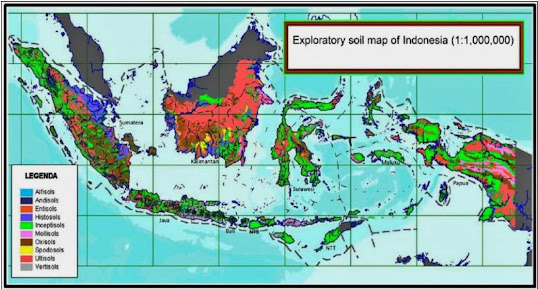
The large number of acidic soils in Indonesia that are used for palm oil plantations makes the productivity of palm oil fruit or the resulting FFB (fresh fruit bunch) not optimal. The acid soil covers the largest dryland area in Indonesia. It occupies approximately 55% of the total land area (191.09 million ha) in Indonesia. About 107.36 million ha of all Indonesian acid soils is classified as dryland acid soils and the rest (14.93 million ha) as peat soil. Acid soils in Indonesia are distributed amongst the big islands, such as Kalimantan (39.42%), Sumatera (28.81%), Papua (18.03%), Java (7.77%), and Sulawesi (6.95%). Acidic soils with low pH make nutrient absorption low in plants and so do soil microbial activity, which plays a large role in soil fertility. This condition should not be ignored because besides making the cultivation of palm oil plantations not optimal, there will also be a lot of fertilizer used. This makes the operational costs of  palm oil plantation operation high. Biochar is a biomass pyrolysis product that is effective and efficient in overcoming these problems. With the abundant amount of biomass waste produced by palm oil mills or CPO mills as biochar raw materials, efforts to improve the quality of plantation soil should be easy to do and have even become the operational standard for these plantations. But the fact is not.


Why hasn't biochar been used to improve soil quality and thus increase the production of palm oil fruit or FFB? The lack of information and education about the benefits and uses of biochar are the main factor. This of course makes the application of biochar in palm oil plantations not yet done even though palm oil mills have abundant biomass waste such as empty palm fruit bunches (EFB) and fiber which are generally not used and cause environmental problems. The priority for processing EFB compared to other products such as EFB pellets or compost also needs separate considerations. The best choice, of course, is based on a comprehensive study according to the characteristics of the business or business will be built. Consider not only short-term economic benefits, but also environmental and long-term benefits is an important thing. 


Quantitatively, an increase in the production of palm oil fruit or FFB, an increase of at least 20% with the application of biochar is something that is normal. And a 20% increase in fruit production will also result in a big profit. Productivity of a number of other agricultural commodities can be increased by 30%, 40% or even more than 100%. The low productivity of palm oil fruit in Indonesia can be increased by the application of biochar, which is particularly effective in improving the soil quality in the palm oil plantations. Moreover, about 80% of the components of the cost of producing crude palm oil (CPO) come from the plantations, and 20% in the processing sector (palm oil mills). The operational costs of palm oil mill plantations, especially fertilizers, can also be reduced by the use of biochar. The priority of liquid biofuel development will also get better if the volume of biofuel raw materials such as CPO increases. This shows the strategic role of biochar. Apart from that from the aspect of climate change, biochar will also absorb CO2 concentrations in the atmosphere or reduce the concentration of greenhouse gases, as a solution to today's world problems.  


Meanwhile, from the side of the palm oil mill, another advantage obtained from biochar production is the use of excess energy from the pyrolysis process or the production of biochar as an energy source for the boiler. Boiler feed water (BFW) will also be preheated twice when it is used for cooling in the pyrolysis condenser and then the economizer on the boiler. In this way, the energy needed by the boiler decreases. When the boiler energy source uses the energy source from pyrolysis, this means that the palm kernel shell (PKS) can be taken and used for other things and can even be sold directly for local and export markets. The main obstacle to business development in the palm oil industry is the availability of energy source namely electricity. If the energy source is available, the development of palm oil-based businesses is very open and varied, such as the production of CPO derivatives, palm kernel shell processing, PKO production, PKO derivative production, biomass power plants and so on.  

Rabu, 17 November 2021

Benefits of Palm Oil Company When Produce Biochar

There are at least four things that become motivation for biochar production, namely as in the chart above. There are a number of slices that make the impact of biochar application multi-benefits, which is very much in line with today's world problems, namely climate change and global warming. Biochar has also been accepted as an instrument to reduce the concentration of CO2 in the atmosphere which causes the two big problems above, namely in 2018 biochar was included in the Intergovermental Panel on Climate Change (IPCC) as one of the negative emissions technologies (NETs). Biochar application is a carbon negative scenario because biochar can absorb CO2 from the atmosphere. This is slightly different from the use of biomass fuels such as wood pellets, wood briquette and palm kernel shell (PKS) in industrial boilers or power plants, which are carbon neutral scenarios. Indeed, basically there are 3 big scenarios to reduce the concentration of CO2 in the atmosphere, namely increasing the efficiency of equipment that uses fossil fuels, using carbon neutral fuels and carbon negative scenarios such as biochar.

Palm oil trees are known to require a lot of water and fertilizer to maintain the life sustainability and productivity of their fruit, so practical efforts in the form of increasing fertilizer nutrient efficiency and increasing fruit productivity are important. Besides that, palm oil mills produce a lot of biomass waste, especially empty fruit bunches (EFB ) and mesocarp fiber, which are very potential for biochar raw materials. The biochar is then applied in palm oil plantations which can be used with chemical fertilizers or with compost / organic fertilizers.

Pyrolysis and gasification technologies are commonly used for the production of the biochar. Apart from producing biochar by pyrolysis or gasification, energy is also produced which can be used for the business development of the palm oil industry or for electricity production. Production of PKO (Palm kernel oil) from kernel processing at KCP (kernel crushing plant) or production of torrefied PKS from PKS processing with torrefaction can be done by utilizing excess energy from the production of biochar. Most of the palm oil mills or CPO mills do not have kernel processing or KCP to produce PKO. And by making torrefied PKS, the caloric value of PKS will increase, it is easy to downsizing (increased grindability), for example in the use of cofiring and does not absorb water (hydrophobic property). In general, palm oil mills will have many advantages, both economically / financially and environmentally, with this biochar production.

Apart from being used for business development like the diagram above, excess energy from pyrolysis or gasification can also be used as boiler fuel in the palm oil mill. In this way the energy to heat the boiler, which is usually with palm kernel shell and mesocarp fiber, can be replaced by energy from pyrolysis or gasification. After that, all of the palm kernel shells / PKS can be sold or exported, thus providing additional profits for the palm oil company. The need for biomass fuel, especially palm kernel shell / PKS, is predicted to increase, both in the domestic market and in the export market. Japan is currently the largest consumer or user of palm kernel shells and it is predicted that the demand will also increase. Japan will also impose stricter standards on imports of palm kernel shells to ensure environmental sustainability by applying the GGL (Green Gold Label) certification which will be effective starting April 2023. This is like the wood pellets with FSC certification. If anyone is interested in an economic analysis of the use of biochar in palm oil business, please contact us.  

Biochar to Increase Biogas Production

Charcoal (biochar) is the raw material for the production of activated carbon. The production of activated charcoal itself goes through two main processes, namely carbonization (pyrolysis) and activation. The surface area of charcoal (biochar) is also smaller than that of activated carbon, but larger than the raw biomass. The carbonization process increases the surface area of the raw biomass. The ratio of surface area between raw biomass, charcoal and activated charcoal is approximately 25 m2 / gram, 200 m2 / gram, 2000 m2 / gram. The larger the surface area of the biomass material that is inserted into the biogas reactor, the greater the penetration of bacteria into the substrate so that the fermentation process that occurs is more perfect so that biogas production will increase. Biochar itself does not participate in fermentation because the main component is stable carbon, while hemicellulose, cellulose and lignin have been decomposed during the carbonization process.

Another example is the addition of biomass briquettes to the biogas reactor, briquetting processs with high pressure and heat also open pores or expand the surface of the biomass, so that biogas production also increases, for more details, read here. The addition of biomass briquettes to the biogas reactor will also increase the C / N ratio, even biochar and activated charcoal have high carbon (C) content.

Charcoal (biochar) has been widely used in the agricultural world to repair damaged soil / soil amendment and thus increase fertility. Good soil fertility will also increase agricultural production. The biochar becomes a home for soil microbes, so that organic materials or compost will break down more completely and be absorbed by plants more as plant nutrients. The charcoal (biochar) pores are the home for these microbes. The more pores, the more microbes will inhabit the biochar as their “house”. The same principle applies to the biogas unit. Another bonus of using biochar is that it absorbs CO2 from the atmosphere, thereby contributing to lowering the greenhouse gases that cause climate change and global warming.

Research in Germany shows that adding 5% biochar to a biogas reactor increases methane production by 5% - based on the dry matter of biochar to the substrate. But when the amount of biochar became 10%, it turned out that no more methane was added. This shows that the optimum condition for adding biochar is the amount of 5%. The microbes in the biochar increase the volume of microbes in the reactor so that the production of biogas or especially methane also increases up to 5%. Biochar itself is not decomposed in the fermentation process. 

Meanwhile, the addition of biomass briquettes per 1 tonne of briquettes will increase biogas production by 400 Nm3. This is because in the biomass briquettes, both cellulose, hemicellulose and lignin have not been decomposed, thus adding to the substrate in the biogas reactor. Whereas in biochar, both cellulose, hemicellulose and lignin have been decomposed during the thermal carbonization process, so there is practically no additional substrate, but only microbial addition occurs in the biochar pores.

The important thing about the addition of biochar is that the compost or digestate produced is of better quality with the addition of the biochar. Biochar will make the compost which is produced as a slow release organic fertilizer. This further encourages biochar production, especially for palm oil companies that care about environmental issues and even strive for zero waste conditions.

 Palm oil mills have the potential to apply biogas and biochar units. Solid wastes such as empty bunches and mesocarp fiber can be used for biochar production. Palm oil mills can even replace the furnace in the boiler with a gasifier or pyrolyser. This becomes more profitable because in addition to heat energy being used for production of steam which is used for power generation and sterilization of fresh fruit, biochar will also be produced. The biochar produced is then used to increase biogas production and improve the quality of the compost, as well as a fertilizer mixture in palm oil plantations. And even the potential use of biochar to save fertilizer on large palm oil plantations, for more details can be read here.     

Jumat, 03 April 2020

Fertilizer Savings in Palm Oil Plantations with Biochar and Compost from Biogas Waste

Although Indonesia is the largest CPO producer in the world with an area of ​​approximately 13 million hectares of palm oil plantations, but it is estimated that less than 10% have a biogas facility from POME (Palm oil mill effluent). Whereas by utilizing POME for biogas production, besides being able to be converted into electricity or heat, it also produces organic fertilizer in the form of compost and liquid organic fertilizer. The compost can be used as fertilizer in oil palm plantations, where the cost of fertilizer for palm oil operations is the highest cost component. It is estimated that every 10,000 hectares costs approximately Rp. 35.75 billion (around US$ 2.25 million) for fertilizer and for more details, you can read here. The use of compost will certainly reduce the need for fertilizer.
Palm oil utilization scheme for optimizing CPO production
Besides that, solid wastes such as palm oil empty fruit bunch, fiber and palm oil frond are also very potential for the production of energy (electricity and heat) and biochar. Energy production in the form of electricity and heat is by burning pyrolysis byproducts in the form of syngas and biooil into the furnace to heat the boiler. And because the syngas and liquid fuels used in the furnace, so that the combustion process is more perfect and clean emissions. Steam generated from the boiler will then drive the steam turbine and generator so as to produce electricity. Low pressure steam from steam turbine is then used for sterilization or boiling the fresh fruit bunches (FFB). While biochar will be used together with compost and chemical fertilizers to make fertilizer effective in the palm oil plantations so that it becomes a slow release fertilizer. Costs for fertilization are also expected to be significantly reduced, for example by up to 50% by this way. Although biochar is not a fertilizer, it has a function that makes fertilizer use effectively because it holds fertilizer nutrients from leaching, for example from rain water, also maintains moisture and so on.
PKS loading for export in Indonesia
PKS (palm kernel shell) can even be sold or exported. This is because previously or in general the palm kernel shells used to fuel boilers with fiber, have been substituted with products from the pyrolysis process namely syngas and biooil. The need for palm kernel shells for both the domestic / local and export markets continues to increase all the time. Palm kernel shells / PKS are environmentally friendly fuels because they come from biomass so they are carbon neutral fuels. The use of PKS as a fuel is widely used by a number of industries starting as a heat source for the drying process such as spray dryers in detergent and ceramic plants, boilers in food industries such as soy sauce factory, to power plants such as in Japan, can be read in more detail here. In the world of biomass fuel commodity trading, especially in the international market, PKS is the main competitor of wood pellets. Although the specifications are not much different, the price of PKS is also cheaper because it comes from palm oil mill waste and does not need complex processing units such as wood pellets. And basically with the scheme of utilizing palm oil mill wastes as above, it will maximize the profit from the palm oil mill or CPO mill.

Selasa, 31 Maret 2020

Energy Independent With Pyrolysis

A community even in remote areas can be energy independent as long as there is an energy source in the area. Biomass energy sources from plants are energy sources that can be obtained almost anywhere. The plant can be planted as a source of raw materials for the production of energy needed. Heat and electricity energy is energy that mostly needed, in addition to energy or fuel for vehicles as a means of transportation. Heat energy is mainly needed for cooking while electrical energy for various purposes in life. Pyrolysis is a technology that can meet the energy needs as above. The diagram below explains the application of pyrolysis to meet these energy needs:

Charcoal is a solid fuel product from pyrolysis. Although solid fuels such as charcoal, are not as practical and easy as gas fuels, the use of charcoal for cooking fuel has many advantages including being safe because it will not explode, smokeless, odorless, has a high calorific value and is an environmentally friendly fuel. While firewood in addition to causing a lot of smoke, smell, low calorie value also interfere with health. Today there are also many countries in Africa that use charcoal for cooking fuel. To make it easier to use and store, the charcoal can be made into briquettes. While fuel for vehicles such as diesel oil and gasoline can be produced from biooil. Vehicles for transportation can operate in the presence of these fuels. The availability of petroleum in Indonesia, which is estimated to be 10 years away, needs to be anticipated and prepared from now on. The current low price of petroleum makes petroleum exports less attractive, especially for Indonesia, which is currently a net importer of petroleum.
Charcoal stoves are widely used in Africa
In the future era when electric vehicles are widely used, electricity production especially for battery charging is prioritized. The energy source for electric cars as environmentally friendly vehicles should also be from renewable energy sources, for more details, please read here. Biomass is a carbon neutral energy source so it does not increase the concentration of CO2 or greenhouse gases in the atmosphere. Woody biomass from the energy plantation is the ideal raw material for the pyrolysis feed. Multipurpose energy plantations are the best energy plantation for this, so that in addition to sustainable production, it also provides other benefits, for more details about multipurpose energy plantations can be read here. Remote areas, especially those with large lands, will have the potential to develop these energy plantations, so that an energy independent community or region can truly be formed and sustainable. Areas in surrounding the palm oil plantations can also utilize biomass waste from palm oil mills and plantations such as palm oil empty fruit bunches (EFB), fronds, etc. for the pyrolysis feed. Indonesia is the owner of the largest palm oil plantation in the world with an area of ​​around 13 million hectares and 1,000 palm oil mills.