Tampilkan postingan dengan label biochar plam oil plantation. Tampilkan semua postingan

Selasa, 03 September 2013

Biochar: Low Carbon Economy As A Soution To Climate Change and the Environment


The high consumption of fossil fuels as the pedestal current economic activity has caused adverse effects on the environment such as the climate change and environmental issues. Accumulation of carbon dioxide concentration in the atmosphere that has exceeded the threshold needs to be reduced to the safe limit. Some things you can do include: improving energy efficiency of various equipment and machines today are still using fossil fuel, using fuel or renewable energy sources and absorb carbon dioxide in the atmosphere. When we review the balance of carbon emitted by the use of renewable fuels or substitution of fossil fuels with renewable energy is carbon neutral, while the absorption of carbon dioxide gas in the atmosphere is carbon negative.
Low-carbon economy as a solution to climate change and the environment is how economic sectors are encouraged to carbon neutral conditions even carbon negative. Biomass energy is one solution to achieve the low-carbon economy. Availability of biomass feedstock in Indonesia in particular, is very abundant and has a small part that is less than 5% is used as an energy source. The Optimum scenario of utilization the biomass into environmentally friendly forms of energy is the next questions when we has dropped the option to use as an energy source.
Continuous pyrolysis technology as a second generation biofuel technology is the best solution in order to establish the era of low-carbon economy. Products such as charcoal / biocharbiooil, and syngas will be generated by this technology. Especially biomass waste or organic waste can be directly processed at the site to produce the products as above. Agro-industry companies such as palm oil mill generate huge biomass waste every day. Indonesia and Malaysia as the largest palm oil producer in the world or around 87% of world production (2007) that had a lot of palm oil mills is estimated at more than 1,000 units, so that the biomass waste available is overwhelming.
Especially in palm oil industries, product biochar (charcoal) will have a major role to improve soil fertility, including reducing the need for chemical fertilizers (urea) in oil palm plantations, so it will be very profitable. A number of efforts have been carried out by the palm oil companies to increase their effectiveness in fertilization and soil enrichment, and with biochar is like like 1 shoot killed 2 birds, palm solid waste problem can be overcome, gain energy sources and improvement of soil fertility. Biochar (charcoal) in addition to be able to fertilize the soil is capable of capturing carbon dioxide from the atmosphere to a carbon negative mechanism, while biooil and syngas can be applied as a carbon neutral fuel because it comes from biomass.

Jumat, 02 Agustus 2013

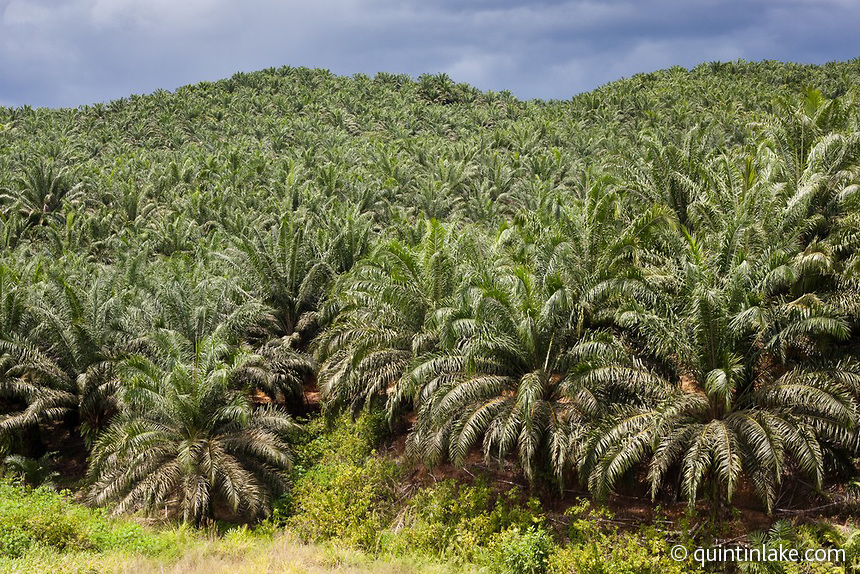
Nutrient Management for Palm Oil Plantation


Nutrient management is one of the major cost components for a palm oil plantation. This is due to the inherently poor fertility of most tropical soils and the intensive extractive nature of plantation agriculture. Biochar offers the possibility for a revolution in nutrient use efficiency in tropical agriculture along with many other proven soil and water holding benefits.

Why biochar?

Many advantages of biochar applications to improve the soil fertility. Biochar production process also uses a thermal process that faster and also more affordable in investment than the biological process, that's common called fermentation. Saving estimation of fertilizer use could save up to 50% with the use of biochar, that means increase the fertilization efficiency due to the application of biochar.
 
How to produce biochar?
 
To produce the best biochar in quality and quantity, the best technology is continous slow pyrolysis process. The biomass waste that is generated by palm oil mill every day is a potential raw material for the production of biochar. Syngas, biooil and heat are other products from continous slow pyrolysis technology for energy applications or other.

Senin, 24 Desember 2012

"Carbon Farming" for Palm Oil Plantation part VI: Think Sustainability, Think Biochar


When we think about the sustainability of palm oil, we would think about the sustainability of palm fruit production and that means thinking about the management of the plantation itself. And talk about the management of palm oil plantations mean can not be separated bymaintaining soil fertility. Efforts to maintain the fertility of the soil is an ongoing effort as the palm oil plantation business. Biochar is one of the excellent material in maintaining soil fertility.
Biochar from JF BioCarbon

Biomass wastes that are highly abundant in palm oil is a potential feedstock for biochar production while continous slow pyrolysis technology will continue also produced green energy for processing in the palm oil mill. A business that zero waste in its operations that sustain the production of palm trees. Thinking about the sustainability of palm oil plantations means thinking about biochar.

Sabtu, 15 Desember 2012

"Carbon Farming" for Palm Oil Plantation Part 4: Misperceptions Between Biochar and Ash


photo is taken from here

Because biochar application to palm oil plantations are new, many of those who do not know and tend to equalize between biochar and ash as fertilizer for palm oil plantations. Though both are clearly very different. Judging from the occurrence of the biochar and the ash is very different. Biochar produced from pyrolysis process while the ash generated from the direct combustion (incinerator) or gasification.

Judging from biochar also many different functions of the ashes just as low quality mineral fertilizers, because biochar could be a home of microbes that will increase the soil fertility. Here are some of the reasons for the agricultural use of biochar:
-Reducing requirements for other inputs, such as conventional fertilizer
-Absorption of carbon from the atmosphere to reduce the concentration of greenhouse gases in the atmosphere
-Increase yield by overcoming obstacles to growth (eg, poor soil structure, low pH, etc.)
-Improve the quality of plant growth by overcoming obstacles (eg, poor nutrient absorption resulting in low protein content)
-Remediation of contaminated soil
-Improve the physical or aesthetic properties of the soil or growing media (for example, make it dark, lowering the density of pores or give to the soil and so on)
Biochar production process with continuous slow pyrolysis technology is also very environmentally friendly because the emission gas well below the permitted threshold. While the direct burning incinerator technology has not allowed for reasons of emission gas and ash byproduct of low economic value.

Sabtu, 01 Desember 2012

"Carbon Farming" for Palm Oil Plantation Part 1

Fertilization in palm plantation business is costly, even this is the highest cost component of the business. Fertilization is a vital activity to the success and sustainability of the business. Fertilization get a portion of 65% and up in the plantation-based business expenses. Analogues same as livestock business that feed holds the highest component of about 80 percent. Thus reducing the need for fertilizer will benefit the business. Moreover, chemical fertilizers are used in the oil palm plantation business are also non-subsidized. There are a number of efforts that can be done to reduce the fertilizer, which in essence is to increase the efficiency of absorption of the fertilizer for plants.

Basically plants will always require fertilizer in certain amount as the nutrients for the growth and productivity of fruit. Thus ensuring adequate fertilizer as the nutrition for the palm trees are principles that should be sought for this business. In fact, to provide a sufficient number of that is costly, due to a variety of site-specific environmental factors such as palm oil is located. Fertilizer in general will be a lot of washed / leaching (50% in average) giving rise to much waste to the detriment of the economy. It can not be allowed to continue and need immediate solutions to overcome them.
Photo taken from here
Application of biochar is one perfect solution for it. CPO plant every day produces excess waste biomass will potentially be used for biochar feedstock. Production of biochar by JF BioCarbon continous slow pyrolysis  reliable to process the amount of waste biomass. In addition to producing biochar also be produced green energy (renewable energy) that can be used for the industrial production of CPO or its various derivatives. Current regulation that prohibits direct burning of biomass waste with the incinerator will further strengthen the continuous slow pyrolysis technology as the best solution for the problem.

There are many scenarios that we can use for biochar application in palm oil plantations, among others enriched with chemical fertilizers (NPK), enriched with compost (and plus mulch), or adding a bacteria that contributes greatly to soil enrichment. If your palm oil industry have a concept for prioritizing environmentally friendly with the use of renewable energy, and energy efficiency, zero waste, sustainable and would like to play real to nourish the planet from global warming, then the application of biochar to "Carbon Farming" is the best solution.