Tampilkan postingan dengan label biomass boiler. Tampilkan semua postingan

Sabtu, 20 November 2021

The Urgency of Biochar Application on Palm Oil Plantations in Indonesia

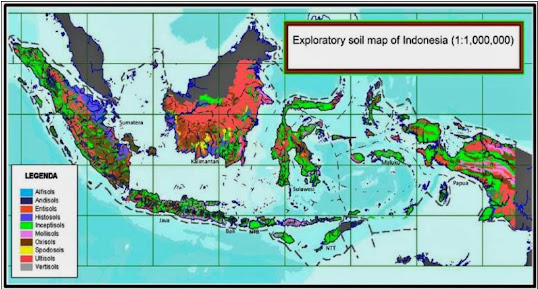
The large number of acidic soils in Indonesia that are used for palm oil plantations makes the productivity of palm oil fruit or the resulting FFB (fresh fruit bunch) not optimal. The acid soil covers the largest dryland area in Indonesia. It occupies approximately 55% of the total land area (191.09 million ha) in Indonesia. About 107.36 million ha of all Indonesian acid soils is classified as dryland acid soils and the rest (14.93 million ha) as peat soil. Acid soils in Indonesia are distributed amongst the big islands, such as Kalimantan (39.42%), Sumatera (28.81%), Papua (18.03%), Java (7.77%), and Sulawesi (6.95%). Acidic soils with low pH make nutrient absorption low in plants and so do soil microbial activity, which plays a large role in soil fertility. This condition should not be ignored because besides making the cultivation of palm oil plantations not optimal, there will also be a lot of fertilizer used. This makes the operational costs of  palm oil plantation operation high. Biochar is a biomass pyrolysis product that is effective and efficient in overcoming these problems. With the abundant amount of biomass waste produced by palm oil mills or CPO mills as biochar raw materials, efforts to improve the quality of plantation soil should be easy to do and have even become the operational standard for these plantations. But the fact is not.


Why hasn't biochar been used to improve soil quality and thus increase the production of palm oil fruit or FFB? The lack of information and education about the benefits and uses of biochar are the main factor. This of course makes the application of biochar in palm oil plantations not yet done even though palm oil mills have abundant biomass waste such as empty palm fruit bunches (EFB) and fiber which are generally not used and cause environmental problems. The priority for processing EFB compared to other products such as EFB pellets or compost also needs separate considerations. The best choice, of course, is based on a comprehensive study according to the characteristics of the business or business will be built. Consider not only short-term economic benefits, but also environmental and long-term benefits is an important thing. 


Quantitatively, an increase in the production of palm oil fruit or FFB, an increase of at least 20% with the application of biochar is something that is normal. And a 20% increase in fruit production will also result in a big profit. Productivity of a number of other agricultural commodities can be increased by 30%, 40% or even more than 100%. The low productivity of palm oil fruit in Indonesia can be increased by the application of biochar, which is particularly effective in improving the soil quality in the palm oil plantations. Moreover, about 80% of the components of the cost of producing crude palm oil (CPO) come from the plantations, and 20% in the processing sector (palm oil mills). The operational costs of palm oil mill plantations, especially fertilizers, can also be reduced by the use of biochar. The priority of liquid biofuel development will also get better if the volume of biofuel raw materials such as CPO increases. This shows the strategic role of biochar. Apart from that from the aspect of climate change, biochar will also absorb CO2 concentrations in the atmosphere or reduce the concentration of greenhouse gases, as a solution to today's world problems.  


Meanwhile, from the side of the palm oil mill, another advantage obtained from biochar production is the use of excess energy from the pyrolysis process or the production of biochar as an energy source for the boiler. Boiler feed water (BFW) will also be preheated twice when it is used for cooling in the pyrolysis condenser and then the economizer on the boiler. In this way, the energy needed by the boiler decreases. When the boiler energy source uses the energy source from pyrolysis, this means that the palm kernel shell (PKS) can be taken and used for other things and can even be sold directly for local and export markets. The main obstacle to business development in the palm oil industry is the availability of energy source namely electricity. If the energy source is available, the development of palm oil-based businesses is very open and varied, such as the production of CPO derivatives, palm kernel shell processing, PKO production, PKO derivative production, biomass power plants and so on.  

Jumat, 06 Desember 2019

Which is Better, Efficient Boiler or Pyrolysis System ?

Fiber and palm kernel shells (PKS) are palm oil mill solid wastes that are produced in CPO production in that mill. The amount of fiber and PKS waste is quite a lot, which is around 20% of each fresh fruit bunch (FFB) or almost the same as the CPO produced. A palm oil mill with a capacity of 60 tons / hour FFB can produce fiber as much as 8.1 tons per hour or 194.4 tons per day and PKS of 3.3 tons / hour per hour or 79.2 tons per day. And because both of them are waste, generally the utilization of the waste is not initially considered, including for use as fuel in boilers in palm oil mills for the production of electricity and steam. The use of fiber and PKS for boiler fuel generally uses 100% fiber and about 30% of the PKS. Under these conditions the remaining 70% of the PKS can be used for other things including being sold or even exported.

When the shell becomes a commercial commodity and demand is greater, palm oil mills replace their old inefficient boilers with new boilers that have a high level of efficiency. In this way, 100% of the PKS is no longer used to boiler fuel and only requires fiber as fuel. In this condition a paradigm shift in thinking begins to occur, that is when the solid waste is almost unnoticed and tends to be considered a problem, then it becomes an important part of earning additional income and it can even be estimated that if the shell is successfully sold then it is sufficient to cover the operational costs of the palm oil mill. Certainly something interesting if the production of CPO (crude palm oil) with 0% operational costs so that profit is increasingly attractive especially amid the recent decline in CPO prices.

Another thing that can be done is to use a pyrolysis unit, to run the boiler. With pyrolysis, not only fiber is used but also the empty fruit bunch (EFB). EFB are solid palm oil mill waste which to date have generally not been utilized. Besides producing energy, pyrolysis also produces products in the form of charcoal (biochar). Although charcoal (biochar) can also be used for energy sources, but in the business of palm oil companies the use of biochar for plantations can be more compatible. The use of biochar in palm oil plantations is mainly to  fertilizer saving, which is one of the major cost components (around 30%) in the CPO production business. With an area of ​​20 thousand hectares of oil palm plantations, fertilizer costs are estimated to reach Rp. 71.50 billion (around US$ 5 million) per year or Rp. 35.75 billion (around US$ 2.5 million) per year for every 10,000 hectares, for more details, please read here. Palm oil mills with big vision certainly try to maximize their potential with the aim of maximizing profits from upstream to downstream production activities. With Biochar can also target the increase in productivity of FFB, for more details, please read here.

The application of biochar will be easier to do in Indonesia than in Malaysia, this is because almost all palm oil mills in Indonesia also have palm oil plantations while in Malaysia the mills generally do not have their own palm oil plantations. The palm oil industry also has an important role for the two countries because Indonesia and Malaysia are the largest CPO producers and owners of biggest palm oil plantations in the world today. The palm oil industry contributes around 7% of Malaysian GDP and 3% of Indonesian GDP, so its role cannot be ignored. Both with pyrolysis and high efficient boilers, biomass waste can be used as an energy source and 100% of the PKS can be commercialized, but with pyrolysis is better because waste of EFB can also be processed, there are biochar product (while only ash if only with regular combustion) for Fertilizers saving in the palm oil plantations and the exhaust gases from the palm oil mill boilers are also clean because they burn gas (syngas) produced from the pyrolysis process.