Tampilkan postingan dengan label dessicated coconut. Tampilkan semua postingan

Selasa, 03 Maret 2020

Dessicated Coconut Factory and Continuous Pyrolysis

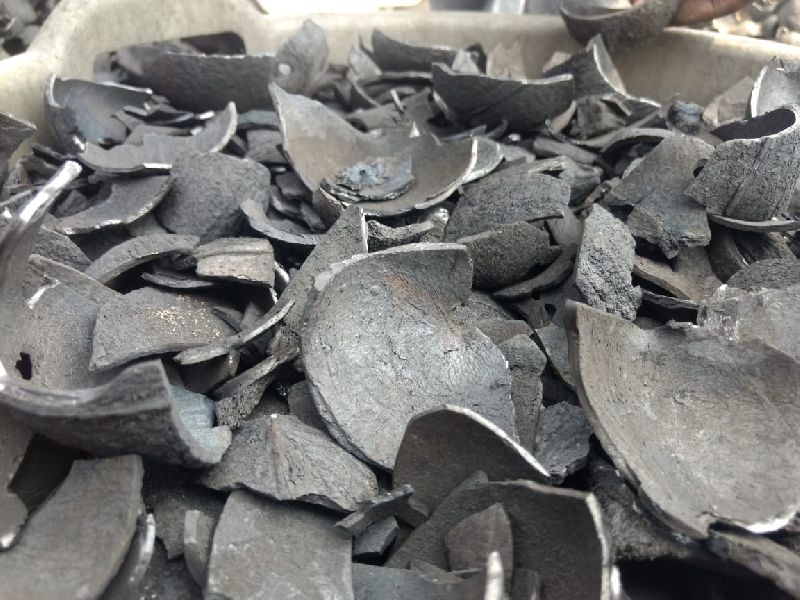
There are about 20 dessicated coconut factories operating in Indonesia or estimated to be more than 100 units worldwide. With an average capacity of 2 tons / hour, this dessicated coconut factory requires approximately 16,200 coconuts every hour. The byproducts produced are coconut shell and coconut water. Coconut shells produced are around 6 tons / hour and coconut water 4.2 tons / hour. The dessicated coconut plant needs electricity and heat to sterilize the coconut meat and drying the dessicated coconut. Energy in the form of electricity and heat can be met from the utilization of the coconut shell.
There are several technologies for utilizing these coconut shells so that products in the form of electricity and heat are obtained. The popular technology today is with a steam turbine boiler, with this technology the coconut shell is burned in a furnace and heats water in the boiler so that it produces steam to drive the turbine and then generate electricity through a generator. This technology is the same as in palm oil mills. In palm oil mill the fiber and part of the palm kernel shell (PKS) is used as fuel to produce electricity and steam is also used to sterilize fresh fruit bunches (FFB) before being processed into oil.
Another better technology is continuous pyrolysis. This in addition to producing electricity and heat also produces charcoal product. Coconut shell charcoal is high-quality charcoal and is much needed by a number of industries such as the briquette charcoal industry and activated carbon. In the pyrolysis technology the coconut shell is not burned directly, but is heated in a vacuum condition (absence of oxygen). Pyrolysis products such as syngas and biooil are used for electricity production and can also be heat, heat energy is also produced from the pyrolysis process itself which is exothermic, while charcoal is the main product of the pyrolysis process.

Minggu, 16 Februari 2020

Reviving the Integrated Coconut Industry Part 8: Coconut Milk, VCO, Dessicated Coconut, Coconut Water, Nata de Coco, Shell Charcoal and Activated Carbon

Basically the campaign to save the coconut plantation (tree of life) is to revive the integrated coconut industry. Damaged and not maintained of coconut plantations due to lack of funding to maintain and develop it in a sustainable manner.

Bioeconomy is defined as knowledge-based production and uses biological resources or living things to produce products, processes, and services in the economic sector within the framework of a sustainable economic system.

Instant coconut milk or packaged coconut milk is almost unthinkable, especially by mothers in Indonesia a few decades ago. Likewise, bottled coconut water, almost all Indonesians were also unthinkable at that time. That is mainly because coconut is very easy to get in almost all corners of the country. But this condition changed when Asian cuisine began to worldwide so that many Western people like it. Coconut milk as one of the main elements of the dish has become a necessity that must be provided. Urban communities with dense population and have a high level of activity, need something practical and instant that makes instant coconut milk products easily accepted. It is also the same as instant food seasoning products that are in demand in urban areas.

Coconut milk and bottled coconut water industry is a type of large industry so it requires a supply of raw materials in large quantities and continuously. To get these conditions in general can only be in coconut plantations which are not infrequently still very remote location. At that location, electricity and a number of supporting infrastructure were not yet available, so the integrated coconut industry could not yet be operated. Electricity is one of the basic needs for industrial operations, so it needs to be made before running the integrated coconut industry such as industries with the main products are coconut milk and bottled coconut water. The production of electricity for this purpose can be done in at least two ways: first, with a steam boiler, as is usually done in a palm oil mill. Coconut coir which has the lowest economic value is used for fuel.
The second way, namely by continuous pyrolysis. Coconut shell can be used as raw material for the pyrolysis. With pyrolysis technology, it would be more profitable because besides electricity generated, heat and charcoal shells are also produced. Electricity and heat can be used for the operation of the coconut processing industry, while shell charcoal can be directly sold or further processed into briquettes or activated carbon. When the need for electricity is large, power plants can use both, namely coconut coir steam boilers and pyrolysis with raw materials for coconut shells. If you want to produce more charcoal, coconut coir can also be used for continuous pyrolysis fuel. The quality of coconut coir is lower than that of coconut shell. This is so that coconut coir charcoal can be used as agricultural charcoal (agri-char / biochar) so that it will increase the productivity of coconut plantations, while coconut shell charcoal for the purposes mentioned above.
Apart from being processed into packaged coconut milk, fruit meat can also be processed into VCO (Virgin Coconut Oil) or dessicated cooconut. VCO production can be done on a medium scale, but currently for the export market or foreign buyers in general require organic certificates. That is also the reason why the production of small-scale VCO for the export market is difficult. Basically, coconuts can be made for a variety of products, according to market needs. Almost all coconut processing industries require electricity and heat for the production process (specifically for the VCO industry, only electricity). The integrated coconut industry approach makes the coconut processing industry more efficient. The combination of the coconut processing industry adjusts to market needs. The dim market for copra & coconut oil, it turns out that little by little is substituted by increasing markets for dessicated coconut, VCO, coconut milk, nata de coco, bottled coconut water and even coconut sugar. Is it possible that the coconut will come back victorious? There are indications there indeed. Wallahu'alam 

Selasa, 11 Februari 2020

Reviving the Integrated Coconut Industry Part 6: Integration of Dessicated Coconut Production, Packaged Coconut Water, and Shell Charcoal

Basically the campaign to save the coconut plantation (tree of life) is to revive the integrated coconut industry. Damaged and not maintained of coconut plantations due to lack of funding to maintain and develop it in a sustainable manner.

Bioeconomy is defined as knowledge-based production and uses biological resources or living things to produce products, processes, and services in the economic sector within the framework of a sustainable economic system.
Dessicated coconut is not very popular in Indonesia. This product is used in the food industry for a mixture of cakes and chocolate so that it gives the flavor of coconut and much later became a favorite food in Europe. This product was originally discovered in Sri Lanka from Henry Vavasseur's drying experiment of grated coconut in 1888. There are 3 countries that are currently producing dessicated coconut, namely the Philippines, Sri Lanka and Indonesia. The need for this dessicated coconut product also continues to increase, namely recorded export of dessicated coconut in 1990 amounting to 151 thousand tons and in 2008 it increased to 248 thousand tons. In Indonesia alone, it is estimated that there are around 20 dessicated coconut (DC) factories.

DC is produced by drying grated coconut until the water content reaches a maximum of 3%. A dryer commonly used for DC production is a fluidized bed dryer. This dryer has advantages including high sensitivity for its operations, so it is commonly used for food and pharmaceutical products. Rotary dryer is a type of dryer that is also popular in the industry, especially in biomass processing such as wood pellets and briquettes, for more details, please read here. Rotary dryer types are more suitable for materials that are not too sensitive to heat, are not easily broken when dropped and heavier materials. That is why rotary dryers are more suitable for materials such as minerals, fertilizers and so on. Rotary dryer can be said to be heavy duty processing load and requires a wider space, while fluidized bed dryer for lighter-duty materials and requires less space.
For drying the grated coconut, heat energy is needed and for the operation of the plant's equipment such as shredding, conveyors, etc. electricity is needed. Both of these energies can be fulfilled by using a continuous pyrolysis unit. Coconut shell is used as a raw material for continuous pyrolysis, so that the output is in the form of charcoal, syngas and biooil. The charcoal can be sold for immediate use, made briquettes or activated carbon. For electricity production, syngas is used for fuel the gas engine (internal combustion engines) which convert heat energy into mechanical energy then into electrical energy. And biooil can be a source of heat both for boiling or sterilizing coconut meat as well as for a heat source for drying grated coconut with the heating media not in direct contact (indirect heating) with the grated coconut.

With the above pattern, the integrated coconut industry is energy independent or does not require energy supply from outside. This condition is very attractive especially for operations in remote locations. This energy independent industry practice is common in the palm oil industry. Palm oil mills usually burn shells and fiber for the production of electricity and steam. Why besides electricity, does the palm oil mill also produce steam? For more details, you can read here.
At present a number of palm oil mills have even used efficient boilers so that it is sufficient with fiber only and the shell can be sold or exported abroad. Though there is a better or more efficient way to produce electricity and steam, which is also by continuous pyrolysis, for more details read here. The shell, which is a biomass fuel, has properties almost similar to wood pellets at a cheaper price and is still abundantly available. Japan and Korea are the two countries in Asia that are most striking in the use of biomass energy related to climate change mitigation and global warming.
Coconut shell charcoal is a sought-after product, so the price is also increasing every year in accordance with market laws, namely supply-demand. The production of coconut shell charcoal will provide an attractive additional income compared to just being burned to ash and making a zero waste integrated coconut industry.

The DC industry is usually large enough in scale or production capacity to produce quite a lot of coconut water. Coconut water can be processed into bottled coconut water, which also requires electricity and heat in the production process. Electricity and heat production can use coconut fiber as fuel. Burning coconut fiber to heat the boiler and produce electricity, similar to the palm oil mill. Steam is produced to heat or sterilize the coconut water. The demand for bottled coconut water increased rapidly, from 484 thousand liters in 2009 to 71.7 million liters in 2015, or 141 times.