Tampilkan postingan dengan label biomass. Tampilkan semua postingan

Minggu, 22 Desember 2024

Maximizing the Rate of CO2 Absorption from the Atmosphere Based on Biomass

Maximizing the rate of CO2 absorption from the atmosphere is very important considering the rate of addition of CO2 concentration to the atmosphere is not comparable to the rate of CO2 absorption. This is what makes the CO2 concentration continue to increase. To balance this speed, a strategy is needed to increase the rate of CO2 absorption. The use of biomass will be very effective and provide multiple benefits for human life. 

CO2 from the atmosphere needs to be captured through biomass production through the process of photosynthesis in plants. Fast-growing species of plants that have high photosynthesis rates are needed for this. Furthermore, biomass, especially wood from fast-growing species of plants, is used as raw material for biochar. Furthermore, biochar is used to improve soil fertility (soil amendment) in various types of agricultural and forestry plants.

Biochar production with slow pyrolysis will also produce excess heat, syngas and biooil that can be used as energy sources. The benefits of biochar production will be obtained from the sale of biochar, the sale of carbon credits and the use of slow pyrolysis by-products. With conditions like this, efforts to increase the speed of CO2 absorption from the atmosphere should be increased. How fast and how much CO2 volume can be absorbed will depend on the type of fast growing species used, the area of ​​planting and the capacity of biochar production.

Selasa, 06 Agustus 2024

Why is There No Biochar Production for The Palm Oil Industry Yet?

Even though biomass waste is abundant in the palm oil industry, both in the plantation area and in the palm oil mill area, most of the biomass waste, especially empty fruit bunches or EFB, is still not utilized or is simply piled up or thrown away. In fact, if the palm oil industry has a strong vision about maximizing profits by minimizing the occurrence of waste, especially biomass, and maximizing environmental sustainability as well as being part of the climate solution, then biomass waste, especially empty fruit bunches or EFB, is a big opportunity.  Currently, special department in the palm oil industry that specifically deal with sustainability issues are starting to be created by palm oil companies. Waste management issues including the utilization of EFB, reducing soil and water pollution due to fertilizers and increasing fertilizer efficiency are the concerns of the sustainability department. 

The empty fruit bunches or EFB can be used as fuel so that most or all of the palm kernel shells or PKS can be sold directly and even exported. Palm oil mill boiler fuel currently uses fuel in the form of palm fiber (mesocarp fiber) and some palm kernel shells / PKS, which can be replaced using empty fruit bunches (EFB) and palm fiber (mesocarp fiber) and without palm kernel shells / PKS. Palm kernel shells / PKS are a very popular biomass fuel in the global market that competes fiercely with wood pellets. By being able to sell all palm kernel shells / PKS and at the same time utilize empty fruit bunch / EFB waste, the palm oil industry will provide many economic benefits.


The use of empty fruit bunches / EFB and mesocarp fiber as a heat source for the boiler is not burned as usual or as is done by all palm oil mills today but must be gasified or pyrolyzed so that another product is produced in the form of biochar. Although gasification can be used to produce biochar, pyrolysis is more recommended because the quality and quantity of biochar will be better. The biochar can later be used for the palm oil plantation itself. The use of biochar in palm oil plantations will significantly save on fertilizer use as well as reducing water and soil pollution due to inefficient use of fertilizer. The biggest cost in operating a palm oil plantation is fertilizer, so by using biochar these operational costs can automatically be reduced. Biochar will become a slow release agent so that fertilizer use will be more efficient or increase NUE (Nutrients Use Efficiency).

Empty fruit bunches / EFB and mesocarp fiber are solid waste from palm oil mills so the waste is located around the palm oil mill, while biochar is used for palm oil plantations. In palm oil companies, management is generally separated between the plantation and mill departments. The use of biochar in palm oil plantations while the raw material comes from palm oil mills requires special arrangements regarding this matter. This could be, for example, trucks transporting fresh fruit bunch / FFB from the plantation to the palm oil mill, then after the FFB is unloaded at the mill, they then go to the plantation again carrying biochar from the palm oil mill.

Currently, no one is utilizing empty fruit bunches / EFB and palm mesocarp fiber as a source of boiler heat and biochar production. The main factor causing this is the main orientation or vision of the palm oil company itself as described above. This is predicted to change soon as awareness of climate issues increases and reaches all levels, especially in sectors related to energy and sustainibility. Moreover, when biochar is applied to plantation land, it also gets carbon credit as carbon sequestration. The smoke coming out of the boiler furnace will also be cleaner as seen from its opacity. The use of gas and liquid fuels from pyrolysis by-products will produce better combustion quality as well as smoke from the chimney. And even the liquid products from pyrolysis can also be used as biopesticides and organic fertilizers. Boiler efficiency will also increase because it uses boiler feed water (BFW) in the form of hot water from the condenser output of the pyrolysis unit.

Apart from old palm oil mills which really want to upgrade their industrial energy systems and fertilizer efficiency in their plantations including sustaibility according to this vision, new palm oil mills whose status is in the development stage should be able to apply this concept more easily. New palm oil mills can immediately follow developments and demands of the times so that they become trend setters with this vision. Being a pioneer and trend setter is indeed more difficult and even risky than just being a follower, but this will raise the reputation and become a leader in the industry so it should also have a positive impact on the company's business performance. A worthy effort.     

Selasa, 11 Februari 2020

Reviving the Integrated Coconut Industry Part 6: Integration of Dessicated Coconut Production, Packaged Coconut Water, and Shell Charcoal

Basically the campaign to save the coconut plantation (tree of life) is to revive the integrated coconut industry. Damaged and not maintained of coconut plantations due to lack of funding to maintain and develop it in a sustainable manner.

Bioeconomy is defined as knowledge-based production and uses biological resources or living things to produce products, processes, and services in the economic sector within the framework of a sustainable economic system.
Dessicated coconut is not very popular in Indonesia. This product is used in the food industry for a mixture of cakes and chocolate so that it gives the flavor of coconut and much later became a favorite food in Europe. This product was originally discovered in Sri Lanka from Henry Vavasseur's drying experiment of grated coconut in 1888. There are 3 countries that are currently producing dessicated coconut, namely the Philippines, Sri Lanka and Indonesia. The need for this dessicated coconut product also continues to increase, namely recorded export of dessicated coconut in 1990 amounting to 151 thousand tons and in 2008 it increased to 248 thousand tons. In Indonesia alone, it is estimated that there are around 20 dessicated coconut (DC) factories.

DC is produced by drying grated coconut until the water content reaches a maximum of 3%. A dryer commonly used for DC production is a fluidized bed dryer. This dryer has advantages including high sensitivity for its operations, so it is commonly used for food and pharmaceutical products. Rotary dryer is a type of dryer that is also popular in the industry, especially in biomass processing such as wood pellets and briquettes, for more details, please read here. Rotary dryer types are more suitable for materials that are not too sensitive to heat, are not easily broken when dropped and heavier materials. That is why rotary dryers are more suitable for materials such as minerals, fertilizers and so on. Rotary dryer can be said to be heavy duty processing load and requires a wider space, while fluidized bed dryer for lighter-duty materials and requires less space.
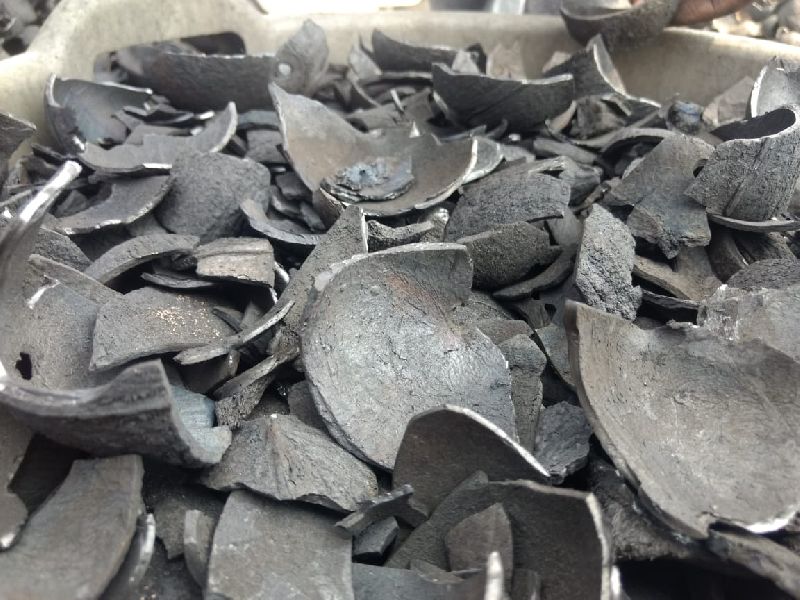
For drying the grated coconut, heat energy is needed and for the operation of the plant's equipment such as shredding, conveyors, etc. electricity is needed. Both of these energies can be fulfilled by using a continuous pyrolysis unit. Coconut shell is used as a raw material for continuous pyrolysis, so that the output is in the form of charcoal, syngas and biooil. The charcoal can be sold for immediate use, made briquettes or activated carbon. For electricity production, syngas is used for fuel the gas engine (internal combustion engines) which convert heat energy into mechanical energy then into electrical energy. And biooil can be a source of heat both for boiling or sterilizing coconut meat as well as for a heat source for drying grated coconut with the heating media not in direct contact (indirect heating) with the grated coconut.

With the above pattern, the integrated coconut industry is energy independent or does not require energy supply from outside. This condition is very attractive especially for operations in remote locations. This energy independent industry practice is common in the palm oil industry. Palm oil mills usually burn shells and fiber for the production of electricity and steam. Why besides electricity, does the palm oil mill also produce steam? For more details, you can read here.
At present a number of palm oil mills have even used efficient boilers so that it is sufficient with fiber only and the shell can be sold or exported abroad. Though there is a better or more efficient way to produce electricity and steam, which is also by continuous pyrolysis, for more details read here. The shell, which is a biomass fuel, has properties almost similar to wood pellets at a cheaper price and is still abundantly available. Japan and Korea are the two countries in Asia that are most striking in the use of biomass energy related to climate change mitigation and global warming.
Coconut shell charcoal is a sought-after product, so the price is also increasing every year in accordance with market laws, namely supply-demand. The production of coconut shell charcoal will provide an attractive additional income compared to just being burned to ash and making a zero waste integrated coconut industry.

The DC industry is usually large enough in scale or production capacity to produce quite a lot of coconut water. Coconut water can be processed into bottled coconut water, which also requires electricity and heat in the production process. Electricity and heat production can use coconut fiber as fuel. Burning coconut fiber to heat the boiler and produce electricity, similar to the palm oil mill. Steam is produced to heat or sterilize the coconut water. The demand for bottled coconut water increased rapidly, from 484 thousand liters in 2009 to 71.7 million liters in 2015, or 141 times. 

Kamis, 21 November 2019

Large Plantations and Large Farms

Fertilizer problems or soil fertility have always been the main topic or discussion for a large plantation business. This is very reasonable because maintaining productivity of crops can only be done by maintaining soil fertility or providing adequate fertilizer. For this reason, the budget for the supply of fertilizer is always a large portion of the plantation business. Then the condition leads to the question of how to make efficiency or save the fertilizer budget? Of course many techniques can be used for this purpose, but basically the selection or use of fertilizer that is appropriate and the effectiveness or absorption of fertilizer for plants is a key success factor in maintaining soil fertility. Let's try to answer the main question above.

When chemical fertilizers are increasingly abandoned because of their effects which damage the environment, there is no other choice but to use organic fertilizer. In large plantations such as oil palm plantations, basically there are also many biomass wastes from palm oil mills that can be used as fertilizer, such as fronds and palm oil trunks. But when these ingredients are also processed to become a particular product, and also the composting process of fibrous wood species takes a long time, the best choice is with organic manure. The question is where do you get livestock manure compost for the oil palm plantation? Actually there are more sources of organic fertilizer or compost that can be produced from palm oil mill effluent, namely from liquid waste. If the palm oil mill has an anaerobic digester, the biogas residue from the sludge can be used as organic fertilizer. At present there are not many palm oil mills that process liquid waste with the biogas unit, with the reason that the unit is considered expensive.

The history and experience of our predecessors before the use of chemical fertilizers can be used as a reference for this. At that time they were able to meet the fertilizer needs of their agricultural businesses, namely by sheep, goats, cattle and buffalo farming. The livestock manure is used for agricultural fertilizer and agricultural waste is used for animal feed. The basic pattern can also be developed for large plantations with several adjustment techniques to improve efficiency. Technical applications in the field that can be done, namely large plantations must cooperate with large farms or even ideally have a large farm to meet the needs of fertilizer for its plantations. For example, a palm oil plantation that has 10,000 hectares of plantation area, 100-200 (1-2%) hectares are used for sheep farming. The sheep breeding, not by just being caged, but grazing in the fields of pasture.
Why is sheep farming done in the pasture fields? This is because by grazing the cost of feed can be suppressed very large or the business becomes very economical. The biggest cost component of livestock business is feed. If the availability and supply of feed can be overcome then the other components become easier. The pasture is in the form of grass and shade trees. Making grass always available is the essence of the business, even it can be said that the pasture is grass farming itself. Rotational grazing is the best grazing technique at the moment. When the grass is fertilized with sheep dung during the grazing, the dirt produced when in the cage can be used for fertilizer on large plantations such as the oil palm. The biogas unit can be used to optimize the utilization of dirt from the cage.

Basically, sheep farming can also stand alone and also be profitable. Therefore, sheep farming can be done separately. In the case when an energy plantation is used for the production of wood pellets, it is still constrained by various things such as the presence and supply of electricity, so the farm business can still be run properly. The production of large-scale wood pellets in various regions in Indonesia is currently still constrained due to the electricity supply. This will certainly hamper the growth of the wood pellet industry so there needs to be another way to overcome this, which insha Allah will be discussed later.
With this concept, not only increases plantation and meat production, but also a complete closed cycle business that is environmentally friendly and sustainable. Honey bee farming can also be added for optimization because obviously the bees besides helping the pollination process will also produce honey, a superior product of high economic value. Various food problems, insha Allah, can be overcome with this concept. This is because from the production side it can be made very efficient with the 2 biggest cost components being reduced significantly by fertilizer and animal feed with the integration of large plantations and large farms.

Although it has used compost from livestock manure, there are still more techniques that can be applied to improve fertilizer efficiency by using biochar. With biochar, the fertilizer will be retained in the biochar pores so that slow release makes it effective for fertilization. In addition, biochar will also hold the fertilizer from leaching due to high rainfall, so that the use of fertilizer can also be saved significantly. Biochar will also be the home of microbes to decompose organic matter into nutrients needed for plants. So, in short, with biochar, the productivity of plantations is high, but the use of fertilizer is minimal because it is efficient, especially when fertilizer is produced from the farm itself. This biochar can be produced by processing the plantation biomass wastes by pyrolysis. For more details about pyrolysis can be read here.