Tampilkan postingan dengan label Coconut Shell. Tampilkan semua postingan

Minggu, 22 Desember 2024

Charcoal Production for Activated Carbon Raw Material

Charcoal characteristics are influenced by the raw materials used and the conditions of the production process. The use of charcoal for certain applications or industries also requires certain specifications or characteristics. For example, charcoal used for fuel can have different specification requirements from charcoal specifications for agriculture (biochar), or charcoal used as raw material for activated carbon. A number of parameters that are acceptable in certain applications may not be acceptable in other applications.

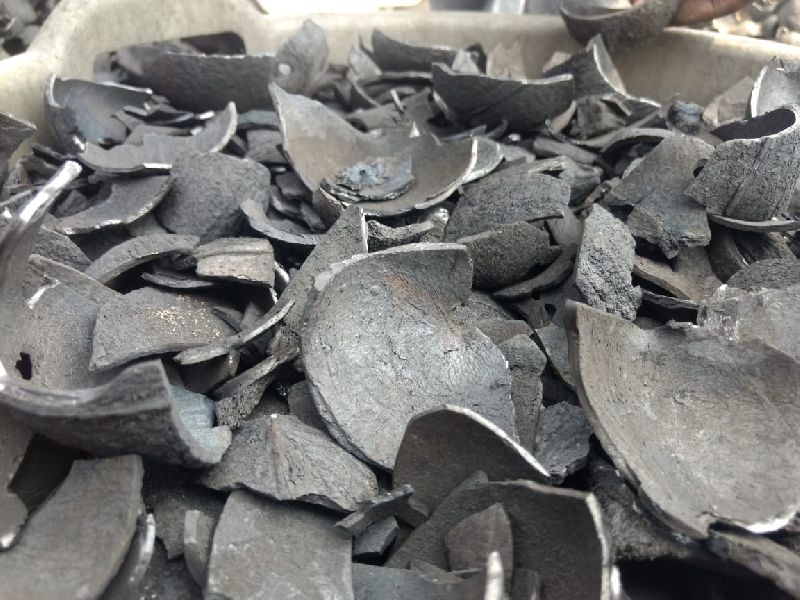
Charcoal products used as raw materials for activated carbon production are also the same. Parameters in the form of high fixed carbon (~80%), high hardness, low ash content (~3%) and low volatile matter (<10%) are prerequisites for the specifications or quality of charcoal as a raw material for activated carbon. As a comparison, charcoal for agriculture (soil amendment) or commonly called biochar has a wide range of quality or specifications, namely lower fixed carbon (FC), higher ash content and higher volatile matter, especially in agro type biochar according to WBC (World Biochar Certificate), while premium type biochar according to WBC has a higher or highest quality and can be used for various purposes. While the material type biochar according to WBC has the lowest quality with use mainly in certain industries such as cement, asphalt, plastic, electronics, and composite materials or cannot be used for agriculture, soil applications and consumer products.

Raw materials for charcoal production for activated carbon production because it requires stricter parameters, especially high fixed carbon, low ash content and high hardness so that raw materials suitable for this purpose are more limited or not all biomass can be used for charcoal production for activated carbon raw materials. This is what makes coconut shells the best and most popular raw material for charcoal production as activated carbon raw materials today. And palm kernel shell raw materials (especially from dura variety) are expected to be the next candidate. The availability of abundant palm kernel shells (PKS) is a special attraction. But indeed with this palm kernel shell (PKS) charcoal raw material, there is still the smell of palm oil, so it is a challenge for activated carbon producers.

Selasa, 11 Februari 2020

Reviving the Integrated Coconut Industry Part 6: Integration of Dessicated Coconut Production, Packaged Coconut Water, and Shell Charcoal

Basically the campaign to save the coconut plantation (tree of life) is to revive the integrated coconut industry. Damaged and not maintained of coconut plantations due to lack of funding to maintain and develop it in a sustainable manner.

Bioeconomy is defined as knowledge-based production and uses biological resources or living things to produce products, processes, and services in the economic sector within the framework of a sustainable economic system.
Dessicated coconut is not very popular in Indonesia. This product is used in the food industry for a mixture of cakes and chocolate so that it gives the flavor of coconut and much later became a favorite food in Europe. This product was originally discovered in Sri Lanka from Henry Vavasseur's drying experiment of grated coconut in 1888. There are 3 countries that are currently producing dessicated coconut, namely the Philippines, Sri Lanka and Indonesia. The need for this dessicated coconut product also continues to increase, namely recorded export of dessicated coconut in 1990 amounting to 151 thousand tons and in 2008 it increased to 248 thousand tons. In Indonesia alone, it is estimated that there are around 20 dessicated coconut (DC) factories.

DC is produced by drying grated coconut until the water content reaches a maximum of 3%. A dryer commonly used for DC production is a fluidized bed dryer. This dryer has advantages including high sensitivity for its operations, so it is commonly used for food and pharmaceutical products. Rotary dryer is a type of dryer that is also popular in the industry, especially in biomass processing such as wood pellets and briquettes, for more details, please read here. Rotary dryer types are more suitable for materials that are not too sensitive to heat, are not easily broken when dropped and heavier materials. That is why rotary dryers are more suitable for materials such as minerals, fertilizers and so on. Rotary dryer can be said to be heavy duty processing load and requires a wider space, while fluidized bed dryer for lighter-duty materials and requires less space.
For drying the grated coconut, heat energy is needed and for the operation of the plant's equipment such as shredding, conveyors, etc. electricity is needed. Both of these energies can be fulfilled by using a continuous pyrolysis unit. Coconut shell is used as a raw material for continuous pyrolysis, so that the output is in the form of charcoal, syngas and biooil. The charcoal can be sold for immediate use, made briquettes or activated carbon. For electricity production, syngas is used for fuel the gas engine (internal combustion engines) which convert heat energy into mechanical energy then into electrical energy. And biooil can be a source of heat both for boiling or sterilizing coconut meat as well as for a heat source for drying grated coconut with the heating media not in direct contact (indirect heating) with the grated coconut.

With the above pattern, the integrated coconut industry is energy independent or does not require energy supply from outside. This condition is very attractive especially for operations in remote locations. This energy independent industry practice is common in the palm oil industry. Palm oil mills usually burn shells and fiber for the production of electricity and steam. Why besides electricity, does the palm oil mill also produce steam? For more details, you can read here.
At present a number of palm oil mills have even used efficient boilers so that it is sufficient with fiber only and the shell can be sold or exported abroad. Though there is a better or more efficient way to produce electricity and steam, which is also by continuous pyrolysis, for more details read here. The shell, which is a biomass fuel, has properties almost similar to wood pellets at a cheaper price and is still abundantly available. Japan and Korea are the two countries in Asia that are most striking in the use of biomass energy related to climate change mitigation and global warming.
Coconut shell charcoal is a sought-after product, so the price is also increasing every year in accordance with market laws, namely supply-demand. The production of coconut shell charcoal will provide an attractive additional income compared to just being burned to ash and making a zero waste integrated coconut industry.

The DC industry is usually large enough in scale or production capacity to produce quite a lot of coconut water. Coconut water can be processed into bottled coconut water, which also requires electricity and heat in the production process. Electricity and heat production can use coconut fiber as fuel. Burning coconut fiber to heat the boiler and produce electricity, similar to the palm oil mill. Steam is produced to heat or sterilize the coconut water. The demand for bottled coconut water increased rapidly, from 484 thousand liters in 2009 to 71.7 million liters in 2015, or 141 times. 

Rabu, 25 Desember 2019

Reviving the Integrated Coconut Industry Part 3

When continuous pyrolysis is used for processing coconut shells and producing charcoal and is not processed further into activated carbon, excess syngas and biooil can be used as energy sources for processing fruit flesh and coconut water. Fruit flesh and coconut water can be processed into a variety of products needed by the market. The production costs of various processed coconut products have become very competitive because energy costs are very minimal or even zero. In addition, energy needs can also be added from coconut fiber which is used as fuel as well. The energy source can be used for electricity or heat or both depending on industry needs.
If gliricidae is planted as a crop between coconut plantations, wood products will also be obtained. The wood can be used as raw material for wood pellets as an export commodity which is predicted to continue to increase demand in line with awareness of environmental problems and climate change. Gliricidae leaf waste can also be used as animal feed such as goats, sheep and cattle. Maintenance of gliricidae is very easy and planting patterns as intercropping with coconut plantations are also common in Sri Lanka. Land optimization can also be done by using land between coconut plantation and gliricidae as pasture fields such as goats, sheep and cattle and for beekeeping.
To make the business profitable and sustainable, professional management certainly needs to be applied in the business. Management of the upstream sector namely plantations and livestock should be separated from the downstream sector namely factory or plant as a processing unit. This is similar to the organization in the palm oil company which separates the plantation division from the factory or mill division. In addition to facilitating business operations, the business will become efficient and competitive.

Selasa, 10 Desember 2019

Reviving the Integrated Coconut Industries in Indonesia

The absence of a market causes the coconut industry to not develop, stagnate and even tend to die. Although various products can be produced from coconut fruit but with a small product uptake is not able to turn on the coconut industry. When the products that the demanded by market are already obtained, such as CPO in the palm oil industry, it is possible for the coconut industry to stretch and rise and be taken into account. Modernization of technology also needs to be done so that the coconut industry becomes a modern industry even though the production capacity is not as big as the palm oil industry. Another factor needed to revive the integrated coconut industry and this is almost the same experienced by all industries in general that is the availability of energy. So that to meet the energy needs, not all coconut fruit should be processed, but some are used to produce energy, for example coconut fiber, because the economic value is the lowest.

Activated carbon is a product that has a very good market potential and with continuous pyrolysis technology followed by activation, the product can be produced without the need for additional external energy. Thus the activated carbon plant can stand on its own using its coconut shell waste. But to get the coconut shell, someone must process the coconut fruit. Products such as VCO, dedicated coconut, and coconut milk can be the main products so that the processing of the coconut fruit. The coconut water can be processed into isotonic drinks or nata de coco. The use of coir-fired boilers (if in a palm oil mill, high efficient boilers only use the fiber) or even fronds and leaves can be used for electricity and steam production. Similar to operations in palm oil mills as well, namely electricity can be used to move a variety of mechanical equipment for processing coconut and steam as well as a source of heat, especially if the processing of the coconut fruit does need it.

With the above pattern, the coconut industry can be operated even though the location is in a remote area and there is no electricity network there, a place where coconut plantations are located. Indonesia as a seduction country of coconut islands with the plantation area of almost 4 million hectares and the widest in the world today or the equivalent of 1/3 of palm oil plantations should be also the leader in the world coconut industry. 

Selasa, 27 Desember 2011

We Will Produce Charcoal As You Wish


Charcoal has widespread uses include metallurgy, tobbaco curing, water purification (activated carbon), poultry and animal feeds, soil Amendment, and other miscellaneous uses. Charcoal is made by a certain process conditions to achieve the specifications according to their usefulness.

The amounts of moisture (2 to 4 percent), volatiles (18 to 23 percent), ash (1 to 4 percent), and fixed carbon (74 to 81 percent) in charcoal provide an average index of quality for general market acceptance either in lump or briquette form. Charcoal with relatively low volatile content and correspondingly higher amounts of fixed carbon is desirable for specialized industrial uses. Temperatures somewhat higher than the normal kiln operating temperatures of 850° to 950° F (454°  to 510° C) are required to produce it. The volatiles, when present in proportions greater than about 24 percent, will cause smoking when charcoal is burned and will give product degrade in some areas of recreational use.
 
In a continuous process raw organic material of any kind is passed through the retorts and cooked into marketable products. While some of the biogas is used to fuel its own process, on site gas turbines or steam boilers can be fueled by the same gas. Variable speed drives give the operator total control on product quality by altering the residence time of the feed stock. The operator can also vary the percentage split between the bio-oil and charcoal by changing the temperature.
 
Chemical properties can be precisely determined only with analytical equipment. A rough quality test for volatiles can be made, however, by burning samples of charcoal and observing the absence or extent of smoking. A metallic ring when a piece of charcoal is dropped onto a hard surface provides a further rough test for good quality. Too rapid coaling at high temperature usually results in the formation of crumbly charcoal easily broken into small pieces and fines. The species of wood does not influence the chemical quality of charcoal; the physical properties, however, are influenced by wood density and structure. For example, the low-density woods produce charcoal in greater bulk, while some woods will produce brittle charcoal. In general, the lump charcoal obtained from the medium-dense to dense hardwoods is considered a cleaner product because of less breakage and dusting with handling.

Kamis, 21 Juli 2011

COCONUT SHELLS AND PALM SHELL USED AS WATER PURIFIERS IN TOKYO


Granulated charcoal, made of shells of coconuts and palm kernels, is being used by treatment plants in Tokyo and neighboring regions to filter tap water supplies and protect the city’s water from radiations leaked by a damaged nuclear power plant, according to a report last month from www.bloomberg.com. Prices for the absorbent carbon material have risen as much as 44 percent since the March 11 earthquake and tsunami that triggered the radiation threat, said Yoshio Toi, a spokesman for the municipal government in Chiba, a prefecture neighboring Tokyo.


Treatment plants are trying to remove any traces of radioactive matter, such as iodine-131, known to cause thyroid cancer, and convince customers that water supplies are safe. Some Tokyo facilities more than quadrupled the amount of activated charcoal used in filtration after a March 21 sample contained iodine-131 that exceeded the safe limit for infants. “Tokyo is ordering more activated charcoal as we deplete our stocks,” said Gen Ozeki, a spokesman for the city’s Bureau of Waterworks. “It’s not just Tokyo doing this, others are taking extraordinary measures for their water, too, so charcoal is becoming scarce.” Kuraray Co., which produces about 24,500 tons of a year of activated charcoal, is receiving orders for “several hundred tons” daily from utilities in and around Tokyo, said Takeshi Hasegawa, a spokesman for the Tokyo-based company. He declined to comment on prices.

Rabu, 01 Juni 2011

Continous Pyrolysis System for Activated Carbon Plant

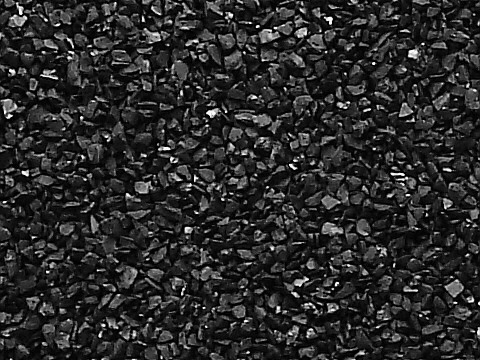
Activated carbons are versatile adsorbents. Their adsorptive properties are due to their high surface area, a microporous structure, and a high degree of surface reactivity. They are, used, therefore, to purify, decolorize, deodorize, dechlorinate, separate, and concentrate in order to permit recovery and to filter, remove, or modify the harmful constituents from gases and liquid solutions. Consequently, activated carbon adsorption is of interest to many economic sectors and concern areas as diverse as food, pharmaceutical, chemical, petroleum, nuclear, automobile, and vacuum industries as well as for the treatment of drinking water, industrial and urban waste water, and industrial flue gases.


Activated carbon in its broadest sense includes a wide range of processed amorphouscarbon-based materials. It is not truly an amorphous material but has a microcrystalline structure. Activated carbons have a highly developed porosity and an extended interparticulate surface area. Their preparation involves two main steps: the carbonization of the carbonaceous raw material at temperatures below 800°C in an inert atmosphere and the activation of the carbonized product. Thus, all carbonaceous materials can be converted into activated carbon, although the properties of the final product will be different, depending on the nature of the raw material used, the nature of the activating agent, and the conditions of the carbonization and activation processes.


During the carbonization process, most of the noncarbon elements such as oxygen, hydrogen, and nitrogen are eliminated as volatile gaseous species by the pyrolytic decomposition of the starting material. The residual elementary carbon atoms group themselves into stacks of flat, aromatic sheets cross-linked in a random manner. These aromatic sheets are irregularly arranged, which leaves free interstices. These interstices give rise to pores, which make activated carbons excellent adsorbents.

During carbonization these pores are filled with the tarry matter or the products of decomposition or at least blocked partially by disorganized carbon. This pore structure in carbonized char is further developed and enhanced during the activation process, which converts the carbonized raw material into a form that contains the greatest possible number of randomly distributed pores of various sizes and shapes, giving rise to an extended and extremely high surface area of the product. The activation of the char is usually carried out in an atmosphere of air, CO2, or steam in the temperature range of 800°C to 900°C. This results in the oxidation of some of the regions within the char in preference to others, so that as combustion proceeds,
a preferential etching takes place. This results in the development of a large internal surface, which in some cases may be as high as 2500 m2/g.

Activated carbons have a microcrystalline structure. But this microcrystalline structure differs from that of graphite with respect to interlayer spacing, which is 0.335 nm in the case of graphite and ranges between 0.34 and 0.35 nm in activated carbons. The elemental composition of a typical activated carbon has been found to be 88% C, 0.5% H, 0.5% N, 1.0% S, and 6 to 7% O, with the balance representing inorganic ash constituents. The oxygen content of an activated carbon can vary, however, depending on the type of the source raw material and the conditions of the activation process.

The most important application of activated carbon adsorption where large amounts of activated carbons are being consumed and where the consumption is ever increasing is the purification of air and water. There are two types of adsorption systems for the purification of air. One is the purification of air for immediate use in inhabited spaces, where free and clean air is a requirement. The other system prevents air pollution of the atmosphere from industrial exhaust streams. The former operates at pollutant concentrations below 10 ppm, generally about 2 to 3 ppm. As the concentration of the pollutant is low, the adsorption filters can work for a long
time and the spent carbon can be discarded, because regeneration may be expensive. Air pollution control requires a different adsorption setup to deal with larger concentrations of the pollutants. The saturated carbon needs to be regenerated by steam, air, or nontoxic gaseous treatments. These two applications require activated carbons with different porous structures. The carbons required for the purification of air in inhabited spaces should be highly microporous to affect greater adsorption at lower concentrations. In the case of activated carbons for air pollution control, the pores should have higher adsorption capacity in the concentration range 10 to 500 ppm.

For personal protection when working in a hostile environment, the activated carbons used in respirators are also different. When working in the chemical industry, the respirators can use ordinary activated carbons because the pollutants are generally of low toxicity. However, for protection against warfare gases such as chloropicrin, cynogen chloride, hydrocynic acid, and nerve gases, special types of impregnated activated carbons are used in respirators and body garments. These activated carbons can protect by physical adsorption, chemisorption, and catalytic decomposition of the hazardous gases.


More than 800 specific organic and inorganic chemical compounds have been identified in drinking water. These compounds are derived from industrial and municipal discharge, urban and rural runoff, natural decomposition of vegetable and animal matter, and from water and waste water chlorination practices. Liquid effluents from industry also discharge varying amounts of a variety of chemicals into surface and ground water. Many of these chemicals are carcinogenic and cause many other ailments of varying intensity and character. Several methods such as coagulation, oxidation, aeration, ion exchange, and activated carbon adsorption have been used for the removal of these chemical compounds.


Active carbons in the form of carbonized wood charcoal have been used for many centuries. The Egyptians used this charcoal about 1500 BC as an adsorbent for medicinal purposes and also as a purifying agent. The ancient Hindus in India purified their drinking water by filtration through charcoal. The first industrial production of active carbon started about 1900 for use in sugar refining industries. This active carbon was prepared by the carbonization of a mixture of materials of vegetable origin in the presence of metal chlorides or by activation of the charred material by CO2 or steam. Better quality gas-adsorbent carbons received attention during World War I, when they were used in gas masks for protection against hazardous gases and vapors.

Nearly 80% (~300,000 tons/yr) of the total active carbon is consumed for liquid-phase applications, and the gas-phase applications consume about 20% of the total production. Because the active carbon application for the treatment of waste water is picking up, the production of active carbons is always increasing. The consumption of activecarbon is the highest in the U.S. and Japan, which together consume two to four times more active carbons than European and other Asian countries. The per capita consumption of active carbons per year is 0.5 kg in Japan, 0.4 kg in the U.S., 0.2 kg in Europe, and 0.03 kg in the rest of the world. This is due to the fact that Asian countries by and large have not started using active carbons for water and air pollution control purposes in large quantities.


Coconut shell and palm shell are the best raw materials for manufacturing of activated carbon because of its hardness. Indonesia is the largest coconut plantation with about 4 million hectares and the largest CPO producer in the world with palm oil plantations more than 7 million ha, which is the ideal location of the source of raw material for production of activated carbon. Indonesian coconut plantation area occupies 31.4% of the world with vast coconut plantations of coconut production of approximately 12.915 billion items (24.4% of world production). Coconut shell weight reached 12% of the weight of coconuts. With weight of coconut average 1.5 kg, the potential of Indonesia, namely coconut shell 2.3 million tons / year. The number of palm oil mills in Indonesia and Malaysia more than 800 units. When an palm oil mill with a capacity of 30 tons of fresh fruit bunches per hour, it will produce 1.95 tonnes of palm shells / hour or about 46.8 tons / day. Certainly the number of very abundant for the production of activated carbon.
Our continuous pyrolysis technology with capacity 60 up to 200 ton/day INPUT would very reliable in the process of carbonization. Integration our continuous pyrolysis technology in activated carbon plant would be very beneficial because the most efficient processes (self sustaining process with syngas) and all products can be drawn.