Rabu, 04 September 2024

The Urgency of IOT and Biochar Applications in Palm Oil Plantations

The sustainability trend in palm oil plantations is increasingly important and urgent, which is of course part of the global solution to environmental and climate problems. The vastness of palm oil plantations and the large production of palm oil are in the spotlight in the industry. Waste management and environmental pollution are important concerns. The large volume of biomass waste has the potential to be a source of environmental pollution and so is the excessive use of chemical fertilizers in palm oil plantations which will also cause environmental pollution. Inappropriate land use, for example deforestation and land conversion, are also other concerns.

Two important issues in the palm oil industry are increasing FFB productivity (yield improvement) and climate change resilience. And thank God, both of these things can be handled at once, namely by applying biochar. Palm oil mill biomass waste (especially palm oil empty fruit bunch) will be converted into biochar and then applied to plantation soil (sustainable soil amendment) with fertilizer so that it becomes a slow release fertilizer that will increase NUE (nutrient use efficiency) and minimize environmental pollution. With the increase in NUE, there will be yield improvement or an increase in FFB productivity. And the application of biochar which will remain in the soil or not decompose for thousands of years will become carbon sequestration / carbon sink which is in line with climate change resilience. A precise solution with one action, of course this should be very interesting and awaited by these palm oil companies.

To ensure that the biochar can work properly, an instrument is needed to measure performance and monitor it. That is why IoT (Internet of things) in this sector is needed. How slow can it goes fertilizer nutrients can be measured and monitored accurately, quickly and precisely. In this way, palm oil productivity can also be predicted. The area of ​​land on palm oil plantations that reaches thousands or tens of thousands of hectares is also not an obstacle. The area of ​​palm oil plantations in Indonesia is currently estimated to reach 17 million hectares and in Malaysia it reaches 5 million hectares, of course these palm oil companies are also trying to achieve their best level of sustainability according to the demands of the times. This is so that the application of biochar on palm oil plantations will become a trend and even its operational standards. The entry point by ensuring biochar performance with IoT is an important consideration.

This biochar application also follows the 4Rs rule, namely the right source (appropriate biochar raw material), right place (appropriate application area), right rate (appropriate dosage) and right timing. The physical and chemical properties of biochar differ depending on the raw material and production process. By following the 4R rule, biochar performance can be maximized. On the other hand, modernization in the palm oil industry also continues to be improved. The public perception of work in oil palm plantations, abbreviated as 3D (dangerous, difficult, dirty), will be gradually changed with mechanization, automation and digitalization. The ratio of workers to plantation land currently around 1: 8 ha will be increased to more than double to 1: 17.5 ha with the above modernization so that workers' wages can also be increased. This modernization is expected to help overcome the two important issues above with the biochar application.

Selasa, 06 Agustus 2024

Why is There No Biochar Production for The Palm Oil Industry Yet?

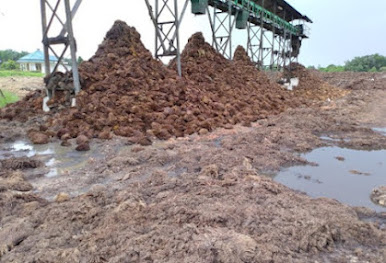
Even though biomass waste is abundant in the palm oil industry, both in the plantation area and in the palm oil mill area, most of the biomass waste, especially empty fruit bunches or EFB, is still not utilized or is simply piled up or thrown away. In fact, if the palm oil industry has a strong vision about maximizing profits by minimizing the occurrence of waste, especially biomass, and maximizing environmental sustainability as well as being part of the climate solution, then biomass waste, especially empty fruit bunches or EFB, is a big opportunity.  Currently, special department in the palm oil industry that specifically deal with sustainability issues are starting to be created by palm oil companies. Waste management issues including the utilization of EFB, reducing soil and water pollution due to fertilizers and increasing fertilizer efficiency are the concerns of the sustainability department. 

The empty fruit bunches or EFB can be used as fuel so that most or all of the palm kernel shells or PKS can be sold directly and even exported. Palm oil mill boiler fuel currently uses fuel in the form of palm fiber (mesocarp fiber) and some palm kernel shells / PKS, which can be replaced using empty fruit bunches (EFB) and palm fiber (mesocarp fiber) and without palm kernel shells / PKS. Palm kernel shells / PKS are a very popular biomass fuel in the global market that competes fiercely with wood pellets. By being able to sell all palm kernel shells / PKS and at the same time utilize empty fruit bunch / EFB waste, the palm oil industry will provide many economic benefits.


The use of empty fruit bunches / EFB and mesocarp fiber as a heat source for the boiler is not burned as usual or as is done by all palm oil mills today but must be gasified or pyrolyzed so that another product is produced in the form of biochar. Although gasification can be used to produce biochar, pyrolysis is more recommended because the quality and quantity of biochar will be better. The biochar can later be used for the palm oil plantation itself. The use of biochar in palm oil plantations will significantly save on fertilizer use as well as reducing water and soil pollution due to inefficient use of fertilizer. The biggest cost in operating a palm oil plantation is fertilizer, so by using biochar these operational costs can automatically be reduced. Biochar will become a slow release agent so that fertilizer use will be more efficient or increase NUE (Nutrients Use Efficiency).

Empty fruit bunches / EFB and mesocarp fiber are solid waste from palm oil mills so the waste is located around the palm oil mill, while biochar is used for palm oil plantations. In palm oil companies, management is generally separated between the plantation and mill departments. The use of biochar in palm oil plantations while the raw material comes from palm oil mills requires special arrangements regarding this matter. This could be, for example, trucks transporting fresh fruit bunch / FFB from the plantation to the palm oil mill, then after the FFB is unloaded at the mill, they then go to the plantation again carrying biochar from the palm oil mill.

Currently, no one is utilizing empty fruit bunches / EFB and palm mesocarp fiber as a source of boiler heat and biochar production. The main factor causing this is the main orientation or vision of the palm oil company itself as described above. This is predicted to change soon as awareness of climate issues increases and reaches all levels, especially in sectors related to energy and sustainibility. Moreover, when biochar is applied to plantation land, it also gets carbon credit as carbon sequestration. The smoke coming out of the boiler furnace will also be cleaner as seen from its opacity. The use of gas and liquid fuels from pyrolysis by-products will produce better combustion quality as well as smoke from the chimney. And even the liquid products from pyrolysis can also be used as biopesticides and organic fertilizers. Boiler efficiency will also increase because it uses boiler feed water (BFW) in the form of hot water from the condenser output of the pyrolysis unit.

Apart from old palm oil mills which really want to upgrade their industrial energy systems and fertilizer efficiency in their plantations including sustaibility according to this vision, new palm oil mills whose status is in the development stage should be able to apply this concept more easily. New palm oil mills can immediately follow developments and demands of the times so that they become trend setters with this vision. Being a pioneer and trend setter is indeed more difficult and even risky than just being a follower, but this will raise the reputation and become a leader in the industry so it should also have a positive impact on the company's business performance. A worthy effort.     

Kamis, 04 Juli 2024

SBE Pyrolysis: A Profitable Waste Management Solution

Spent Bleaching Earth (SBE) which is solid waste produced from the bleaching process in the CPO processing industry into cooking oil and oleochemicals is increasing along with the production of palm oil derivative products or downstream palm oil industries such as cooking oil and oleochemicals. The amount of bleaching earth used generally ranges from 0.5-2.0% of the total CPO refined, depending on the quality of the CPO to be processed in the refining process. SBE is included in category 2 hazardous toxic material (B3) waste from specific sources with waste code B413. SBE is categorized as hazardous toxic material (B3) waste because it contains high oil and has characteristics that are flammable and corrosive. SBE can be categorized as non-B3 waste if its oil content is below 3%.

The classification of SBE status as hazardous toxic material (B3) waste in Indonesia is different from the status of SBE in Malaysia, which is also the second largest palm oil producer in the world. SBE waste produced by the Malaysian refinery industry is not classified as B3 waste but is still categorized as solid waste from refinery factories whose processing is regulated in the Solid Waste Regulation (SWR) so that the waste can be reused into products with high economic value.

According to the Indonesian Vegetable Oil Industry Association (GIMNI, 2021), with a refinery capacity of palm oil/CPO between 600 tons to 2,500 tons per day, and assuming the use of bleaching earth (BE) of 1%-2%, the average will produce 6-50 tons of SBE per day. And according to the Directorate General of Waste Management, Toxic and Hazardous Materials (PSLB3) of the Ministry of Environment and Forestry, the SBE produced from the vegetable oil refining process in Indonesia in 2019 reached 779 thousand tons. Of that amount, 51.47% (401 thousand tons) of SBE was processed, while the remaining 48.39% (378 thousand tons) was stored or stockpiled. A very large amount and has the potential to pollute the environment.

SBE has an oil content of around 20-40%, so it has the potential to be utilized. In addition, SBE also contains color, gum, metals namely Silica, Aluminum oxide, Ferrioxide, Magnesia, other metals and water. Basically, SBE processing is done by separating oil from its solids. The separated oil can then be used as raw material for biodiesel and even aircraft fuel (bio-jet fuel) such as POME / PAO and UCO. With the amount of unprocessed SBE reaching around 378 thousand tons per year, the potential oil that can be extracted reaches around 115 thousand tons per year.

With pyrolysis, the process of separating solid and liquid fractions from SBE is easy to do, as well as oil recovery can be maximized, as well as SBE becomes non-hazardous toxic material (non-B3) waste because its oil content is below 3%. More specifically, with continuous pyrolysis, the volume of SBE waste reaching 50 tons per day in the CPO refinery unit can be easily done. The large potential economic value that can be obtained from the utilization of SBE is a shame if it is not optimized. The market opportunity for processed products from SBE waste is also expected to be bright in the future, along with the development of market preferences that demand the availability of eco-friendly and sustainable products. 


Rabu, 08 Desember 2021

The Urgency of Ex-Coal Mine Reclamation With Biochar

The large number of ex-coal mines that are not reclaimed causes various environmental problems and even life safety. There have been many casualties from the former coal mine pit. The simple logic should be that after the coal deposit is taken or extracted during the mining activity, the land is returned and repaired so that the quality is better than before the mining activity or at least the same, but not worse so that various environmental problems arise. The era of decarbonization is accelerating because of the driving force of climate change and global warming. Fossil fuels, especially coal, are starting to be abandoned, of course, including the coal mining activity itself. Meanwhile, the area of former coal mines which reaches millions of hectares is a lot of environmental problems today.

When the quality of the soil is improved so that it has high fertility then this becomes a very extraordinary potential so that a number of important activities can be carried out, such as agriculture, animal husbandry and forestry. With such conditions, the effort to self-sufficiency or food sovereignty is not impossible. Technically, it can be analyzed which of the agricultural, livestock and forestry sectors can reach the goal faster, namely food independence or sovereignty. But before going far and doing business on the ex-mining land, to be more specific what products will be made, the basic question is how to improve the condition of the damaged soil and the scale is also massive?

The application of biochar to the soil is a surefire solution in an effort to repair damaged soils. Depending on how severe the damage is, the characteristics of the soil type and the final quality level being targeted will determine the application or dosage of the biochar. In addition to improving the soil, the biochar application also absorbs CO2 from the atmosphere, thereby reducing the concentration of CO2 from the atmosphere or is a carbon negative scenario. Biochar buried in the soil becomes a carbon sink, similar to creating a conservation forest to absorb CO2 from the atmosphere. How much biochar is buried so that it can be calculated that the CO2 absorbed into the carbon sink can be sold on the carbon market and get carbon credit. Biochar itself is able to last in the soil for hundreds of years and is not decomposed for a long time. Even when the land has been repaired with biochar and then a conservation forest is made on it, the carbon credit obtained are double, namely from the application of biochar itself and from the conservation forest. But once again, of course, economic factors are another important consideration, so as above, after soil fertility is improved with biochar, there are a number of options for using the land. Of course which one provides the best economic benefits will be the choice.

Millions of hectares of land can be recovered so that its benefits will be maximized. Say, for example, that one million hectares of land can be recovered and then used for activities that support food security or self-sufficiency such as agriculture and animal husbandry, then how much output can be calculated. Even better if there can be a surplus of food production so that it can export. Or even in the longer term, the land is reforested into conservation forest, so how much CO2 can be absorbed by the forest plus the application of biochar. Of course very much. Then why have to build a food estate but have to clear forest land, while there are other better ways? Namely not only restoring but improving the condition of the land even better before the coal mining activity was carried out.  

Selasa, 07 Desember 2021

Biochar and Land Reclamation of Ex-Coal Mines

Reclamation of ex-coal mining land is the obligation of the mining company, but often this is not done properly for various reasons. These are mainly due to weak rule enforcement and light sanctions. With the area of ex-coal mines that has reached millions of hectares and the reclamation efforts are needed, but the realization in the field is still very minimal, making environmental damage even greater. The thing that can encourage efforts to improve the ex-coal mining land is the profit or economic factor that can be obtained. This means that if the reclamation effort also bring economic benefits - in addition to environmental benefits, of course - then the coal companies will also be happy to do so. So what activity is it?

The photo is taken from here
After the coal deposit is taken, the top soil should be returned to the land. The basic thing that needs to be done is to improve the quality of the soil so that it can be used for planting various crops. By improving soil quality, besides soil fertility can be restored and even increased, it also includes isolating (immobilizing) a number of harmful elements from the ex-coal mining land. Creating a profitable and sustainable business activity is the next step. The improved soil can then be planted and legumes are the best choice, this is because legumes are other than pioneer plant types with high survivability, strong and deep roots that prevent erosion, root nodules from azetobacter symbiosis by binding nitrogen from the atmosphere which fertilizes the soil also provides many other benefits. Ruminant husbandry is a profitable and sustainable business activity, because it mainly utilizes the leaves of the legume plant as a source of feed. The livestock manure can also be used to further improve the health and quality of the soil so that soil fertility continues to increase and is maintained. The wood from the legume plantation can also be used for productions namely briquettes, charcoal briquettes and even wood pellets.

As a basic thing and the entry point for the above business is improving the quality of the land or soil of the ex-coal mines. There are a number of ways to do this, but the use of biochar is one of the best options. With biochar not only increases the pH or acidity of the soil so that many nutrients will be absorbed by plants better and soil microbial activity to decompose organic matter is more active, but it is also able to absorb a number of harmful chemical elements in the soil, increasing soil organic carbon that can last hundreds of years and also absorbs the greenhouse gase from atmosphere. The biochar can be made from a number of agricultural, forestry and agro-industrial wastes, such as wood chips from logging or from palm oil mill waste such as empty fruit bunches and fiber. A number of areas in Kalimantan are not only rich in coal deposits and also currently many of these ex-coal mining lands are abandoned, as well as a lot of biomass materials such as forest waste and palm oil mill waste for the production of biochar.

In order to reduce CO2 emissions in the atmosphere, biochar is also able to absorb CO2 from the atmosphere (carbon sequestration) and is a carbon negative scenario. The biochar applied to the soil is a carbon sink, as an option for carbon credit other than carbon offset. In the current era of decarbonization, efforts to reduce CO2 level in the atmosphere are important. In Indonesia, where there is still a lot of forest land, carbon credit can be obtained from the absorption of CO2 by the trees in the forest, so that the forest acts as a carbon sink as well. But in other countries where the use of fossil energy is very large or massive, they must reduce the adverse climate impacts caused by burning fossil energy materials, especially coal. They can buy carbon credits on this biochar application.

 
Coal is the most widely used fossil energy for power generation in the world today and Indonesia is one of the producers of such coal. Although in the near future the use of coal will be reduced and in some countries it will be stopped altogether, but the negative impacts of coal mining are still many, damaging and even endangering the environment. This is an urgency to improve the land or ex-coal mining land which is estimated to reach 8 million hectares in Indonesia. On the one hand, coal power plants can buy carbon credits for biochar applications like the scheme above. Palm oil mills on the other hand also produce a lot of solid waste, especially empty fruit bunches (EFB) that can be used for the production of biochar. These big companies could collaborate to solve climate problems due to the increasing concentration of CO2 in the atmosphere. To this day, it is reported from the Mauna loa observatory, in Hawaii, United States that the concentration of CO2 in the atmosphere has exceeded 400 ppm or there is still an increase of about 2 ppm every year, even though the global target is to decrease the concentration to only 350 ppm.    

Biochar and IoT in Palm Oil Plantations

Monitoring until action needs to be done to get optimal results according to the expected target. Ensuring that the supply of nutrients and water is always sufficient for the needs of plants is an important thing to do. Other variables that affect the process of nutrient absorption and plant growth need to be properly monitored. Biochar is a soil amendment to improve soil properties such as soil structure, soil aeration, water and nutrient availability, suppress the development of certain plant diseases, create good habitats for symbiotic microorganisms and reduce soil acidity. Biochar also  adsorbs greenhouse gases in the form of carbon dioxide from the atmosphere, thereby reducing these gases in the atmosphere. It is important that sensors are used to read the variables above. How many sensors are installed and what type is also very dependent on the objectives being achieved. The use of various sensors in large numbers is also a cost in itself, while a production is always looking for the most efficient way to maximize profit. The use of sensors that are effective and efficient is the key to successfully monitoring the conditions of biochar applications in the field with a specified period of time, even real time all the time.

IoT (Internet of Things) is predicted to become a trend in the near future and it cannot be avoided. A number of plantation areas that are located far away in remote villages, such as in palm oil plantations, are generally still constrained by the internet network, this condition makes IoT unable to be applied or still not optimal. Palm oil plantations are one of the ideal locations for biochar applications for large capacities as well as IoT, for more details read here. While waiting for an internet network in the area provided by a telecommunications company, satellite signals can be used even with small data usage so that the information displayed is also less and simpler. This makes only really important information that needs to be monitored, especially on plantation locations that are difficult to reach. At such a stage manual monitoring is still much needed, so the online information from the satellite only helps for verification. Devices such as drones can also be used to monitor growth or general the plantation conditions.

Basically, IoT and its supporting devices such as artificial intelligence and big data are tools to help make decisions, especially for the plantation manager such as palm oil plantations. Knowing the condition of the plantation so that it can maintain the level of plantation productivity performance is an important part of maintaining the company's performance itself. Even though IoT devices help in such a way, the important thing that is still needed is basic knowledge to the characteristics of plantation management itself. These sciences will be very useful for analyzing the data presented by IoT devices more sharply and accurately or on target. Selection of sensors, the number of sensors to the location of the sensor installation must be carried out effectively and this can only be done with an adequate scientific basis. A number of chemical analyzes in general also cannot be done sensory but using reagents and so on. In addition, IoT is also a new thing so that a number of certain activities or practices in certain agriculture or plantations and more specifically in the biochar application have not been identified for IoT developers. This is so that collaboration between researchers, practitioners and IoT developers is needed so that IoT device products will also be more effective and efficient. 

Sabtu, 04 Desember 2021

Integration of Pyrolysis with Cocopeat and Cocofiber Industries

The high demand for cocofiber and cocopeat in the world which reaches thousands of containers per year should be a golden opportunity and a driving force for the Indonesian coconut industry. There are a number of potential advantages of Indonesia which should be at the forefront of capturing and exploiting these opportunities. These advantages include, from 196 countries in the world, only 8 countries control 90% of the world's coconut demand, Indonesia as the owner of the largest coconut plantation in the world, which is around 3.8 million hectares with a production of more than 15 billion coconuts fruit every year, and strategic geographical position. This is also the reason why the ICC (International Coconut Community) or an international organization concerned that the members of which are coconut producing countries is headquartered in Jakarta, Indonesia. The island of Sumatra is the center of the largest coconut plantation in Indonesia, especially Indragiri Hilir regency in Riau province, followed by the islands of Sulawesi, Java, Maluku and Papua, Nusa Tenggara and Bali, and Kalimantan. The current condition, although with a number of advantages above and the quality of Indonesian coconut coir is high and the price of this coir is cheap, it turns out that Indonesia still supplies less than 5% of the world's cocofiber and cocopeat needs.

To seize these opportunities, of course, one cannot only rely on the potentials, but also on effective and efficient production technology. One of the main obstacles in increasing cocofiber and cocopeat production capacity is the drying aspect. The production of cocofiber and cocopeat can be boosted in such a way if the efficient drying aspect can be carried out. And for drying, heat energy is absolutely necessary. This heat energy can be obtained cheaply from the excess energy of the pyrolysis process. In addition to producing the main product in the form of biochar, excess energy from the pyrolysis process can be relied on as an energy source or heat source for the coconut coir processing industry. A certain type of dryer according to the characteristics of the material being dried must also be used. With modern dryers such as belt dryers, tray dryers and drum dryers, in addition to the high drying capacity, the product quality will also be standard and stable.

Meanwhile, for the pyrolysis process, raw materials are needed in the form of biomass wastes that are widely available in that location, even the biomass waste can vary according to its availability which sometimes depends on the season. In certain cases, it is also possible for pyrolysis to be integrated with an integrated coconut industry, so that coconut shell becomes the raw material. Meanwhile, if the location of the coconut plantation is not far from the palm oil plantation, biomass wastes from the plantation or palm oil mill can be used for the pyrolysis. Even like the palm oil trunk, if it is not used and only left to rot in the plantation, it invites insects that disturb the coconut plantation. For more details, you can read it here. The integration of the pyrolysis industry and coconut coir processing in addition to reducing environmental pollution due to biomass waste is also a solution for the coconut coir industry. The relationship between the two industries must be mutually beneficial, namely the pyrolysis industry can sell its excess energy at a competitive price and the coconut coir industry can increase its production.