Tampilkan postingan dengan label Industrial Charcoal Production. Tampilkan semua postingan

Selasa, 03 Juli 2012

Biomass Ash Behaviour in Pyrolysis Process


In most pyrolysis systems, the operating temperatures are fairly modest. It is commonly found at laboratory and rig scale that the inherent mineral material in biomass tends to be retained within char, and is not released into gas or vapour phase in sufficient quantities to cause ash deposition or other operational problems within the reactor or in the gas collection equipment.

Very little work has been carried out on the distribution and stability of heavy metals in biochar. High mineral-ash biochars (especially chicken manure biochar and activated carbon) are known to adsorb heavy metals.

Very little has been published on the distribution of mineral ash within different type of biochar. Of the inorganic elements that comprise mineral ash, most are believed to occur as discrete phases separate from the carbonaceous matrix. In some biochars, however, K and Ca are distributed throughout the matrix where they may form phenoxides (K, Ca) or simply be intercalated between grapheme sheets (K).

Minerals found in biochars include sylvite (KCl), quartz (SiO2), amorphous silica, calcite (CaCO3), hydroxyapatite (Ca10(PO4)6(OH)2), and other minor phases such as Ca phosphates, anhydrite (CaSO4), various nitrates, and oxides and hydroxides of Ca, Mg, alumunium (Al), titanium (Ti), Mn, zinc (Zn) or Fe. Amorphous silica is of particular interest as it typically is in the form of phytoliths that contain and protect plant C from degradation. Crystalline silica is also of interest because it has been found in some biochars where it poses a very high level respiratory risk. Microprobe analysis of these biochars indicates that there is a large variation of mineral content even within each particle.

Kamis, 29 Desember 2011

The Future of Bamboo Plantation Is Renewable Energy and Water Purification


Fossil fuel reserves are dwindling while energy demand continues to rise, the phenomenon of climate change, environmental degradation due to pollution and the depletion of forest area on the surface of the earth makes people think to look for solutions. It is estimated that the earth needs a new forest covering 70 million ha within the next 2 years, which means that each country needs to make 320 thousand ha. Bamboo plant has very promising prospects in the future, amid concern the world over, to climate change, forest protection and a number of important issues like the above.

Bamboo is a plant source of timber that can grow rapidly in the earth. And a plant replacement timber from tropical forests which are now greatly reduced due to the enormous demand from industry, therefore attention to the production of bamboo began to increase in all continents either Asia, Africa, Europe and America. In this 21st century bamboo industry will continue to be an increasingly valuable commodity. Even the African continent has seen bamboo as a potential source of renewable energy. Europe has also seen the potential of bamboo as a source of bioenergy. While in India, one of the countries in Asia are building power plants using fuel made ​​from bamboo.

Bamboo is a plant that is able to regenerate itself naturally. While bamboo stalks are harvested, then the new shoots will appear and replace them within a few months. If compared with a tree that can only be harvested with the rotation a few years, bamboo can be harvested on a regular basis per year. Rapid growth of bamboo which means ensuring the continuity to meet the ongoing needs.

Depending on the type, bamboo plantations can be earning more than 50 years. First harvest bamboo plants in plantations usually begins after age 5-7 years. The process of harvesting can be done with equipment that is fairly simple and inexpensive. Such as hand saws, and other simple tools that are often in need.
In plantations, bamboo will produce biomass that can support to maintain a green environment. 1,000 hectares of bamboo plantation can produce approximately 30 thousand tons of timber resources. The cost to create a new plantation depends on the cost of labor, land preparation, fertilizer, irrigation, and plants. It costs almost the same as making timber plantation. But there is a huge difference at the payback period, the timber takes longer than bamboo plantation. Investment in bamboo plantations will be back in less than 10 years. And for that reason tersebutlah the bamboo plantations generate profits faster than wood. Bamboo plantations will be very profitable after 5 years.


Potential of bamboo as raw material for renewable energy such as charcoal and torrified wood. By using continuous pyrolysis technology that products can be produced. Bamboo charcoal can then be further processed into activated charcoal (activated carbon) for water purification. Due to the increasingly severe environmental degradation due to soil pollution by industry and households, the need for activated charcoal for water purification will be even greater.

Selasa, 27 Desember 2011

We Will Produce Charcoal As You Wish


Charcoal has widespread uses include metallurgy, tobbaco curing, water purification (activated carbon), poultry and animal feeds, soil Amendment, and other miscellaneous uses. Charcoal is made by a certain process conditions to achieve the specifications according to their usefulness.

The amounts of moisture (2 to 4 percent), volatiles (18 to 23 percent), ash (1 to 4 percent), and fixed carbon (74 to 81 percent) in charcoal provide an average index of quality for general market acceptance either in lump or briquette form. Charcoal with relatively low volatile content and correspondingly higher amounts of fixed carbon is desirable for specialized industrial uses. Temperatures somewhat higher than the normal kiln operating temperatures of 850° to 950° F (454°  to 510° C) are required to produce it. The volatiles, when present in proportions greater than about 24 percent, will cause smoking when charcoal is burned and will give product degrade in some areas of recreational use.
 
In a continuous process raw organic material of any kind is passed through the retorts and cooked into marketable products. While some of the biogas is used to fuel its own process, on site gas turbines or steam boilers can be fueled by the same gas. Variable speed drives give the operator total control on product quality by altering the residence time of the feed stock. The operator can also vary the percentage split between the bio-oil and charcoal by changing the temperature.
 
Chemical properties can be precisely determined only with analytical equipment. A rough quality test for volatiles can be made, however, by burning samples of charcoal and observing the absence or extent of smoking. A metallic ring when a piece of charcoal is dropped onto a hard surface provides a further rough test for good quality. Too rapid coaling at high temperature usually results in the formation of crumbly charcoal easily broken into small pieces and fines. The species of wood does not influence the chemical quality of charcoal; the physical properties, however, are influenced by wood density and structure. For example, the low-density woods produce charcoal in greater bulk, while some woods will produce brittle charcoal. In general, the lump charcoal obtained from the medium-dense to dense hardwoods is considered a cleaner product because of less breakage and dusting with handling.

The concept of Zero Waste MSW Processing Using Continous Pyrolysis Technology and Biogas System


How did your perspective when looking at the mounting garbage, whether it be problems or challenges that invite the opportunity?

It's no secret that the waste problem has become a common problem in many places, especially in big cities. The challenge is how to make waste processing unit that zero waste and be profitable? Integration of continuous pyrolysis technology and biogas system is the answer on this. With pyrolysis, organic waste, plastics, and tires will produce specific products with high economic value. When the processing of organic waste are the main products produced charcoal, biooil, and syngas. All of them can be used for energy applications. While the plastic is processed then the primary product is syn crude oil whose quality as petroleum. Processing of scrap tires with pyrolysis will produce syn crude oil like in plastic pyrolysis processing, carbon black, syngas and steel wire.

With the sale of the products of pyrolysis, so the activity of MSW processing is not only dependent on the tipping fee, but the majority of the profits derived from the sale of the pyrolysis products. In addition there are two thermal process beside pyrolysis which is used on MSW processing, there are gasification and incineration, but pyrolysis has many advantages over both methods, more details please click here.

In the processing of organic waste with this continuous pyrolysis technology, before the organic waste enter  into the pyrolysis unit, the moisture content of the organic waste need to be reduced to about 10% by using a mechanical device. In this process will produce leachate that rich with organic matter so that the potential for biogas system in anaerobic digestion reactor, so that gas can be produced for power generation. While the byproducts of residual water will be cleaner because the organic components decompose during the formation of biogas, thus safely discharged to the environment and the solid residue will be used as high-quality compost.

Rabu, 03 Agustus 2011

GENERAL OVERVIEW OF CHARCOAL PROPERTIES


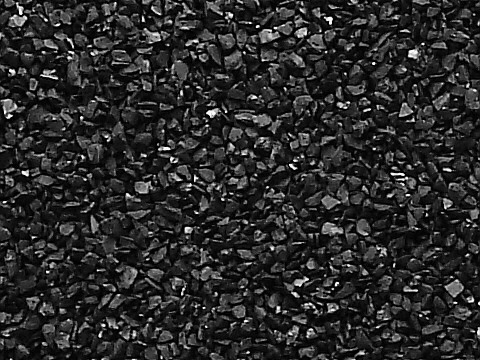
The quality of charcoal depends on both wood species used as a raw material and of the proper application of the carbonisation technology. Charcoal produced from hardwood like beech or oak is heavy and strong. Charcoal made from softwood, on the other hand, is soft and light. The density of beech charcoal is 0.45 t/m3a, that of pine charcoal 0.28 t/m3. The bulk density of charcoal does not only depend on the apparent density but also on the size distribution, and is in the range of 180-220 kg/m3. The gross calorific value (GCV) is usually in the range of 29-33 GJ/t.

Good quality charcoal was characterized by Chaturvedi as follows: “[It] retains the grain of the wood; it is jet black in colour with a shining luster in a fresh cross-section. It is sonorous with a metallic ring, and does not crush, nor does it soil the fingers. It floats in water, is a bad conductor of heat and electricity, and burns without flame.”

Charcoal intended for barbecue typically contains 20-30%mass of volatiles, whereas metallurgical charcoal often contains 10-15%m (or even less) volatile matter. Hence, taking ash contents into account, the fixed carbon content is 78-90 %mass.

This carbon is a finely crystalline and practically free of sulfur. Charcoal also contains volatiles that may escape at elevated temperatures (obviously above the charcoal manufacturing process of approximately 400 C), consisting of hydrogen, oxygen, and nitrogen. Ash content is approximately 1.5-5%mass. Charcoal also contains water, the amount being dependent on ambient temperature and humidity. Moisture content varies between 5 %m-8 %mass.

Standards for barbecue charcoal and charcoal briquettes, according to EN 1860.

Charcoal: Carbon (fix), dry basis > 75% Ash, dry basis < 8% Moisture, wet basis < 8% Granulation [d > 80 mm] < 10% [d > 20 mm] > 80% [0 mm < d < 10 mm] < 7% Bulk density > 130 kg/m3

Charcoal briquettes: Carbon (fix), dry basis > 60% Ash, dry basis < 18% Moisture, wet basis < 8% Granulation Suitable for BBQ equipment of EN 1860-1 [d < 20 mm] < 10% Binder Combustion gases cause no health hazards in contact with food. Binder is of food grade quality.

Source : INDUSTRIAL CHARCOAL PRODUCTION, A Development of a sustainable charcoal industry,Presented by FAO