Jumat, 07 September 2012

7 Reasons Why Future of World Economy Depends on Renewable Energy

There are various reasons as to why the global economic future depends on alternative renewable energy sources. Here are seven of these reasons.

  1. Reducing the effects of global warming. Alternative renewable energy sources will provide a solution to the ecological crisis that is caused in part by global warming. If the switch to alternative renewable energy sources is not made soon, this may have a very serious impact on the world economy and the world’s communities.
  2. Fossil fuels are running out. Oil and natural gas are not infinite and will run out eventually. Even before they run out, they will become increasingly expensive because of scarcity. The resulting energy crisis will have a devastating impact on the global economy.
  3. Reducing pollution. Alternative renewable energy sources are a wonderful way for reducing the global levels of pollution. For example, waste to energy is a great method of turning discarded trash into desperately needed energy to power and heat our homes.

  4. Supporting developing countries. The need for energy goes up every year, especially as more developing countries advance. When they have access to domestically produced energy, it will make their development process easier, as local economies benefit from the abundance of businesses and jobs. The countries of the future will be the countires that are embracing green energy sources right now. Look at China – they got into the act this last few years as they understand that there future depends on it. More and more countries are taking action. Anything to do with the green economy is going to be huge in the next few decades.

  1. Moving away from foreign oil dependency. It is possible to produce alternative renewable energy sources domestically in every country. This means that no nation will depend on another to provide it with the means to produce energy, as well as a cleaner domestic environment overall.
  2.  Investing in alternative energy. It is a smart choice to invest in alternative energy. This means that it is not only a great opportunity to help our planet, but also one to receive a good financial return in the end. 
  3. Creating green jobs. Many new jobs would be created once the switch to alternative renewable energy sources is made. Factory jobs would be needed, since the manufacturing of energy source components is needed. Technicians would be needed to install, service, and repair those energy source components, like wind turbines, solar panels, or municipal waste pyrolyzer.
While for the specific reasons on the biomass for energy with thermal energy conversion route, please click here.


For the original article, click here

For more information, go to:
en.wikipedia.org/wiki/Renewable_energy


Sabtu, 11 Agustus 2012

The Importance Of Standard Biochar


Biochar and charcoal are similar materials with different purposes. Charcoal, a fuel and metal reductant,is considered to be the oldest man-made material. The advantage of charcoal is that it burns with less smoke, which is advantageous when cooking indoors. In addition, charcoal burns hotter than wood, which allows it to be used for metal forming, such as in blacksmithing.

Adsorption is a pivotal property that distinguishes biochar from other carbon-rich natural products. Adsorption also distinguishes superior biochars from less effective “agricultural charcoals”. Since biochar is so new, there are no analytical methods developed specifically to measure adsorption in biochar, nor any experience base to relate adsorption to biochar impact when added to growing system. Thus,  urgently needed the standard biochars. Following paper will give analytical options for biochar adsorption and surface area, please go here.

Minggu, 08 Juli 2012

The discovery of Terra Preta Soil sites in East Kalimantan Will Accelerate the Implementation of Biochar in Indonesia


One proof will be more meaningful than a thousand promises. The recent discovery of Terra Preta soil in Malinau, East Kalimantan province make more people pay attention to biochar, which will accelerate the implementation of biochar and grow a variety of biochar industries in various regions in Indonesia and Southeast Asia.

To find out the news, please read the following article:
here and here.

Selasa, 03 Juli 2012

Biomass Ash Behaviour in Pyrolysis Process


In most pyrolysis systems, the operating temperatures are fairly modest. It is commonly found at laboratory and rig scale that the inherent mineral material in biomass tends to be retained within char, and is not released into gas or vapour phase in sufficient quantities to cause ash deposition or other operational problems within the reactor or in the gas collection equipment.

Very little work has been carried out on the distribution and stability of heavy metals in biochar. High mineral-ash biochars (especially chicken manure biochar and activated carbon) are known to adsorb heavy metals.

Very little has been published on the distribution of mineral ash within different type of biochar. Of the inorganic elements that comprise mineral ash, most are believed to occur as discrete phases separate from the carbonaceous matrix. In some biochars, however, K and Ca are distributed throughout the matrix where they may form phenoxides (K, Ca) or simply be intercalated between grapheme sheets (K).

Minerals found in biochars include sylvite (KCl), quartz (SiO2), amorphous silica, calcite (CaCO3), hydroxyapatite (Ca10(PO4)6(OH)2), and other minor phases such as Ca phosphates, anhydrite (CaSO4), various nitrates, and oxides and hydroxides of Ca, Mg, alumunium (Al), titanium (Ti), Mn, zinc (Zn) or Fe. Amorphous silica is of particular interest as it typically is in the form of phytoliths that contain and protect plant C from degradation. Crystalline silica is also of interest because it has been found in some biochars where it poses a very high level respiratory risk. Microprobe analysis of these biochars indicates that there is a large variation of mineral content even within each particle.

Jumat, 15 Juni 2012

Huge Demand of Torrified Biomass For Energy Application


Biomass ranks fourth as energy resource on global basis. Biomass is CO2 neutral and contains very little sulfur, hence it does not contribute greatly to acid-rain problems. Biomass have unique role on a renewable energy source.While the growing need for sustainable electric power can be met by other renewables, biomass is our only renewable source of carbon-based fuels and chemicals. Bioenergy is the word used for energy associated to biomass, and biofuel is the bioenergy carrier, transporting solar energy stored as chemical energy. Biofuels can be considered a renewable source of energy as long as they based on sustainable biomass production.

As Europe is very much the center of the global wood fuel market in general and the wood pellet/briquette market in particular, it comes as no surprise that vast majority of big wood fuel producers  of many countries have European countries as their final destination. With the goal set by the European Union to achieve a 20% share of renewable energy in the energy mix and a 20% decrease in greenhouse gas emissions by 2020 (DIRECTIVE 2009/28/EC, 2009) it is likely that the increase in EU demand for bioenergy will accelerate. However, it is also likely that a large share of future use of bioenergy in Europe will be from biomass of non-European origin as the resources are unlikely to be cost cost-competitive compared to biomass to biomass imported from other parts of the world.  

Trading wood fuel is always complex due to the biomass itself being both low in value per volume unit as well as difficult to store and transport as a result of it being a “living material” and hence susceptible to degradation from biological processes. Torrefaction is a technology to improve the quality of the biomass fuel and is followed by densification (pelleting / briquetting) will save transportation costs. Torrefaction has many advantages that overcome some problems in the wood fuel in general.

The quantities of biomass co-fired in large coal fired and other fossil fuel-fired power plant boiler have increased fairly dramatically over the past few years, particularly in Northern Europe but also elsewhere in the world. The level of co-firing activity worldwide, and the co-firing ratios at specific plants, are likely to increase further over the next few years.

Biomass materials have significant levels of inorganic matter as impurities, and many of the practical problems encountered with the combustion of biomass materials, or the co-combustion of biomass materials with coal and other fossil fuel, are associated with the nature and behaviour of the biomass ash and the other inorganic constituents. In practical terms, the ash-related problems in biomass combustors and boilers, and in plants co-firing biomass with more conventional fossil fuels, have commonly been associated with:
-The formation of fused or partly fused ash agglomerates and slag deposits at high temperature within furnaces;
-The formation of bonded ash deposits at lower gas temperatures on the heat exchange surfaces in the boiler convective sections and elsewhere;
-The accelerated metal wastage of boiler components due to gas-side corrosion and erosion;
-The formation and emmision of sub-micron aerosols and fumes; and
-The handling and utilization/disposal of ash residues from biomass combustion plants, and of the mixed ash residues from the co-firing of biomass in coal-fired boilers.

In very general terms, the nature of the problems and the impact on plant perfomance depend both on the characteristics of the biomass fuel, i.e. principally on the ash content and the ash chemistry, and on the design and operation of the combustion equipment and the boiler. Raw material have significant role of the densified (pellet/briquette) torrefied biomass quality. We will choose raw material with low ash content and a high ash melting temperature.

The peat and coal have the higher ash contents, but only a relatively small portion of the mineral material is in the water and acetate soluble fractions and is considered to contribute to the formation of the fine ash/aerosol material. In the case of the biomass materials, the total mineral contents are lower, but a much higher proportion of the mineral material is considered to contribute to the formation of the fine ash/aerosol fraction. The ash residue is normally weighed to provide an estimate of the ash content of the fuel, and then analysed for the ten major elements present in coal ashes, i.e. SiO2, Al2O3, Fe2O3, CaO, MgO, TiO, Na2O, K2O3, P2O5 dan SO3.

Usually slagging takes place with biomass fuels containing more than 4% ash and non-slagging fuels with ash content less than 4%. The ash content of different types of biomass is an indicator of slagging behaviour of the biomass. Generally, the greater the ash content, the greater the slagging behaviour. But this does not mean that biomass with lower ash content will not show any slagging behaviour. The temperature of combustion temperature, the mineral compostion of ash and their percentage combined determine the slagging behaviour. If conditions are favorable, the the degree of slagging will be greater. Minerals like SiO2, Na2O and K2O3 are more trouble some.

The selection of raw materials is an important factor for the production of torrified biomass. High quality torrified biomass need to be produced to meet a variety of industrial and domestic needs. Chemical treatment of raw materials can be made ​​to increasing the quality of raw materials, but it will do if the quality of raw materials is not sufficient anymore. Finally a reliable technology for the production of  torrified biomass absolutely necessary to meet those needs.

Minggu, 27 Mei 2012

Save Your Multi-Million Industries with Soil Amendment Based Activated Carbon


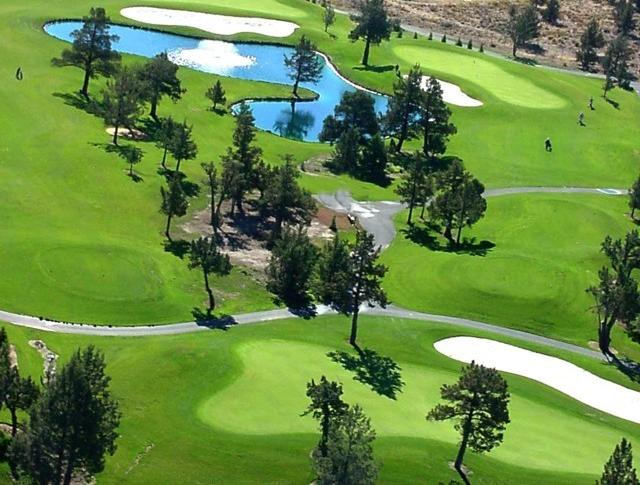
Golf courses can suffer devastating damage due to over fertilizing or chemical spills. The University of Florida’s 2009 Pest Control Guide for Turf Managers states that it is a good idea to keep a bag or two of activated charcoal in stock at all times when managing fine turf so that the activated charcoal can be applied almost immediately without having to wait for delivery after an accidental spill.

A high end golf course in South Carolina lost months of play during the peak tourist season due to an accidental mix-up in which weed killer instead of fertilizer was sprayed on several fairways. Activated carbon effectively removes organic toxins, such as herbicides, from soil, to provide a safe environment for new or existing root systems. Once the
toxin has been adsorbed onto the carbon, it is biologically inactive and cannot cause further damage.

The DirtDoctor website is dedicated to the issues that affect organic gardeners and covers a widerangeof topics. In response to a question on “Soil Detox for Contaminated Soil” the website expert, Howard Garrett, replied: “Digging the soil out and hauling it off is not the answer. If your soil has been contaminated with heavy metals like arsenic and chromium in treated lumber or creosote in railroad ties, or with lead and arsenic from iron supplements, or if the contamination is from pesticides or petroleum spills, the solution is the same. First, stop the contamination. Second, apply the activated charcoal/ carbon.”

Another way that the activated carbon will  protects the environment is its use in removing pesticides from streams and rivers by spraying the edges of fields. This prevents harmful chemicals from entering waterways and contaminating not only the water, but also the aquatic life and plants that make up their fragile ecosystems.

Activated carbon provides unique performance capabilities that help protect our environment. It is widely used in agriculture as a soil amendment to protect and enhance plant and turfgrass growth and vigor. Its ability to decontaminate soil is beneficial when replanting ornamentals, turfgrass or food crops where herbicides have been previously applied. The effectiveness of activated carbon for these applications has made it the product of choice of leading industry professionals.

To reach that purpose of course, reliable industrial charcoal plant needed to support that activated carbon industry. Our system will produce charcoal as you wish, as we fully realize that activated carbon industry need high quality charcoal for their consintent quality of activated carbon. 

Sabtu, 19 Mei 2012

Go Green With Sustainable Energy For All


UN Secretary-General BanKi-moon has called on governments, the private sector and society to commit to his Sustainable Energy for All Initiative at the World Future Energy Summit (WFES) in Abu Dhabi, UAE.

In his keynote at WFES, Ban Ki-moon said he has designated sustainable development as his top priority for his next five-year term, and he has set out three objectives to be achieved by 2030:
  1. Universal access to modern energy services;
  2. Double the rate of improvement of energy efficiency; and
  3. Double the share of renewable energy in the global energy mix.
Work on an Action Agenda has already started.Energy transforms lives, businesses and economies. And it transforms our planet — its climate, natural resources and ecosystems. There can be no development without energy.

Biomass is the fourth largest energy source in the world. In contrast to water, wind and solar thermal, biomass is the only energy source that does not depend on the weather in order to ensure stable energy production. Most of the biomass has been used optimally in developed countries, but otherwise there are still many untapped in developing countries. Yet millions of tons of biomass produced annually as a result of agricultural and agro-industrial residue.

Pyrolysis is a technology to process biomass into high-grade fuel. Application of pyrolysis products that biochar can also improve soil fertility. Problem is the lack of electricity supply is a common problem especially in developing countries. According to Ban Ki-moon one in five residents of this planet do not have access to electricity services. Syngas produced from continuous pyrolysis can be used to power plants in remote areas that are rich in potential biomass.