..... And you see the earth dried up at first, then when We send down water upon it, live the earth, and be the land, and grow all kinds of beautiful plants. "- (QS 22: 5)
Soil is a medium for the growth of plants, more specialized crops that are cultivated by humans to meet their needs through agriculture / plantation and forestry. Good soil will produce high quality agricultural products with a large quantity. But getting the ideal soil especially for the farming business is not an easy thing nowadays because of several things. First the destruction of the soil due to the use of chemical fertilizers that turned out to be in the long run damaged the soil, as experienced by most agricultural land today. The second factor is the limitation of land due to its massive use of land for housing, industry and so on. The third factor is irresponsible farming such as mobile agriculture. The fourth factor is human effort to take irresponsible natural resources as commonly happened in mining, illegal logging and so on. Any farming business also begins with recognizing the type of land and its character, it shows how important the land is.
Chemical fertilizers mainly as the biggest and main cause of the damage for current agricultural lands. This is because chemical fertilizers cause physical, chemical and biological damage to the soil. The soil becomes hard, lacks nutrients (barren) and the death of soil microbes. The death of soil microbes is the source of the biggest problem causing the damage to the soil. This is because soil microbes play an important role to continue to maintain soil fertility. A handful of fertile soil contains 2 billion microbes that run each other prey and fight over food in the ground. The activity of running microbes that prey on each other in the soil, causing the ground to vibrate and become hollow. Hollow soil is loosening and improving soil aeration that also helps to fertilize the soil. The presence of water entering the soil will be absorbed by the plants as well as the needs of these microbes. Why chemical fertilizers should be avoided? This is because chemical fertilizers make acid soil that kills the soil microbes, so the consequences are very fatal. The synthesis or decomposition of organic materials also involves these microbial activities.
The ideal soil is fertile, with parable like white bread,soft and hollow. Soft and hollow because of the soil microbial activity that forms the structure and cavity. These conditions make optimal plant growth because the roots can freely absorb nutrients in the soil for growth. The reverse is barren land, with a metaphor like the pathetic bread, which is hard and solid. Hard and solid due to the absence or lack of microbes in the soil. These conditions make plant growth disturbed and will not be optimal. Water also will not be well absorbed in the soil condition. Well, what if the cavities or pores in the soil are reproduced and even made a special house for microbes? Of course microbial activity is getting bigger and growing. "White bread" is even more tender and hollow / porous. Does the cavity or pore serve only as a microbial house? Apparently not. The cavities or pores also improve the soil structure of aeration and are also able to withstand the soil nutrients from loss due to leaching / washing.
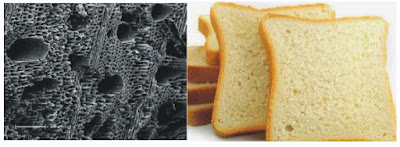
Furthermore, the pores are also able to absorb CO2 gas from the atmosphere. CO2 gas is one of the greenhouse gases that causes the earth's temperature increase. The higher concentrations of CO2 gas in the atmosphere further increase the earth's temperature, the occurrence of climate change and global warming. The absorption of CO2 gas to be stored in the soil is a negative carbon scenario. The pores are more specifically subdivided into macropore, mesopore and micropore. CO2 is mainly absorbed in the micropre. Further discussion on the problem of pores and its application on the production process of activated charcoal (activated carbon).
What materials that can add pores to microbial homes, improve soil structure, retain soil nutrients from leaching and even absorb CO2 from the atmosphere? The material is biochar or agricultural charcoal made through the process of pyrolysis or biomass carbonization such as agricultural wastes. Biochar can also increase the pH so that the soil microbial life more optimal. Biochar is widely used with compost in organic farming. The use of charcoal (biochar) as a medium for planting itself is not new, but the use of biochar as part of problem solving in the world of extensive and contemporary agriculture is new in particular to repair the soil damage caused by chemical fertilizers. Why use biochar for such improvements? Is it not enough with compost? Biochar works to accelerate and maintain soil fertility. "Pathetic breads" is harder and longer transformed into "white breads" with only compost. High agricultural productivity becomes an easy thing to achieve with land such as "fresh bread". The "fresh bread" is as the Quran suggests ihtazzat warabbat - earth that vibrates and expands (QS 22: 5) because there is water and microbial activity in it. And such conditions are sought as ideal conditions for agriculture.
In forestry areas it would be more appropriate to use leguminoceae to make the earth vibrate and expand (ihtazzat warabbat), this is because the soil microbial plant in the legume root is able to bind the nitrogen (N) element of the atmosphere so that it will fertilize the soil. Energy production such as wood pellets with legumes plantations / forest such as gliricidae and calliandra are more suitable for forestry. While the wood is processed into wood pellets, while the leaves can be for sheep / goats. Deep rooting and strong also makes the legume forest able to withstand erosion and retain water, which at times can even bring up springs.
Tampilkan postingan dengan label biochar for reduction the fertilizer. Tampilkan semua postingan
Selasa, 18 Juli 2017
Selasa, 03 September 2013
Biochar: Low Carbon Economy As A Soution To Climate Change and the Environment
The high consumption of fossil fuels as the pedestal current
economic activity has caused adverse effects on the environment such as the
climate change and environmental issues. Accumulation of carbon dioxide
concentration in the atmosphere that has exceeded the threshold needs to be
reduced to the safe limit. Some things you can do include: improving energy efficiency of various equipment and machines today are
still using fossil fuel, using fuel or renewable energy sources and absorb
carbon dioxide in the atmosphere. When we review the balance of carbon
emitted by the use of renewable fuels or substitution of fossil fuels with
renewable energy is carbon neutral, while the absorption of carbon dioxide gas
in the atmosphere is carbon negative.
Low-carbon economy as a solution to climate change and the
environment is how economic sectors are encouraged to carbon neutral conditions
even carbon negative. Biomass energy is one solution to achieve the low-carbon
economy. Availability of biomass feedstock in Indonesia in particular, is very
abundant and has a small part that is less than 5% is used as an energy source.
The Optimum scenario of utilization the biomass into environmentally friendly
forms of energy is the next questions when we has dropped the option to use as
an energy source.
Continuous pyrolysis technology as a second generation biofuel technology is the best solution in order to establish the era of
low-carbon economy. Products such as charcoal / biochar, biooil, and syngas will
be generated by this technology. Especially biomass waste or organic waste can
be directly processed at the site to produce the products as above.
Agro-industry companies such as palm oil mill generate huge biomass waste every
day. Indonesia and Malaysia as the largest palm oil producer in the world or
around 87% of world production (2007) that had a lot of palm oil mills is
estimated at more than 1,000 units, so that the biomass waste available is overwhelming.

Especially in palm oil industries, product
biochar (charcoal) will have a major
role to improve
soil fertility, including reducing the need for chemical fertilizers (urea) in oil palm
plantations, so it will be very profitable. A number of efforts have
been carried out by the palm oil
companies to increase
their effectiveness in fertilization
and soil enrichment,
and with biochar
is like like 1 shoot killed 2 birds, palm solid
waste problem can be overcome,
gain energy sources
and improvement of soil fertility. Biochar (charcoal) in addition to be able to fertilize the soil is capable of capturing carbon dioxide from the atmosphere to a
carbon negative mechanism, while biooil and
syngas can be applied as a carbon neutral fuel
because it comes from biomass.
Jumat, 02 Agustus 2013
Nutrient Management for Palm Oil Plantation
Nutrient
management is one of the major cost components for a palm oil plantation. This
is due to the inherently poor fertility of most tropical soils and the
intensive extractive nature of plantation agriculture. Biochar offers the
possibility for a revolution in nutrient use efficiency in tropical agriculture
along with many other proven soil and water holding benefits.
Why
biochar?
Many advantages of biochar applications to improve the soil fertility. Biochar production process also uses a thermal process that faster and also more affordable in investment than the biological process, that's common called fermentation. Saving estimation of fertilizer use could save up to 50% with the use of biochar, that means increase the fertilization efficiency due to the application of biochar.
How to
produce biochar?
To produce the best biochar in quality and quantity, the best technology is continous slow pyrolysis process. The biomass waste that is generated by palm oil mill every day is a potential raw material for the production of biochar. Syngas, biooil and heat are other products from continous slow pyrolysis technology for energy applications or other.
Senin, 24 Desember 2012
Biochar, Climate Change and Global Warming
This time is the topic of climate change and global warming
back into the world spotlight. Frameworks Convention annual meeting of theUnited Nations Convention on Climate Change (UNFCCC) was opened last week took
place in Doha, Qatar with 15000 people are expected to participate. The
emphasis today is more necessary action as compared to the previous conference.
In the 18th climate change conference (COP18) is getting a lot of evidence of
natural disasters due to climate change are shown.
Mitigation of climate change and global warming would cost
billions of dollars. The Climate Policy Initiative is make estimation need
around US $ 300 billion each year in
2020 and increased to US $ 500 billion by 2030. While the commitment of
industrialized countries only allocate US$ 100 billion annually in the UNFCCC's GreenClimate Fund.
Role of Biochar
Although it has not received great attention in efforts to
mitigate climate change-related disasters and global warming, in fact biochar
potential as a tool that a lot of benefits. When we look at the motives for
biochar production would look like this chart:
In the first study on the impact of climate change in SouthEast Asia by the Asian Development Bank (ADB) in 2009: based on high emissions
scenario, average temperatures in four countries-Indonesia, Philippines,
Thailand and Vietnam - is projected to rise 4.8 degrees Celsius in 2100 from
1990 levels, average global sea level rise is 70 cm long time, and Indonesia,
Thailand and Vietnam is projected to experience the drier climate in two or
three decades. Southeast Asia seems more affected by climate change than the
global average.
Indonesia and Malaysia as a tropical country with a very
rich potential of waste biomass mainly from agro-industries such as oil
industry, the potential for applying biochar appropriate motivation in the
image above. MPOB (Malaysian Palm Oil Board) specifically researching biochar
to plant oil palm. Implementing Continuous Slow Pyrolysis technology with waste
biomass feedstock will produce environmentally friendly energy that are
categorized as "Carbon Neutral" because the balance does not increase
the amount of greenhouse gases in the atmosphere, while the application of
biochar as a by-product on the farm in addition will increase the fertility of
the soil is also able to absorb greenhouse gases in the atmosphere that are
categorized as "Carbon Negative" because the balance will reduce the
concentration of greenhouse gases in the atmosphere. So with the application of Continous Slow Pyrolysis and product of biochar will get the optimum
comprehensive solution to the scheme shown above which was instrumental in
reducing the effects of climate change and global warming.
Jumat, 14 Desember 2012
Carbon Farming For Palm Oil Plantation Part 2
Leading plantations and agronomist are searching for better
ways to manage land for higher production and healthier profit, as well as a
buffer against Climate Change. Soil Health is widely recognized as the key to
these benefits, and Soil Carbon is the key to Soil Health.
Carbon Farming is the land management system that is the most effective in responding to Climate Change. It can be used to build a buffer against higher temperatures and lower rain fall. It can cut input costs as it taps into the nutrient reserves and productive capacity hidden in the soil. Carbon farming is the only way to increase soil carbon which the engine room of growth in Agriculture.
![]() |
| photo taken from here |
Increasing
soil carbon is likely to enhance the long term sustainability of farms as it
plays a central role in the physical, chemical, and biological health of the
soil and hence the productive capacity of arable soils. Increasing the biomass
input, decreasing the decomposition rate and increasing the potential of a soil
to store carbon will all act to increase soil carbon. Soils with the greatest
potential to sequester carbon will be those that have suffered a significant loss of carbon with clearing of
native vegetation and have a capacity to increase biomass production or can
protect added carbon from decomposition (Baldock et al 2009).
Farmers wanting to build soil carbon may be able to achieve this though maintaining and enhancing vegetation cover, maximizing vegetation growth, minimizing soil disturbance, and changing the soil texture. Activities that broad acre farmers may consider to increase soil carbon include :
· -Converting cropping land to productive pastures
and increasing the pasture phases in crop rotation
· -Increasing practices to retain stubble
· -Green manuring, particularly legume crops
· -The application of soil ameliorants such as
biochar, compost, or manure (Sanderman
et al 2010), and
· -Alterations to soil texture through the addition
of clay to lighter textured soils.
![]() |
| Photo taken from here |
Palm oil industry in Indonesia & Malaysia which in operations generate a lot of waste biomass and on the other hand requires energy in the form of heat and electricity for the process of the fruits and high productivity of palm oil plants, then very potential to apply the continous slow pyrolysis technology to get energy and biocharnya to carbon farming.
![]() |
| photo's taken from here |
Carbon farming is a different way of looking at your land.
It gives you a different set of priorities, if you get it right, it can deliver
everything you ever wanted to get out of farming. And more…..
Sabtu, 01 Desember 2012
"Carbon Farming" for Palm Oil Plantation Part 1
Fertilization in palm plantation business is costly, even this is the highest cost component of the business. Fertilization is a vital activity to the success and sustainability of the business. Fertilization get a portion of 65% and up in the plantation-based business expenses. Analogues same as livestock business that feed holds the highest component of about 80 percent. Thus reducing the need for fertilizer will benefit the business. Moreover, chemical fertilizers are used in the oil palm plantation business are also non-subsidized. There are a number of efforts that can be done to reduce the fertilizer, which in essence is to increase the efficiency of absorption of the fertilizer for plants.
Basically plants will always require fertilizer in certain amount as the nutrients for the growth and productivity of fruit. Thus ensuring adequate fertilizer as the nutrition for the palm trees are principles that should be sought for this business. In fact, to provide a sufficient number of that is costly, due to a variety of site-specific environmental factors such as palm oil is located. Fertilizer in general will be a lot of washed / leaching (50% in average) giving rise to much waste to the detriment of the economy. It can not be allowed to continue and need immediate solutions to overcome them.
Application of biochar is one perfect solution for it. CPO plant every day produces excess waste biomass will potentially be used for biochar feedstock. Production of biochar by JF BioCarbon continous slow pyrolysis reliable to process the amount of waste biomass. In addition to producing biochar also be produced green energy (renewable energy) that can be used for the industrial production of CPO or its various derivatives. Current regulation that prohibits direct burning of biomass waste with the incinerator will further strengthen the continuous slow pyrolysis technology as the best solution for the problem.
There are many scenarios that we can use for biochar application in palm oil plantations, among others enriched with chemical fertilizers (NPK), enriched with compost (and plus mulch), or adding a bacteria that contributes greatly to soil enrichment. If your palm oil industry have a concept for prioritizing environmentally friendly with the use of renewable energy, and energy efficiency, zero waste, sustainable and would like to play real to nourish the planet from global warming, then the application of biochar to "Carbon Farming" is the best solution.
Basically plants will always require fertilizer in certain amount as the nutrients for the growth and productivity of fruit. Thus ensuring adequate fertilizer as the nutrition for the palm trees are principles that should be sought for this business. In fact, to provide a sufficient number of that is costly, due to a variety of site-specific environmental factors such as palm oil is located. Fertilizer in general will be a lot of washed / leaching (50% in average) giving rise to much waste to the detriment of the economy. It can not be allowed to continue and need immediate solutions to overcome them.
![]() |
| Photo taken from here |
There are many scenarios that we can use for biochar application in palm oil plantations, among others enriched with chemical fertilizers (NPK), enriched with compost (and plus mulch), or adding a bacteria that contributes greatly to soil enrichment. If your palm oil industry have a concept for prioritizing environmentally friendly with the use of renewable energy, and energy efficiency, zero waste, sustainable and would like to play real to nourish the planet from global warming, then the application of biochar to "Carbon Farming" is the best solution.
Langganan:
Komentar (Atom)


