Tampilkan postingan dengan label Biomass Waste. Tampilkan semua postingan

Senin, 10 Maret 2025

Optimizing Pyrolysis and Biochar in the Palm Oil Industry

Indonesia's CPO production currently reaches around 50 million tons per year with a land area of ​​around 17.3 million hectares. This means that the average CPO production per hectare is only 2.9 tons or per million hectares produces 2.9 million tons. If biochar is used and there is a 20% increase, it means there is an increase of 10 million tons of CPO per year and this is equivalent to saving around 3.5 million hectares of land, or the use of biochar will slow down forest clearing (deforestation) for palm oil plantations.

The average speed of Indonesian palm oil plantation area is 6.5% per year or equivalent to about 1 million hectares per year for the last 5 years, while the increase in palm oil fruit production or FFB (fresh fruit bunches) is only 11% on average. Even the largest expansion of palm oil land occurred in 2017, which increased by 2.8 million hectares. By opening 1 million hectares of forest, national CPO production only increased by 11%, while without the need to open forests, namely with the application of biochar, there could be a 20% increase in productivity. And the 20% increase in FFB yield (fresh fruit bunches) using biochar is a low estimate.

With the number of palm oil mills in Indonesia reaching more than 1000 units and tens of millions of tons of biomass waste, especially empty palm fruit bunches (EFB), the volume of biochar production produced is certainly very large. In addition, pyrolysis technology can replace combustion technology which is generally used in palm oil mills to produce steam for electricity production and sterilization of fresh fruit bunches (FFB) in CPO production. With pyrolysis raw materials using palm oil tankos and being able to replace palm kernel shells, 100% of palm kernel shells (PKS) can be sold or exported. The sale of palm kernel shells or PKS (palm kernel shells) will certainly provide additional attractive benefits for the palm oil company. Palm kernel shells or PKS are the main competitors of wood pellets in the global biomass market.

In addition, the use of biochar also saves fertilizer use and the highest operational cost on oil palm plantations is fertilizer so this is very relevant. Tens of billions of costs spent on fertilizer can be reduced by using biochar, especially since the biochar comes from its own waste so that it will automatically become a solution for biomass waste management. Including biopesticides and liquid organic fertilizers can also be produced from the pyrolysis process. Carbon credit is the next business potential. This is because the application of biochar to the soil for agriculture or plantations is an effort for carbon sequestration / carbon sink.

The benefits that can be obtained from this biochar carbon credit are also large, even globally biochar carbon credit ranks first or more than 90% in Carbon Dioxide Removal (CDR) recorded in cdr.fyi. However, there are indeed many large biochar producers who do not sell their carbon credits because of the methodological requirements of standard carbon companies such as Puro Earth and Verra, and these biochar producers are comfortable with their biochar sales business, especially since these producers have existed (established) since before carbon credits were available for biochar.    

Minggu, 27 Oktober 2024

Increasing Food Agriculture Productivity: Biochar Application or Forest Clearing for Food Estate?

Indonesia currently ranks 69th out of 113 countries in 2022 in food security and this is lower than Malaysia and Vietnam with indicator points below the global average. This condition is concerning considering that Indonesia was once self-sufficient in food before and even the price of rice in Indonesia is the most expensive in ASEAN. Efforts to maintain food productivity are indeed a challenge, let alone increasing it. Along with increasing population growth, the need for food automatically increases. The condition of declining food production and productivity is related to a number of factors including land conversion to non-agricultural land, and soil / land damage. A number of regulations have been made to stem the rate of decline in food productivity due to these two things.

Regarding land damage, repair efforts need to be made so that agricultural productivity increases. It is estimated that the area of ​​land damage that occurs is very large with a high level of severity. This requires gradual and sustainable repair efforts with various strategies including improving farming patterns and even a number of incentives. Only with these efforts can the agricultural sector as a source of food be repaired or if not, the damage to agricultural land will get worse so that repair efforts will be more difficult.

Biochar application or forest clearing for food estate ?
Biochar application will be able to repair damaged lands. In addition to being a slow-release fertilizer agent so that fertilizer use becomes efficient and does not pollute the environment, increasing soil pH, increasing soil organic carbon and increasing agricultural productivity, biochar will also help overcome the management of agricultural waste that has so far polluted the environment. The increase in agricultural productivity from the use of biochar is on average around 20%. If Indonesia's current rice production is around 31 million tons per year, then the application of biochar will increase total rice production to 37.2 million tons (an increase of 6.2 million tons). With an average rice production per hectare of 6 tons, the increase of 6.2 million tons is equivalent to increasing the area of ​​agricultural land by 1.03 million hectares. Even damaged land from post-mining can be reclaimed and rehabilitated with the application of biochar, with the land area also reaching millions of hectares. This is certainly better than clearing new forest land for food estates because of its environmental impact. 

As the human population grows, the need for food and energy will continue to increase. Indonesia's population in 2045 is estimated to reach 319 million people and the world's population in 2050 is approaching 10 billion people. The need and urgency of biochar to improve soil quality is increasing. Tens of millions of hectares of all Indonesian acidic soils, which are classified as dry land acidic soils, need to be improved with biochar. This means that the business potential reaches billions of dollars or trillions of rupiah. Meanwhile, rice imports in 2024 are targeted to reach 3.6 million tons (as a buffer), a large amount. With an annual rice requirement of around 31 million tons, the contribution of imported rice reaches more than 10%.

Biochar in addition to repairing soil damage so that it increases its fertility which ultimately increases agricultural productivity is also part of the climate solution, namely by means of carbon sequestration. Biochar applied to the soil will last hundreds or even thousands years, and does not decompose. This is another advantageous factor for biochar producers, namely getting carbon credits. The quality of biochar will determine the acquisition or price of the carbon credit, so that the raw materials of biochar and its production process are affected. The price of carbon credits is increasing so that it is increasingly attractive and also the carbon credit market continues to grow.

Damage to land or agricultural land that occurs is mostly caused by excessive use of chemical fertilizers. If the use of chemical fertilizers can be reduced in dosage or with sufficient use, there will be improvements in land quality. Even if chemical fertilizers are gradually reduced in dosage and organic fertilizers / compost are increasingly added so that in the end chemical fertilizers are not used at all, soil fertility will be optimal as well as agricultural productivity.

The photo from here

Of course, this requires time and continuous effort. Livestock must also be encouraged so that compost / organic fertilizer can also be produced sufficiently from the processing of livestock manure. Integrated farming with livestock is the best solution for improving agricultural land with biochar, especially increasing the efficiency of fertilization. If the above can be implemented properly, then forest clearing for food estate land can also be slowed down / held back by considering all aspects comprehensively so that it is not a short-term solution that tends to be forced, and rushed because of the regime's image efforts even at a cost of hundreds of trillions.     

Rabu, 24 November 2021

Utilization of Excess Energy from Biochar Production with Pyrolysis

Most of the production equipments for biochar are currently obsolete, so that the productivity and quality of the products produced are low, also causing environmental problems, namely air pollution. In equipment with this technology, the production process is also not running efficiently, indicated by the large amount of energy or heat loss so that it is less profitable. Slow pyrolysis technology is the best technology for biochar production because it maximizes the production of a solid fraction (biochar). Meanwhile, other thermal technology group are not so suitable for biochar production, for example fast pyrolysis, the main objective of which is to maximize its liquid product or biooil, gasification is the main objective of maximizing gas or syngas product as well as hydrothermal carbonization (HTC) or wet pyrolysis requiring high pressure operating conditions so that it is difficult to be applied. Modern slow pyrolysis technology will operate autothermal / self sustain fuel, safe, good process control and energy management, so that in this way in addition to energy being used for the pyrolysis process itself, excess energy can also be used for other needs such as electricity or heat production.

 There are three main variables for this pyrolysis process, namely heating rate, duration / residence time and temperature. The quality and quantity of biochar are determined by these process variables. For example, biochar production with a temperature of less than 400 C will produce acidic biochar, while biochar production above this temperature will produce alkaline biochar. Currently, the pH of biochar produced ranges from 4 to 12. There are also those who make a category about the pyrolysis temperature for biochar production, namely, low with less than 250 C, medium (250 - 500 C), high with more than 500 C. According to some researches fixed carbon also increased from 56% to 93% at 300 and 800 C pyrolysis temperatures. The surface area also increased from 120 m2 / gram at 400 C to 460 m2 / gram at 900 C. 

And indeed, basically the quality and quantity of biochar is determined by the raw materials used and the conditions of the production process, especially the pyrolysis. In fact, to ensure the quality of biochar, all aspects need to be considered such as raw materials and production processes such as the pyrolysis operating temperature should not be more than 20%, interruptions when production are allowed as long as the conditions of subsequent production parameters are maintained the same as before the restart. The composition of the raw material should not fluctuate more than 15%. And for modern pyrolysis equipment, the excess energy must be utilized with an estimated 35-60% of the energy from the biomass raw material found in pyrolysis gas. A number of agricultural waste processings can use the pyrolysis optimally, including:

 1. Palm Oil Industry

The use of pyrolysis technology for palm oil companies, especially in Indonesia, is currently ideal. This is because palm oil mills or CPO mills produce a lot of solid waste biomass namely, empty fruit bunches/EFB, fiber and palm kernel shell. And because palm kernel shell / PKS has a lot of demand both from within and outside the country for industrial fuel and power plants, this PKS should not be used as raw material for pyrolysis or biochar production, but can be directly used as a trading commodity.  The EFB and fiber are used as raw material for biochar and then the biochar is used to improve the soil quality of palm oil plantation so that fresh fruit bunch or FFB productivity increases. Excess energy from pyrolysis is then used as boiler fuel so that it can reduce or even replace all PKS as the the boiler fuel. And because the boiler fuel is replaced with the excess energy pyrolysis, so can be  all of the PKS can be sold. 

2. Integrated Coconut Industry

Products from coconut processing such as copra, dessicated coconut, and nata de coco require heat in the production process. Coconut shell charcoal is also a favorite charcoal with a large market demand. The charcoal will usually be further processed into briquettes for energy and activated carbon for various industries. For biochar production, coconut industrial wastes such as coir/fiber, bunch and midrib can be used. Excess energy of pyrolysis can be used for the production of the above products and other advanced products. The low productivity of Indonesian coconut production needs to be improved, one of which is by improving soil quality with biochar. In addition, there are so many coconut plantations in Indonesia that need to be replanted so that improving soil quality to achieve the desired production is increasingly important. 

3. Corn Plantation

Efforts to increase food products need to be taken seriously, this can be done in two ways, first by expanding the land or making new rice paddy fields for production and the second by improving the quality of existing land so that productivity will increase. Biochar is very effective and efficient for the second method above. Besides being used as a human food source, corn is also used for animal feed. With the projection of the human population continuing to increase, the need for food either directly by consuming corn or indirectly from livestock such as meat and eggs. Poultry or chicken feed production ranks first of other animal feed production, or in the world almost half of the animal feed produced is chicken feed. Corn cobs and husks are agricultural waste that can be used for biochar production. Excess energy from the pyrolysis process can be used for drying corn and other advanced processes.

4. Rice Paddy Farming 

Rice or paddy is the staple food of most of the Indonesian population. The area of irrigated rice fields is decreasing throughout the year. This encourages the use of non-irrigated rice fields or dry land for the production of this rice. Biochar is able to improve the quality of dry land soils, such as in corn farming. Rice husks are rice paddy agricultural waste that can be used for biochar production. Excess energy from rice husk pyrolysis can be used for drying the rice paddy itself so that it becomes dry grain ready to be milled, or for other purposes. With the improvement of soil quality, rice productivity can be increased and it is not impossible that food self-sufficiency, especially rice, can be achieved, as has been achieved by Indonesia some time ago.

Biochar For Date Palm Plantations

Biochar is increasingly being used as a soil amendment with the aim of improving the physical, chemical and biological properties of the soil, and reducing the concentration of greenhouse gases from the atmosphere. In date palm plantations which are mostly planted in dry and sandy areas, the use of biochar will especially increase the ability of water and nutrients holding capacity, meaning that the evaporation of groundwater can also be reduced and nutrient loss for date palms can also be reduced. This of course is very beneficial for the date palm tree. Waste from date palm plantations such as midribs, seeds and leaves can be used as raw material for the biochar. The impact or positive results of the use of biochar have been reported from enormous of studies and experiments. These results are improvements in the physical, chemical and biological properties of the soil which ultimately result in the quality and productivity of the fruit yield.

 Every year, it is estimated that each date palm tree produces 33 kg of green waste or 20 kg of dry biomass waste. Currently, it is estimated that date palms around the world reach 120 million trees with a biomass waste potential of 4 billion tonnes of green waste or 2.4 billion dry and can be converted into biochar into 800 million tonnes of biochar. The 10 largest date producing countries are Egypt, Iran, Saudi Arabia, Algeria, Iraq, Pakistan, Sudan, South Sudan, Oman and the United Arab Emirates. The use of modern pyrolysis equipment for processing biomass waste into biochar, also produces excess energy for heat or electricity production which can be used for various purposes. Location of date palm plantations in rural areas can use electricity or store this energy for other purposes such as cooking. The energy storage can be done with large or small tanks for the needs of residents in that location. By utilizing the excess energy from the pyrolysis process, environmental damage such as illegal logging can be minimized. Dry and arid are areas with high evaporation and low rainfall, and such areas as these occupy 41% of the land surface area on earth. Currently nearly 900 million people inhabit this area.

Improved soil quality will result in higher crop productivity. The better the quality of the soil that can be cultivated, the better the productivity will be. Biochar will enrich soil organic carbon which has important roles, including reducing plant nutrient loss, increasing soil aggregation, reducing soil erosion, and increasing water holding capacity. Each plant has its own characteristics regarding the growing medium and environmental condition. Improving the quality of the soil will certainly increase the productivity of dates and even increase the quality of the fruit.   

Rabu, 17 November 2021

Biochar to Increase Biogas Production

Charcoal (biochar) is the raw material for the production of activated carbon. The production of activated charcoal itself goes through two main processes, namely carbonization (pyrolysis) and activation. The surface area of charcoal (biochar) is also smaller than that of activated carbon, but larger than the raw biomass. The carbonization process increases the surface area of the raw biomass. The ratio of surface area between raw biomass, charcoal and activated charcoal is approximately 25 m2 / gram, 200 m2 / gram, 2000 m2 / gram. The larger the surface area of the biomass material that is inserted into the biogas reactor, the greater the penetration of bacteria into the substrate so that the fermentation process that occurs is more perfect so that biogas production will increase. Biochar itself does not participate in fermentation because the main component is stable carbon, while hemicellulose, cellulose and lignin have been decomposed during the carbonization process.

Another example is the addition of biomass briquettes to the biogas reactor, briquetting processs with high pressure and heat also open pores or expand the surface of the biomass, so that biogas production also increases, for more details, read here. The addition of biomass briquettes to the biogas reactor will also increase the C / N ratio, even biochar and activated charcoal have high carbon (C) content.

Charcoal (biochar) has been widely used in the agricultural world to repair damaged soil / soil amendment and thus increase fertility. Good soil fertility will also increase agricultural production. The biochar becomes a home for soil microbes, so that organic materials or compost will break down more completely and be absorbed by plants more as plant nutrients. The charcoal (biochar) pores are the home for these microbes. The more pores, the more microbes will inhabit the biochar as their “house”. The same principle applies to the biogas unit. Another bonus of using biochar is that it absorbs CO2 from the atmosphere, thereby contributing to lowering the greenhouse gases that cause climate change and global warming.

Research in Germany shows that adding 5% biochar to a biogas reactor increases methane production by 5% - based on the dry matter of biochar to the substrate. But when the amount of biochar became 10%, it turned out that no more methane was added. This shows that the optimum condition for adding biochar is the amount of 5%. The microbes in the biochar increase the volume of microbes in the reactor so that the production of biogas or especially methane also increases up to 5%. Biochar itself is not decomposed in the fermentation process. 

Meanwhile, the addition of biomass briquettes per 1 tonne of briquettes will increase biogas production by 400 Nm3. This is because in the biomass briquettes, both cellulose, hemicellulose and lignin have not been decomposed, thus adding to the substrate in the biogas reactor. Whereas in biochar, both cellulose, hemicellulose and lignin have been decomposed during the thermal carbonization process, so there is practically no additional substrate, but only microbial addition occurs in the biochar pores.

The important thing about the addition of biochar is that the compost or digestate produced is of better quality with the addition of the biochar. Biochar will make the compost which is produced as a slow release organic fertilizer. This further encourages biochar production, especially for palm oil companies that care about environmental issues and even strive for zero waste conditions.

 Palm oil mills have the potential to apply biogas and biochar units. Solid wastes such as empty bunches and mesocarp fiber can be used for biochar production. Palm oil mills can even replace the furnace in the boiler with a gasifier or pyrolyser. This becomes more profitable because in addition to heat energy being used for production of steam which is used for power generation and sterilization of fresh fruit, biochar will also be produced. The biochar produced is then used to increase biogas production and improve the quality of the compost, as well as a fertilizer mixture in palm oil plantations. And even the potential use of biochar to save fertilizer on large palm oil plantations, for more details can be read here.     

Sabtu, 23 Januari 2021

Production of Electricity and Charcoal from Banana Trunk Waste


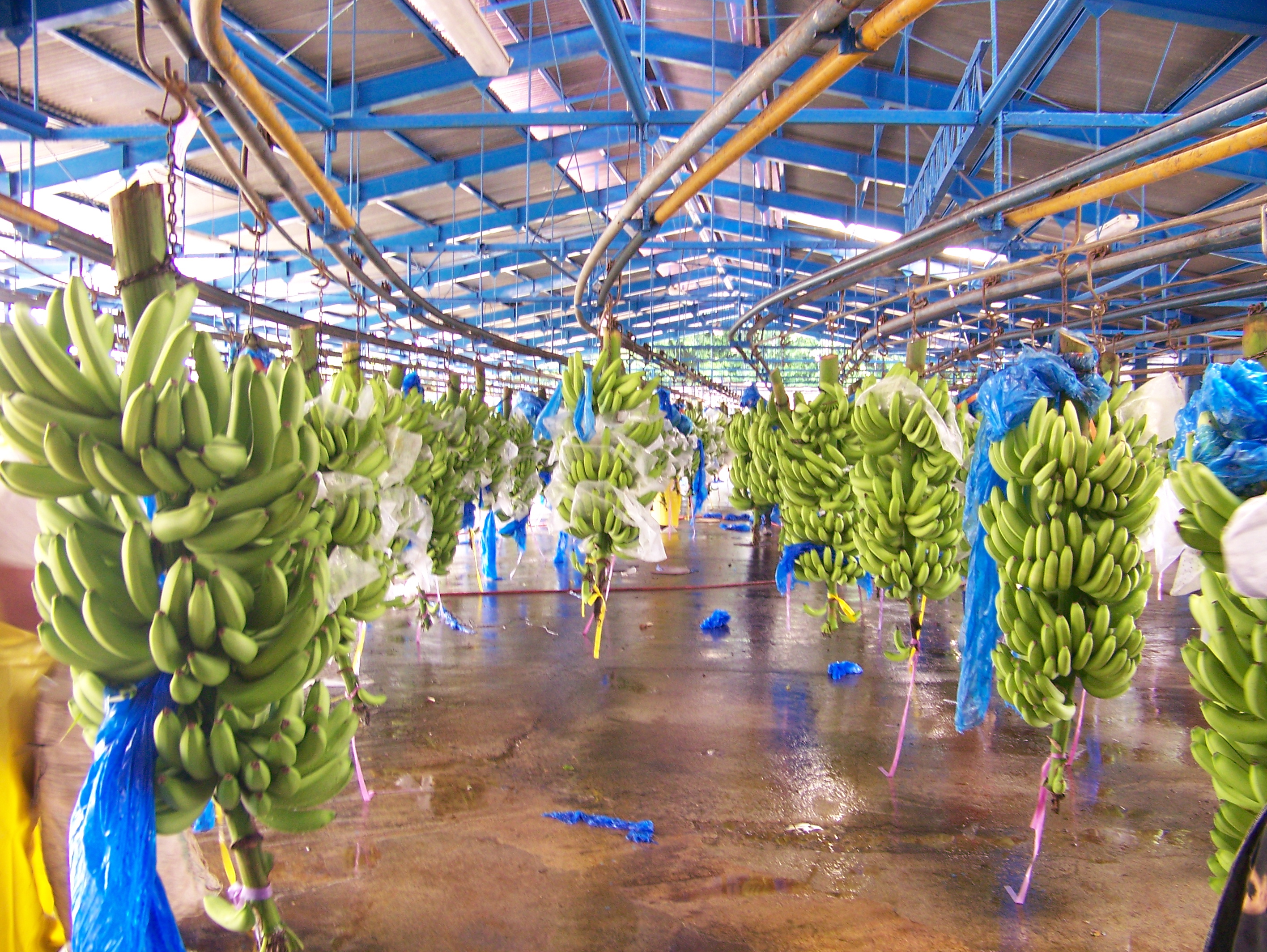
Banana trees only bear fruit once. After this fruit, the banana tree dies and the trunk becomes waste. Meanwhile, banana production from the plantation is continued by its seedlings. To maintain the quality of banana production, controlling the number of banana saplings is important, especially in plantations that are professionally managed. The more banana trees, especially if the number is not controlled, the quality and quantity of bananas produced will decrease.

After the bananas are harvested, the trunks are just left in the banana plantation. Even though banana trunks can be used for electricity and charcoal production, namely by continuous pyrolysis technology. The electricity produced can be used for banana packaging production operations which are usually export-oriented and charcoal can be used to maintain the fertility of the banana plantation land itself or for fuel, for example by making briquettes. The process of removing banana trunks from the plantation should also be easy because you can take advantage of the means used to transport bananas from the plantation, of course, with a few modifications. After the banana trunks are collected in a place, then the size is reduced (downsizing) and the moisture content is reduced so that can continue processed with the pyrolysis unit.


Large banana plantations generally manage plantation covering thousands or tens of thousands hectares. With these conditions, the resulting banana trunk waste is also very large, or comparable to the banana harvest. Costa Rica is a country that is well-known as a banana producing country. In a number of countries in Southeast Asia such as Indonesia, Malaysia and the Philippines, there are also a number of large banana plantations. By utilizing banana stem waste or adding waste from the plantation, besides overcoming environmental problems and preventing banana tree disease so that the productivity of the banana plantation is maintained, it also provides other benefits. The use of charcoal (biochar) for the banana plantation. Besides being able to save on the use of fertilizers, it will also increase the productivity of the banana fruit itself, as can also be done in oil palm plantations, for more details can be read here. A number of practices using charcoal for agriculture (biochar) can increase crop productivity by up to 40%.

Kamis, 21 November 2019

Large Plantations and Large Farms

Fertilizer problems or soil fertility have always been the main topic or discussion for a large plantation business. This is very reasonable because maintaining productivity of crops can only be done by maintaining soil fertility or providing adequate fertilizer. For this reason, the budget for the supply of fertilizer is always a large portion of the plantation business. Then the condition leads to the question of how to make efficiency or save the fertilizer budget? Of course many techniques can be used for this purpose, but basically the selection or use of fertilizer that is appropriate and the effectiveness or absorption of fertilizer for plants is a key success factor in maintaining soil fertility. Let's try to answer the main question above.

When chemical fertilizers are increasingly abandoned because of their effects which damage the environment, there is no other choice but to use organic fertilizer. In large plantations such as oil palm plantations, basically there are also many biomass wastes from palm oil mills that can be used as fertilizer, such as fronds and palm oil trunks. But when these ingredients are also processed to become a particular product, and also the composting process of fibrous wood species takes a long time, the best choice is with organic manure. The question is where do you get livestock manure compost for the oil palm plantation? Actually there are more sources of organic fertilizer or compost that can be produced from palm oil mill effluent, namely from liquid waste. If the palm oil mill has an anaerobic digester, the biogas residue from the sludge can be used as organic fertilizer. At present there are not many palm oil mills that process liquid waste with the biogas unit, with the reason that the unit is considered expensive.

The history and experience of our predecessors before the use of chemical fertilizers can be used as a reference for this. At that time they were able to meet the fertilizer needs of their agricultural businesses, namely by sheep, goats, cattle and buffalo farming. The livestock manure is used for agricultural fertilizer and agricultural waste is used for animal feed. The basic pattern can also be developed for large plantations with several adjustment techniques to improve efficiency. Technical applications in the field that can be done, namely large plantations must cooperate with large farms or even ideally have a large farm to meet the needs of fertilizer for its plantations. For example, a palm oil plantation that has 10,000 hectares of plantation area, 100-200 (1-2%) hectares are used for sheep farming. The sheep breeding, not by just being caged, but grazing in the fields of pasture.
Why is sheep farming done in the pasture fields? This is because by grazing the cost of feed can be suppressed very large or the business becomes very economical. The biggest cost component of livestock business is feed. If the availability and supply of feed can be overcome then the other components become easier. The pasture is in the form of grass and shade trees. Making grass always available is the essence of the business, even it can be said that the pasture is grass farming itself. Rotational grazing is the best grazing technique at the moment. When the grass is fertilized with sheep dung during the grazing, the dirt produced when in the cage can be used for fertilizer on large plantations such as the oil palm. The biogas unit can be used to optimize the utilization of dirt from the cage.

Basically, sheep farming can also stand alone and also be profitable. Therefore, sheep farming can be done separately. In the case when an energy plantation is used for the production of wood pellets, it is still constrained by various things such as the presence and supply of electricity, so the farm business can still be run properly. The production of large-scale wood pellets in various regions in Indonesia is currently still constrained due to the electricity supply. This will certainly hamper the growth of the wood pellet industry so there needs to be another way to overcome this, which insha Allah will be discussed later.
With this concept, not only increases plantation and meat production, but also a complete closed cycle business that is environmentally friendly and sustainable. Honey bee farming can also be added for optimization because obviously the bees besides helping the pollination process will also produce honey, a superior product of high economic value. Various food problems, insha Allah, can be overcome with this concept. This is because from the production side it can be made very efficient with the 2 biggest cost components being reduced significantly by fertilizer and animal feed with the integration of large plantations and large farms.

Although it has used compost from livestock manure, there are still more techniques that can be applied to improve fertilizer efficiency by using biochar. With biochar, the fertilizer will be retained in the biochar pores so that slow release makes it effective for fertilization. In addition, biochar will also hold the fertilizer from leaching due to high rainfall, so that the use of fertilizer can also be saved significantly. Biochar will also be the home of microbes to decompose organic matter into nutrients needed for plants. So, in short, with biochar, the productivity of plantations is high, but the use of fertilizer is minimal because it is efficient, especially when fertilizer is produced from the farm itself. This biochar can be produced by processing the plantation biomass wastes by pyrolysis. For more details about pyrolysis can be read here.

Senin, 24 Desember 2012

Biochar, Climate Change and Global Warming


This time is the topic of climate change and global warming back into the world spotlight. Frameworks Convention annual meeting of theUnited Nations Convention on Climate Change (UNFCCC) was opened last week took place in Doha, Qatar with 15000 people are expected to participate. The emphasis today is more necessary action as compared to the previous conference. In the 18th climate change conference (COP18) is getting a lot of evidence of natural disasters due to climate change are shown.

Mitigation of climate change and global warming would cost billions of dollars. The Climate Policy Initiative is make estimation need around  US $ 300 billion each year in 2020 and increased to US $ 500 billion by 2030. While the commitment of industrialized countries only allocate US$ 100 billion  annually in the UNFCCC's GreenClimate Fund.

Role of Biochar
Although it has not received great attention in efforts to mitigate climate change-related disasters and global warming, in fact biochar potential as a tool that a lot of benefits. When we look at the motives for biochar production would look like this chart:


In the first study on the impact of climate change in SouthEast Asia by the Asian Development Bank (ADB) in 2009: based on high emissions scenario, average temperatures in four countries-Indonesia, Philippines, Thailand and Vietnam - is projected to rise 4.8 degrees Celsius in 2100 from 1990 levels, average global sea level rise is 70 cm long time, and Indonesia, Thailand and Vietnam is projected to experience the drier climate in two or three decades. Southeast Asia seems more affected by climate change than the global average.

Indonesia and Malaysia as a tropical country with a very rich potential of waste biomass mainly from agro-industries such as oil industry, the potential for applying biochar appropriate motivation in the image above. MPOB (Malaysian Palm Oil Board) specifically researching biochar to plant oil palm. Implementing Continuous Slow Pyrolysis technology with waste biomass feedstock will produce environmentally friendly energy that are categorized as "Carbon Neutral" because the balance does not increase the amount of greenhouse gases in the atmosphere, while the application of biochar as a by-product on the farm in addition will increase the fertility of the soil is also able to absorb greenhouse gases in the atmosphere that are categorized as "Carbon Negative" because the balance will reduce the concentration of greenhouse gases in the atmosphere. So with the application of Continous Slow Pyrolysis and product of biochar will get the optimum comprehensive solution to the scheme shown above which was instrumental in reducing the effects of climate change and global warming.


 The use of technology "carbon capture and storage" usually by injecting CO2 emissions from fossil-fueled power plants (as a CO2 gas producer unit or the biggesr greenhouse gases  currently) into the earth very expensive investment, so the need for the use of environmentally friendly renewable energy-biomassbased with Slow Continuous Pyrolysis technology and application biochar as its product will receive great attention soon.