Tampilkan postingan dengan label bioeconomy. Tampilkan semua postingan

Minggu, 22 Desember 2024

Biochar or Biocoal Production?

Biochar and biocoal production are basically one breath. Biochar production with full pyrolysis while biocoal with half/mild pyrolysis (torrefaction). The purpose of torrefaction/mild pyrolysis is to increase its energy content and make it hydrophobic so it is called biocoal. While the purpose of full pyrolysis is to produce stable biocarbon material so that it does not decompose in the soil for hundreds or even thousands of years and improve soil fertility so as to increase plant productivity (agriculture and forestry). 

Current biochar applications are mainly for agriculture and biochar production will produce excess heat, syngas and biooil as energy sources. While biocoal only focuses on energy. The benefits of biochar production are obtained from the sale of biochar, the sale of carbon credits and the utilization of by-products (full) pyrolysis. While the benefits of biocoal are only from the sale of biocoal itself.

The selection or development of a business will be related to business readiness (market, technology, investment, etc.) and other benefits, namely benefits in the social and environmental sectors.

Senin, 28 Desember 2020

Water Hyacinth Pyrolysis For Electricity And Charcoal Production


Map of distribution of global water hyacinth infestation
Water hyacinth has become a global concern as the most disturbing and invasive aquatic weed. The impact of water hyacinth losses covers the environment, economy and even social conditions experienced by many countries as a result of the water hyacinth attack. Economically, the losses due to water hyacinth are also very large, reaching hundreds to thousands of millions of dollars. Pyrolysis of water hyacinth for electricity and charcoal production is one solution to overcome the water hyacinth attack. In this way, it is hoped that the growth of water hyacinth can be controlled and reduce the environmental impact significantly. This is because the speed of attack from the fast growth of water hyacinth can be balanced with the speed of the biomass requirement for the pyrolysis process that produces electricity and charcoal.


The electricity generated in addition to operate or running the pyrolysis unit can also be used for various needs of the surrounding community. Meanwhile, the charcoal produced can be used for energy and agricultural applications, or in general the motivation for charcoal (biochar) production is as shown in the scheme below. And to facilitate handling both storage, transportation and use, the charcoal can be compressed / densified into pellets or briquettes. The need for energy or fuel for the surrounding community for cooking and so on, can use the charcoal that has been compressed into the pellets or briquette. If the community previously used firewood obtained from the forest illegally, then the charcoal pellet or briquette is also a solution to the problem of forest destruction.


The use of water hyacinth as a bioenergy is the best option and is most recommended by prominent experts and researchers around the world. Pyrolysis is one way or method of bioenergy production. It is true that water hyacinth also provides environmental benefits, namely phytoremediation, but with uncontrolled development, the aspects of the losses incurred are far greater than the benefits obtained. This requires good management so as to produce optimal benefits. In a number of cases even the water hyacinth creates silting which causes the volume and discharge of water, even though the water is used for hydroelectric power plants. This causes the hydropower plant to have less water supply and disrupt its operation. So that the use of water hyacinth for electricity production with pyrolysis will again increase the supply of electricity produced and at the same time overcome the volume and discharge of water for the hydropower plant. Basically, maintaining a balance between the environment and economic aspects must be made in such a way as to become a sustainable activity so that it is in line with the bioeconomic era. Bioeconomics is defined as knowledge-based production and using biological resources or living things to produce products, processes and services in the economic sector within the framework of a sustainable economic system.

Selasa, 31 Maret 2020

Energy Independent With Pyrolysis

A community even in remote areas can be energy independent as long as there is an energy source in the area. Biomass energy sources from plants are energy sources that can be obtained almost anywhere. The plant can be planted as a source of raw materials for the production of energy needed. Heat and electricity energy is energy that mostly needed, in addition to energy or fuel for vehicles as a means of transportation. Heat energy is mainly needed for cooking while electrical energy for various purposes in life. Pyrolysis is a technology that can meet the energy needs as above. The diagram below explains the application of pyrolysis to meet these energy needs:

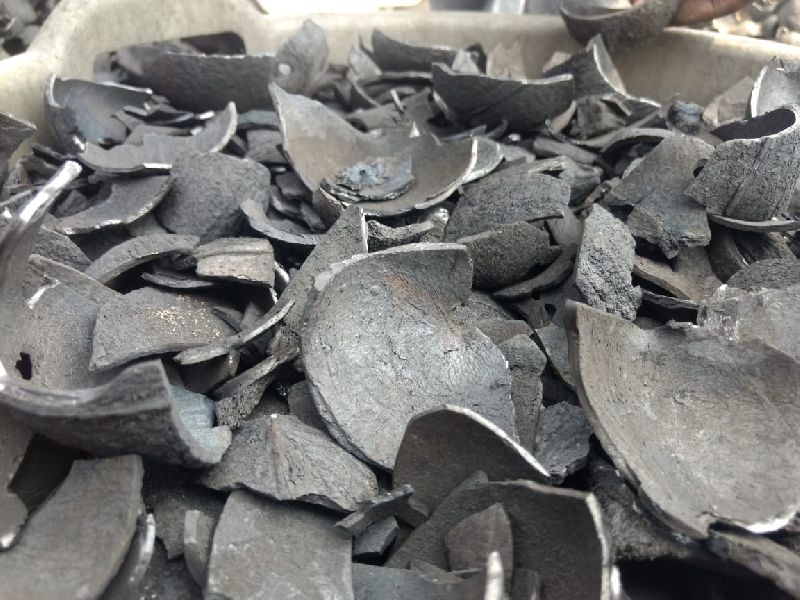
Charcoal is a solid fuel product from pyrolysis. Although solid fuels such as charcoal, are not as practical and easy as gas fuels, the use of charcoal for cooking fuel has many advantages including being safe because it will not explode, smokeless, odorless, has a high calorific value and is an environmentally friendly fuel. While firewood in addition to causing a lot of smoke, smell, low calorie value also interfere with health. Today there are also many countries in Africa that use charcoal for cooking fuel. To make it easier to use and store, the charcoal can be made into briquettes. While fuel for vehicles such as diesel oil and gasoline can be produced from biooil. Vehicles for transportation can operate in the presence of these fuels. The availability of petroleum in Indonesia, which is estimated to be 10 years away, needs to be anticipated and prepared from now on. The current low price of petroleum makes petroleum exports less attractive, especially for Indonesia, which is currently a net importer of petroleum.
Charcoal stoves are widely used in Africa
In the future era when electric vehicles are widely used, electricity production especially for battery charging is prioritized. The energy source for electric cars as environmentally friendly vehicles should also be from renewable energy sources, for more details, please read here. Biomass is a carbon neutral energy source so it does not increase the concentration of CO2 or greenhouse gases in the atmosphere. Woody biomass from the energy plantation is the ideal raw material for the pyrolysis feed. Multipurpose energy plantations are the best energy plantation for this, so that in addition to sustainable production, it also provides other benefits, for more details about multipurpose energy plantations can be read here. Remote areas, especially those with large lands, will have the potential to develop these energy plantations, so that an energy independent community or region can truly be formed and sustainable. Areas in surrounding the palm oil plantations can also utilize biomass waste from palm oil mills and plantations such as palm oil empty fruit bunches (EFB), fronds, etc. for the pyrolysis feed. Indonesia is the owner of the largest palm oil plantation in the world with an area of ​​around 13 million hectares and 1,000 palm oil mills. 

Selasa, 03 Maret 2020

Dessicated Coconut Factory and Continuous Pyrolysis

There are about 20 dessicated coconut factories operating in Indonesia or estimated to be more than 100 units worldwide. With an average capacity of 2 tons / hour, this dessicated coconut factory requires approximately 16,200 coconuts every hour. The byproducts produced are coconut shell and coconut water. Coconut shells produced are around 6 tons / hour and coconut water 4.2 tons / hour. The dessicated coconut plant needs electricity and heat to sterilize the coconut meat and drying the dessicated coconut. Energy in the form of electricity and heat can be met from the utilization of the coconut shell.
There are several technologies for utilizing these coconut shells so that products in the form of electricity and heat are obtained. The popular technology today is with a steam turbine boiler, with this technology the coconut shell is burned in a furnace and heats water in the boiler so that it produces steam to drive the turbine and then generate electricity through a generator. This technology is the same as in palm oil mills. In palm oil mill the fiber and part of the palm kernel shell (PKS) is used as fuel to produce electricity and steam is also used to sterilize fresh fruit bunches (FFB) before being processed into oil.
Another better technology is continuous pyrolysis. This in addition to producing electricity and heat also produces charcoal product. Coconut shell charcoal is high-quality charcoal and is much needed by a number of industries such as the briquette charcoal industry and activated carbon. In the pyrolysis technology the coconut shell is not burned directly, but is heated in a vacuum condition (absence of oxygen). Pyrolysis products such as syngas and biooil are used for electricity production and can also be heat, heat energy is also produced from the pyrolysis process itself which is exothermic, while charcoal is the main product of the pyrolysis process.

Minggu, 16 Februari 2020

Reviving the Integrated Coconut Industry Part 8: Coconut Milk, VCO, Dessicated Coconut, Coconut Water, Nata de Coco, Shell Charcoal and Activated Carbon

Basically the campaign to save the coconut plantation (tree of life) is to revive the integrated coconut industry. Damaged and not maintained of coconut plantations due to lack of funding to maintain and develop it in a sustainable manner.

Bioeconomy is defined as knowledge-based production and uses biological resources or living things to produce products, processes, and services in the economic sector within the framework of a sustainable economic system.

Instant coconut milk or packaged coconut milk is almost unthinkable, especially by mothers in Indonesia a few decades ago. Likewise, bottled coconut water, almost all Indonesians were also unthinkable at that time. That is mainly because coconut is very easy to get in almost all corners of the country. But this condition changed when Asian cuisine began to worldwide so that many Western people like it. Coconut milk as one of the main elements of the dish has become a necessity that must be provided. Urban communities with dense population and have a high level of activity, need something practical and instant that makes instant coconut milk products easily accepted. It is also the same as instant food seasoning products that are in demand in urban areas.

Coconut milk and bottled coconut water industry is a type of large industry so it requires a supply of raw materials in large quantities and continuously. To get these conditions in general can only be in coconut plantations which are not infrequently still very remote location. At that location, electricity and a number of supporting infrastructure were not yet available, so the integrated coconut industry could not yet be operated. Electricity is one of the basic needs for industrial operations, so it needs to be made before running the integrated coconut industry such as industries with the main products are coconut milk and bottled coconut water. The production of electricity for this purpose can be done in at least two ways: first, with a steam boiler, as is usually done in a palm oil mill. Coconut coir which has the lowest economic value is used for fuel.
The second way, namely by continuous pyrolysis. Coconut shell can be used as raw material for the pyrolysis. With pyrolysis technology, it would be more profitable because besides electricity generated, heat and charcoal shells are also produced. Electricity and heat can be used for the operation of the coconut processing industry, while shell charcoal can be directly sold or further processed into briquettes or activated carbon. When the need for electricity is large, power plants can use both, namely coconut coir steam boilers and pyrolysis with raw materials for coconut shells. If you want to produce more charcoal, coconut coir can also be used for continuous pyrolysis fuel. The quality of coconut coir is lower than that of coconut shell. This is so that coconut coir charcoal can be used as agricultural charcoal (agri-char / biochar) so that it will increase the productivity of coconut plantations, while coconut shell charcoal for the purposes mentioned above.
Apart from being processed into packaged coconut milk, fruit meat can also be processed into VCO (Virgin Coconut Oil) or dessicated cooconut. VCO production can be done on a medium scale, but currently for the export market or foreign buyers in general require organic certificates. That is also the reason why the production of small-scale VCO for the export market is difficult. Basically, coconuts can be made for a variety of products, according to market needs. Almost all coconut processing industries require electricity and heat for the production process (specifically for the VCO industry, only electricity). The integrated coconut industry approach makes the coconut processing industry more efficient. The combination of the coconut processing industry adjusts to market needs. The dim market for copra & coconut oil, it turns out that little by little is substituted by increasing markets for dessicated coconut, VCO, coconut milk, nata de coco, bottled coconut water and even coconut sugar. Is it possible that the coconut will come back victorious? There are indications there indeed. Wallahu'alam 

Selasa, 11 Februari 2020

Reviving the Integrated Coconut Industry Part 6: Integration of Dessicated Coconut Production, Packaged Coconut Water, and Shell Charcoal

Basically the campaign to save the coconut plantation (tree of life) is to revive the integrated coconut industry. Damaged and not maintained of coconut plantations due to lack of funding to maintain and develop it in a sustainable manner.

Bioeconomy is defined as knowledge-based production and uses biological resources or living things to produce products, processes, and services in the economic sector within the framework of a sustainable economic system.
Dessicated coconut is not very popular in Indonesia. This product is used in the food industry for a mixture of cakes and chocolate so that it gives the flavor of coconut and much later became a favorite food in Europe. This product was originally discovered in Sri Lanka from Henry Vavasseur's drying experiment of grated coconut in 1888. There are 3 countries that are currently producing dessicated coconut, namely the Philippines, Sri Lanka and Indonesia. The need for this dessicated coconut product also continues to increase, namely recorded export of dessicated coconut in 1990 amounting to 151 thousand tons and in 2008 it increased to 248 thousand tons. In Indonesia alone, it is estimated that there are around 20 dessicated coconut (DC) factories.

DC is produced by drying grated coconut until the water content reaches a maximum of 3%. A dryer commonly used for DC production is a fluidized bed dryer. This dryer has advantages including high sensitivity for its operations, so it is commonly used for food and pharmaceutical products. Rotary dryer is a type of dryer that is also popular in the industry, especially in biomass processing such as wood pellets and briquettes, for more details, please read here. Rotary dryer types are more suitable for materials that are not too sensitive to heat, are not easily broken when dropped and heavier materials. That is why rotary dryers are more suitable for materials such as minerals, fertilizers and so on. Rotary dryer can be said to be heavy duty processing load and requires a wider space, while fluidized bed dryer for lighter-duty materials and requires less space.
For drying the grated coconut, heat energy is needed and for the operation of the plant's equipment such as shredding, conveyors, etc. electricity is needed. Both of these energies can be fulfilled by using a continuous pyrolysis unit. Coconut shell is used as a raw material for continuous pyrolysis, so that the output is in the form of charcoal, syngas and biooil. The charcoal can be sold for immediate use, made briquettes or activated carbon. For electricity production, syngas is used for fuel the gas engine (internal combustion engines) which convert heat energy into mechanical energy then into electrical energy. And biooil can be a source of heat both for boiling or sterilizing coconut meat as well as for a heat source for drying grated coconut with the heating media not in direct contact (indirect heating) with the grated coconut.

With the above pattern, the integrated coconut industry is energy independent or does not require energy supply from outside. This condition is very attractive especially for operations in remote locations. This energy independent industry practice is common in the palm oil industry. Palm oil mills usually burn shells and fiber for the production of electricity and steam. Why besides electricity, does the palm oil mill also produce steam? For more details, you can read here.
At present a number of palm oil mills have even used efficient boilers so that it is sufficient with fiber only and the shell can be sold or exported abroad. Though there is a better or more efficient way to produce electricity and steam, which is also by continuous pyrolysis, for more details read here. The shell, which is a biomass fuel, has properties almost similar to wood pellets at a cheaper price and is still abundantly available. Japan and Korea are the two countries in Asia that are most striking in the use of biomass energy related to climate change mitigation and global warming.
Coconut shell charcoal is a sought-after product, so the price is also increasing every year in accordance with market laws, namely supply-demand. The production of coconut shell charcoal will provide an attractive additional income compared to just being burned to ash and making a zero waste integrated coconut industry.

The DC industry is usually large enough in scale or production capacity to produce quite a lot of coconut water. Coconut water can be processed into bottled coconut water, which also requires electricity and heat in the production process. Electricity and heat production can use coconut fiber as fuel. Burning coconut fiber to heat the boiler and produce electricity, similar to the palm oil mill. Steam is produced to heat or sterilize the coconut water. The demand for bottled coconut water increased rapidly, from 484 thousand liters in 2009 to 71.7 million liters in 2015, or 141 times. 

Reviving the Integrated Coconut Industry Part 4: Analysis and Projection

Basically the campaign to save the coconut plantation (tree of life) is to revive the integrated coconut industry. Damaged and not maintained of coconut plantations due to lack of funding to maintain and develop it in a sustainable manner.

Bioeconomy is defined as knowledge-based production and uses biological resources or living things to produce products, processes, and services in the economic sector within the framework of a sustainable economic system.


The Monas monument in Jakarta is so monumental and so famous that almost all Indonesians know it, even the Jakarta province uses the monument as its government logo or icon. But very few know that the 32 kg gold which is the top of the Monas monument, 28 kg or 87.5% (say almost 90%) comes from the contribution of coconut entrepreneurs, namely from the copra trade. Coconut has indeed experienced the glory of even having a large role in Indonesia's independence. A number of ammunition of wars to various important events in the framework of Indonesia's independence were financed by the copra trade. Copra is the raw material for coconut oil which later becomes a number of derivative products that are highly needed by humans. The era of the triumph of copra or coconut oil revolves around the transition period of the 19th century to the 20th century or more precisely between the 1870s to the 1950s and its heyday in the 1920s. 


Why now copra and coconut oil are especially sinking and unable to compete with palm oil? The long history of trade competition is the answer. Some parties, especially the American Soybean Association (ASA) accuse coconut oil as an evil oil that contains cholesterol and saturated fat clogging coronary arteries. The accusation has never been proven right, in fact it proved to be the opposite, but it is one of the main reasons for the destruction of the global copra and coconut trade. The campaign and the tropical oil war took about 30 years or in the 1950s to the end of the 1980s in the United States and eventually the Indonesian coconut industry collapsed. 

If we look at palm oil, it turns out the same thing happened. For some time Indonesian palm oil has also received a negative campaign due to environmental destruction so that Europeans do not want to buy palm oil from Indonesia. It could be and it is probable that this is also an effort to weaken and make the palm oil industry will also be dropped later. But because it has only been running for a few years, it seems that the effect is not very visible at this time. And if it is done massively and continuously and there is no significant resistance, then it is not impossible that the fate of the palm oil industry is also similar to the coconut industry. The statement that 'only donkeys fall into the same hole twice' is something that needs to be pondered deeply to analyze this. 
 
Coconut Fruit
As an additional reference, Indonesia, which in the colonial era as one of the main producers and exporters of cane sugar, is currently also having a misfortune because besides being no longer an exporter, it has become one of the largest sugar importers. In 2016 Indonesia became the largest sugar importer in the world with a value of $ 2.1 billion or around Rp.28.4 trillion. The value of Indonesia's imports was greater than the three other importing countries whose populations were actually greater than those of Indonesia, namely America ($ 1.9 billion), China ($ 1.2 billion) and India ($ 922 million). There are quite a lot of sugar factories in Indonesia, namely more than 180 units, but most of them are currently not actively producing and most are on Java. The total national sugar production is 2.2 million tons with a sugar cane plantation area of around 0.5 million hectares and an estimated need of 5.7 million tons so that production still needs to be increased. 

Indonesia, the majority of which still exports raw materials for industries in other countries, also indicates that it is a developing country, so this condition should also be improved. Export of a variety of finished products or a minimum of intermediate products must be sought. Export of whole coconut is one thing that must be avoided and replaced with exports of processed products. When we talk about reviving the integrated coconut industry, but on the other hand, whole coconuts as raw materials are directly exported without processing it is a lie or it's useless. Industries without raw materials will surely die. Exporting whole coconut with an estimated number of four billion items annually is a setback. How not, in the history of the glory of the coconut, Indonesia exports in the form of a minimum of copra, while today it even exports whole coconuts. Industry era 4.0 also has no meaning with conditions like this. 
 
Whole coconut
Of course it needs good regulation and cooperation between various parties to overcome this. Indeed, there are also policies from developed countries to limit the development of developing countries' industries, for example during the heyday of coconut in Philippines many exported copra to the United States and the United States gave some import taxes to the Philippines on condition that the Philippines not develop its coconut industry. And indeed in that era many copra processing industries located in Europe and the United States. 
 
Palm oil fruit
Even in the current era of bioeconomy all commodities of agriculture, forestry, fisheries and animal husbandry should support each other to make a strong economy, for example with agro-forestry will be able to optimize the potential of land and environmental balance. Don't let the dichotomy and contradiction occur so that between bioeconomy-based products weaken each other, for example coconut oil and palm oil should be able to have their own segments or even from the beginning it has been designed that coconut for mainly non-oil food products and palm oil for oil products because the productivity of oil per hectare is the largest of all plants. Coconut oil and palm oil (CPO) have different qualities, because coconut oil has a medium chain bond or MCFA (Medium Chain Fatty Acid) while palm oil (CPO) has a long chain bond or LCFA (Long Chain Fatty Acid). Coconut oil which is rich in lauric acid is similar to palm kernel oil (PKO). Besides being found in coconut oil and palm kernel oil (PKO), lauric acid is also found in mother breast milk. 
 
CPO (Crude Palm Oil)
When the European Union for example with its bioeconomy makes various efforts to obtain various sources of energy, food, chemicals and so on from living things or biomass, then we should realize that Indonesia's position in the tropics is the best position to lead the bioeconomy era on condition that managed properly. Do not let the great potential just be useless and even bring disaster like some time ago, namely natural wealth invites the invaders and the Indonesian people were colonized due to the devide et impera politic. As a result, instead became a slave in their own country. Indonesia should be the largest producer of biomass, the biomass country.


As palmae plant groups there are many similarities between palm oil and coconut. And specifically the case in Indonesia, for example the productivity of coconut and palm oil is also still less than other countries like Malaysia, so this needs to be improved. But the number of palm oil processing industries starting from the production of CPO and its derivatives is currently more than coconut, which is estimated to be around 1000 pieces while the area of palm oil plantations is also almost 4 times that of coconut plantations. Palm oil production is currently reaching 38.17 million tons for CPO or 41.98 tons in total with palm kernel oil (PKO) in 2017 or the largest in the world. With CPO production of 38.17 million tons, the use in the food sector, especially cooking oil, is 3-5% (equivalent to approximately 2 million tons). In other sectors, CPO derivative products such as oleochemical 3.8 million tons / year ago, the energy sector, biodiesel 2 , 5 million tons, and the rest export around 70%.

There is an analysis that indicates that the coconut industry will rise with a number of products starting to demand the market, including the most striking coconut water, followed by coconut milk, dessicated coconut and VCO. But unfortunately most of the success is not in Indonesia but in other countries such as the Philippines, Sri Lanka and India. In fact, there are even products whose raw materials from Indonesia after being ready to sell products are sold back to Indonesia, namely coconut milk which is the source of coconut from Indonesia. Thus the actual analysis that the coconut industry began to stretch has a point especially at the global level, while for the domestic indicators there are almost no indications, only small spots are still too early to be said to rise. With an estimated 14 billion nuts produced annually in Indonesia, there are around 3 billion liters of coconut water, or when converted to VCO to 1.4 million tons, dessicated coconut to 1.7 million tons while coconut shells are 2.5 million tons and coir/fiber of 5.6 million tons.

Indeed, in the current era of bioeconomy, it is a natural thing that in the past it became trash and discarded, and now it is a commodity that is sought and even competed, for example coconut water that was once thrown away, is now accommodated as raw material for nata de coco and bottled coconut water, coconut shells and coconut husks, then palm kernel shells which were originally only thrown away as a road hardener/ improvement are now widely sought after and used as fuel for power plants with very large demand, more details can be read here. Some coconut products that are starting to be in demand, there is already demand and it is projected to continue to increase is coconut water. The Philippines exported 484 thousand liters of coconut water in 2009 to 17.9 million liters in 2012 and in 71.7 million liters in 2015 or there was a 141-fold increase in 8 years. To produce 71.7 million liters of coconut water, 261 million coconuts are needed per year. And it is estimated that the bottled coconut water market currently reaches 13 trillion rupiah. Unfortunately there is no information for Indonesia. Almost all of the coconut water products are exported to the United States and usually a close relationship with the buyer's country which is closely related to historical factors will facilitate business transactions. Maybe that's why the no. 2 coconut producing country in the world can export more their coconut products to the United States.

Coconut milk packaging is used not only for cooking but also for vegetable milk, such as soy milk. China is a country that consumes a lot of coconut milk to replace animal milk, with China as its biggest consumer. Whereas dessicated coconut, there are currently 3 main producers namely the Philippines, Indonesia and Sri Lanka. At present it is estimated that more than 20 dessicated coconut plants in Indonesia. The demand for dessicated coconut was quite large at 151 thousand tons in 1990 to 248 thousand tons in 2008.

Will the Indonesian coconut industry be able to rise? Of course it can, but there are a number of conditions that must be met. The rise of the coconut industry must be led by people who have adequate capability so as to understand the core problems and be able to map problems accurately in this sector and provide solutions. A leader is a person who has a vision and lives or implements his vision until the goal is reached. Leaders who do not have the strong driving force to implement their vision will not have the drive to be moved to create the solutions needed. With the efforts of various parties and always praying to Allah SWT, God willing, will be realized.

 Coconut is very close to people's lives, so the community can actively participate in advancing the integrated coconut industry. Integrated coconut industries can be made in centers of coconut plantations, even in remote locations as long as there is access to market their products. Market access and control are important. When the market has been acquired and controlled, production activities can be easily carried out. It's useless to build a factory or industry if you don't have a market. The pattern of mutually beneficial cooperation (non-usury) such as syirkah with profit sharing will make the industry stronger. Insha Allah. That is because from coconut can produce a lot of products that can be commercialized and will bring blessings. Large companies have also been prepared to take this opportunity, so do not miss it. Things that need to be pursued so that assets do not only revolve in certain circles as is currently the case with the application of capitalist economy. With the current economic model it takes 800 years for the bottom billion people to reach 10% of global income. As a result of the current liberalism and capitalism, the richest 10% control 85% of global wealth. The three richest people in the world have assets of more than 47 countries GDP, the lowest gross GDP. 1% of the richest people own more than 50% of the world's wealth. This huge inequality should be overcome immediately with a fair and prosperous economy.

Will coconut be back victorious and become a locomotive in the current bioeconomy era? Can coconut be able to move the economic sector back heroically as an important commodity that has a role in Indonesia's independence? Or is it even in the 'lullabies' with the many potentials of this country but is unable to exploit it and instead invites new 'invaders'? Wallahu 'alam  

Jumat, 06 Desember 2019

Which is Better, Efficient Boiler or Pyrolysis System ?

Fiber and palm kernel shells (PKS) are palm oil mill solid wastes that are produced in CPO production in that mill. The amount of fiber and PKS waste is quite a lot, which is around 20% of each fresh fruit bunch (FFB) or almost the same as the CPO produced. A palm oil mill with a capacity of 60 tons / hour FFB can produce fiber as much as 8.1 tons per hour or 194.4 tons per day and PKS of 3.3 tons / hour per hour or 79.2 tons per day. And because both of them are waste, generally the utilization of the waste is not initially considered, including for use as fuel in boilers in palm oil mills for the production of electricity and steam. The use of fiber and PKS for boiler fuel generally uses 100% fiber and about 30% of the PKS. Under these conditions the remaining 70% of the PKS can be used for other things including being sold or even exported.

When the shell becomes a commercial commodity and demand is greater, palm oil mills replace their old inefficient boilers with new boilers that have a high level of efficiency. In this way, 100% of the PKS is no longer used to boiler fuel and only requires fiber as fuel. In this condition a paradigm shift in thinking begins to occur, that is when the solid waste is almost unnoticed and tends to be considered a problem, then it becomes an important part of earning additional income and it can even be estimated that if the shell is successfully sold then it is sufficient to cover the operational costs of the palm oil mill. Certainly something interesting if the production of CPO (crude palm oil) with 0% operational costs so that profit is increasingly attractive especially amid the recent decline in CPO prices.

Another thing that can be done is to use a pyrolysis unit, to run the boiler. With pyrolysis, not only fiber is used but also the empty fruit bunch (EFB). EFB are solid palm oil mill waste which to date have generally not been utilized. Besides producing energy, pyrolysis also produces products in the form of charcoal (biochar). Although charcoal (biochar) can also be used for energy sources, but in the business of palm oil companies the use of biochar for plantations can be more compatible. The use of biochar in palm oil plantations is mainly to  fertilizer saving, which is one of the major cost components (around 30%) in the CPO production business. With an area of ​​20 thousand hectares of oil palm plantations, fertilizer costs are estimated to reach Rp. 71.50 billion (around US$ 5 million) per year or Rp. 35.75 billion (around US$ 2.5 million) per year for every 10,000 hectares, for more details, please read here. Palm oil mills with big vision certainly try to maximize their potential with the aim of maximizing profits from upstream to downstream production activities. With Biochar can also target the increase in productivity of FFB, for more details, please read here.

The application of biochar will be easier to do in Indonesia than in Malaysia, this is because almost all palm oil mills in Indonesia also have palm oil plantations while in Malaysia the mills generally do not have their own palm oil plantations. The palm oil industry also has an important role for the two countries because Indonesia and Malaysia are the largest CPO producers and owners of biggest palm oil plantations in the world today. The palm oil industry contributes around 7% of Malaysian GDP and 3% of Indonesian GDP, so its role cannot be ignored. Both with pyrolysis and high efficient boilers, biomass waste can be used as an energy source and 100% of the PKS can be commercialized, but with pyrolysis is better because waste of EFB can also be processed, there are biochar product (while only ash if only with regular combustion) for Fertilizers saving in the palm oil plantations and the exhaust gases from the palm oil mill boilers are also clean because they burn gas (syngas) produced from the pyrolysis process.

Sabtu, 09 November 2019

Food Energy Water for the World Community

"There will be no doomsday, until wealth has been piled up and abundant, until a man goes everywhere carrying his zakat but he does not get anyone who is willing to accept his zakat. And so that the Arab lands become fertile again prosperous with meadows and rivers "(HR.Muslim).
The earth will once again prosper before doomsday. In general gardens and forests like that also cause springs to appear (QS 36: 34) which in time will flow into the rivers (QS 19: 24-25) and also be your pleasure and your animals ( QS 79: 31). Basically, the earth is very sufficient to meet human needs, especially in 3 main things namely food, energy and water. In the era of bioeconomy that is believed to be in sight and we will soon experience it, a number of technologies will be developed to support these three main sectors in a sustainable manner. The emphasis on something that is sustainable  is increasingly emphasized to increasingly abandon or not at all use fossil sources (fossil free), especially in the energy sector. It is this aspect of sustainability that clearly distinguishes the fossil economy era from bioeconomy.


The Concept of Energy Plantation and Verticulture 
The tropics will be excellent for developing bioeconomy because of the availability of sunshine throughout the year. This tropical region will compete for entrepreneurs engaged in this sector, such as the African continent and Indonesia. The availability of vast land in the area is a key factor in the development of energy plantations. Energy is a vital need for human kind today, especially to drive economic sectors. With energy plantations, massive energy needs can be met. Fast rotation and coppice plants such as calliandra and gliricidae are the mainstay of energy plantations. In addition to the energy plantation will be able to conserve water, livestock business can also be developed by utilizing leaves waste from the energy plantations. Sheep, goat or cattle farms are ideal for utilizing leaves waste from the energy plantations. Honey bee keeping can also be developed by utilizing flowers from the energy plantation.
verticulture with skyscrapers

Calliandra Energy Plantation
Tall buildings were built not even for human habitation, but as agricultural land for food crops (verticulture). Verticulture farming is to meet food needs and facilitate its management. Modern farming techniques are used to maximize the quality and productivity of the farm. To support the success of agriculture, IOT (internet of things) with a number of sensors that can be read online is an integral part of agricultural management. The effectiveness and efficiency of farming can be increased rapidly so that high productivity and quality can be achieved, while large lands mainly for energy plantations. Biochar which can be used to improve the effectiveness and efficiency of fertilization can be applied to verticulture farming.  Apart from being made compost agricultural wastes can also be partially converted into biochar. For large capacity biochar production, the continuous pyrolysis units are the best choice. Compost and biochar production also makes the farming practices zero waste. Even with continuous pyrolysis technology, in addition to biochar, heat and electricity can also be produced. Liquid fuel namely biooil, is also produced from the continuous pyrolysis technology.
With the majority of land used for energy plantations, the energy needs, InshaAllah, can be fulfilled even the meat needs of the livestock business, as well as food production with verticulture. The ideal concept, if it can be implemented, should be a solution to the problems of life today. The concept can be implemented if humanity realizes the importance of the program and supports it. Technically, this can be done, and some have done it even on a smaller scale and it has not been fully integrated.
The coming era of bioeconomy should also be in line with the improvement of the economic system that gives a sense of justice to the world's population. With the current economic model it takes 800 years for the bottom billion people to reach 10% of global income. As a result of the current liberalism and capitalism, the richest 10% control 85% of global wealth. The three richest people in the world have assets of more than 47 GDP, the lowest gross GDP. 1% of the richest people own more than 50% of the world's wealth. This huge inequality should be overcome immediately with a equitable and prosperous economy. The transition from fossil economy to bioeconomy can be both an medium and a momentum for improving the economic system. The tropics, which were previously of a minor economic role, should have been increased and taken into account or even become a major player in the bioeconomy era.

Jumat, 22 Februari 2019

Owls, Cobra Snakes or Liquid Smoke to Repel Mice at Palm Oil Plantations?

Mice are animals that disrupt various human activities so they must be expelled or killed. Many stories from farmers who experienced crop failure due to rampant rat pests. Likewise in palm oil plantations, rats will damage the palm fruit. Biological countermeasures are mostly carried out, namely with owls and cobra snakes. While other efforts that can be done is by liquid smoke. Aside from being used for fertilizer, liquid smoke can also be used to repel these mice. A strong aroma and an acidic nature will make the mice away from the palm oil trees that have been given liquid smoke. The longer the effect of liquid smoke on the palm oil tree the longer the mice away from the palm tree.
Liquid smoke does not harm humans and can be produced in large quantities. Besides that liquid smoke also comes from biomass (pyrolysis) so that it is an environmentally friendly chemical and from renewable sources. Empty bunches or EFB which have generally not been utilized by palm oil mills can be used for the production of liquid smoke. In addition to liquid smoke, biochar is also produced which is also very useful in the palm oil plantations, for more details, please read here. Production of liquid smoke and biochar from EFB will also be a solution to handling solid waste in the form of empty bunches. The production of biochar and liquid smoke for large scale can be done only with continuous pyrolysis units, for more details, please read here.
While when biochar and liquid smoke are used in oil palm plantations, the pyrolysis product in the form of syngas and biooil can be used for boiler fuel. When syngas and biooil are used as fuel, palm kernel shells and a number of mesocarp fibers can be sold or exported like CPO. PKS (palm kernel shell) or shell can be exported directly to Japan or Korea. Whereas mesocarp fiber can be made pellets or briquettes before being exported. Production of pellets or briquettes from mesocarp fiber is almost the same as the production of wood pellets or sawdust briquettes, for reference can be read here and here.
Back to the laptop. So the production of liquid smoke from pyrolysis of empty palm bunches is more likely to be a solution to overcome rat pests in addition to various other advantages for palm oil plantations and mills. In addition, liquid smoke can also be used for fertilizers and is not harmful. Even to optimize the control of rodent pests is very possible with a combination of liquid smoke with owls and cobra snakes.

Rabu, 29 Agustus 2018

Continuous Pyrolysis for the Activated Carbon Production Part 2

Activated carbon production can be done in two ways, namely physical and chemical activation. Both physical and chemical activation require pyrolysis (carbonization) in the activated carbon production process. The difference about the sequence, in the use of the pyrolysis unit (carbonization) in the activation process is the physical activation of the pyrolysis unit (carbonization) for charcoal production which is then activated using steam or CO2, while the chemical activation of the pyrolysis unit (carbonization) is used for charcoal production from raw materials previously chemically activated like with H3PO4, ZnCl2, KOH. Other differences in physical activation using temperature for activation are higher, namely the range of 800-1000 C while the chemical activation uses a lower temperature, which is around 150-200 C only. Activated carbon products or yield that are produced chemically are more than those produced physically, which are around 3: 1.
The advantage of using a continuous pyrolysis unit for activated carbon production primarily increases the efficiency of the production process and the quality of the products. Efficiency is very important for a production activity. The efficiency of the production process is derived from the use of pyrolysis by-products that can be used to produce heat and even electricity. As an example of physical activation that uses a high operating temperature, excess syngas can be used to reach that temperature. Biooil produced can produce steam. Charcoal products produced from a continuous pyrolysis (carbonization) unit also do not need to be cooled and can be activated directly, so that their energy needs can be minimized. So that the activated carbon production should be an integration between the pyrolysis unit (carbonization) and its activation unit.

While in the chemical activation process, pyrolysis (carbonization) byproducts can also be used for the production of activated carbon. The activation process that uses a temperature that is quite low at 150-200 C can use excess heat from the pyrolysis process for its heat source. While excess syngas can be used to produce electricity for the production of activated carbon or sold to other parties such as other industries or PLN. Biooil can also be used for burner fuel or purified again for the production of vehicle fuel and so on. Continuous use of pyrolysis (carbonization) will also produce high quality, standard and stable product quality, this is because the operating conditions in the unit can be easily and accurately controlled, such as heating rate, residence time and temperature.


While in charcoal production (carbonization) traditionally operating in batches, in addition to a lot of energy loss also produces a lot of smoke which causes air pollution. The loss of energy during the traditional process of carbonization (pyrolysis) can even reach more than 60% meaning that more than half of the energy is only wasted, for more details can be read here. Of course this is very unfortunate, the activated carbon plant which should be able to operate very efficiently and economically, becomes wasteful and expensive. The effect of this is of course on the depletion of the profits obtained by the business. Within a short time it is expected that activated carbon factories will use continuous pyrolysis (carbonization) to increase efficiency, environmental and economic aspects.

Minggu, 29 Juli 2018

Production of Biophenol, Bioformaldehyde and Wood Adhesive from Pyrolysis Liquid Products

The byproducts of biomass (slow) pyrolysis are liquid and gas products. The liquid products consist of biooil and biomass vinegar (pyroligneous acid). Biooils can be directly used as fuel with a particular burner, or can also be upgraded to the vehicle fuel. Meanwhile, if used for non-energy products, can be used for the production of green chemical or renewable chemicals such as BioFormaldehyde and wood adhesive. While the aqueous phase of pyrolysis liquid product that is biomass vinegar (pyroligneous acid) can be used for feedstock biophenol production. Previously biomass vinegar has been known for various uses such as latex coagulant, anti-termite and fertilizer. While the biophenol production process scheme of biomass vinegar as follows.

Global consumption for phenol currently reaches 20 million tons or worth 20 billion US dollars (280 trillion rupiah). Renewable phenol or biophenol can substitute phenol which has been produced based on petroleum. Excess heat and excess syngas from the pyrolysis process can be used for the production process of the biophenol as energy sources. An integrated and efficient production unit will produce highly competitive products, such as the pyrolysis process which is primarily charcoal, and from its by-products made derivative products that are desperately needed today.