From a thermal standpoint, we may divide the pyrolysis process into four stages. Although divided by temperature, the boundaries between them are not sharp; there is always some overlap :
-Drying (~100 oC). During the initial phase of biomass heating at low temperature, the free moisture and some loosely bound water is released. The free moisture evaporates, and the heat then conducted into the biomass interior. -Initial Stage (100-300 oC). In this stage, exothermic dehydration of the biomass take place with the release of water and low-molecular-weight like CO and CO2. -Intermediate Stage (>200 oC). This is primary pyrolysis, and it takes place in the temperature range of 200 to 600 oC. Most of the vapor or precursor to bio-oil is produced at this stage. Large molecules of biomass particles decompose into char (primary char), condensable gases (vapors and precursors of the liquid yield), and noncondensable gases. -Final Stage (~300-900 oC). The final stage of pyrolysis involves secondary cracking of volatiles into char and noncondensable gases. If they reside in the biomass long enough, relatively large-molecular-weight condensable gases crack, yielding additional char (called secondary char) and gases. This stage typically occurs above 300 oC (Reed, 2002, P.III-6). The condensable gases, if removed quickly from reaction site, condense outside in the downstream reactor as tar or bio-oil. It is apparent from figure below that a higher pyrolysis temperature favor production of hydrogen, which increase quickly above 600 oC. An additional contribution of shift reaction further increase the hydrogen yield above 900 oC, in which typically used in gasification process since biomass pyrolysis use in lower temperature than gasification (range 400-600 oC).
Shift Reaction
Releses of Gases During Pyrolysis of Wood
Temperature has a major influence on the product of pyrolysis. The carbondioxide yield is high at lower temperature and decrease at higher temperature. The release of hydrocarbon gases peaks at around 450 oC and then starts decreasing above 500 C, boosting the generation of hydrogen.
Hot char particles can catalyze the primary cracking of the vapor released within biomass particle and the secondary cracking occurring outside the particle but inside the reactor. To avoid cracking of condensable gases and thereby increase the liquid yield, rapid removal of the condensable vapor is very important. The shorter the residence time of the condensable gas in the reactor, the less the secondary cracking and hence the higher the liquid yield. There’s always see the market demand of biomass pyrolysis products to meet that need. To see how our continous pyrolysis plant can do this, please click here and to find what real application on biomass pyrolysis for South East region please read the all articles in this blog.
The rate of heating of the biomass particle has an important influence on yield and composition of the product. Rapid heating to a moderate temperature (400-600 oC) yields higher volatiles and hence more liquid, while slower heating to that temperature produces more char. The operating parameters of a pyrolyzer are adjusted to meet the requirement of the final product of interest. Tentative design norms for heating in a pyrolyzer include the following :
-To maximize char production, use a slow heating rate (<0.01-2.0 oC/s), a low final temperature, and a long gas residence time.
-To maximize liquid yield, use a high heating rate, a moderate final temperature (450-600 oC), and a short gas resiedence time.
-To maximize gas production, use a slow heating rate, a high final temperature (700-900 oC), and a long gas residence time.
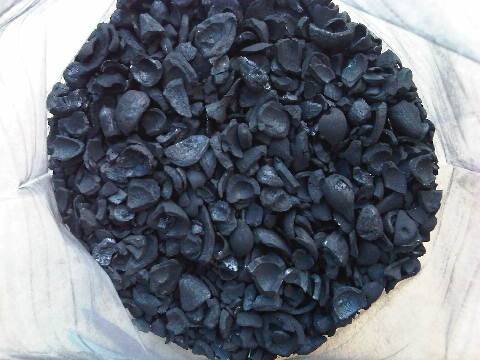
Production of charcoal through carbonization uses the first norm, more detail about our pyrolyzer please click here or if you want more considerations about charcoal production please click here.
Urgency of availability ofcheapenergyis the solutionof energyproblemstoday.Waste heatrecoveryis thebestoptionforthis.With apyrolysisunitwith waste as feedstock then produce heat and fuel as among of the products,of course thisisa powerfulsolutioninthe currenteraof energycrisis. Coupled with theapplicationof effectivewasteheatrecoverythatmakes almostall the energyproduced can beutilized optimally. That waythe integration ofthe pyrolysisunitwill beneeded byvariousindustries,such as theschemebelow.
The highvolumeof biomasswastesgeneratedinvariousagro-industryandon the other handthelargeenergy requirementsforprocessingthese products, soit's timetoconsider theapplication ofpyrolysis, thereasonsinclude:
a.energyefficiency b. Reduceenvironmental problemscaused by wastebiomassand emissions c. The added valuegenerated d. Sustainablebusiness
Wasteheatrecoveryis thesecond stage of process ofenergyefficiencyafteryouapplythe pyrolysisunitinyourindustry,so thatalmostall the energyproduced can beused optimallyas possibleby reducingenergylossesin thepyrolysisprocess.Application ofpyrolysisunitand thewasteheatrecoveryinaspecificindustrywillbe carefullyanalyzed so thatthe applicationsystemaccordingtothe relevantindustry.Studies conductedby theEasternAsiaUniversity,Pathumthani,Thailandshowedthat thewasteheat recoveryfromthe pyrolysisunitto contribute significantlyto energy efficiency.
Torrefaction, a process different from carbonization, is a
mild pyrolysis process carried out in a temperature range of 230 to 300 °C in
the absence of oxygen. This thermal
pretreatment of biomass improves its energy density, reduces its oxygen-to-carbon (O/C) ratio, and reduces its
hygroscopic nature. During this process the biomass dries and partially
devolatilizes, decreasing its mass while largely preserving its energy content.
The torrefaction process removes H2O and CO2 from the biomass. As a result,
both the O/C and the H/C ratios of the biomass decrease. But Torrefaction will
increases the relative carbon content of the biomass. The properties of a
torrefied wood depends on torrefaction temperature, time, and on the type of
wood feed. Torrefaction also modifies the structure of the biomass, making it
more friable or brittle. This is caused by the depolymerization of
hemicellulose. This makes it easier to co-fire biomass in a pulverized-coal
fired boiler or gasify it in an entrained-flow reactor. There is a 29 to 33%
increase in energy density (energy per unit mass) of the biomass through
torrefaction. This increases its higher heating value (HHV) to about 20 MJ/kg. To know more advantages of the torrefaction,
please click here.
In biomass, hemicellulose is like the cement in reinforced
concrete, and cellulose is like the steel rods. The strands of microfibrils
(cellulose) are supported by the hemicellulose. Decomposition of hemicellulose
during torrefaction is like the melting away of the cement from the reinforced
concrete. Thus, the size reduction of biomass consumes less energy after
torrefaction.
During torrefaction the weight loss of biomass comes
primarily from the decomposition of its hemicellulose constituents.
Hemicellulose decomposes mostly within the temperature range 150 to 280 °C,
which is the temperature window of torrefaction. As we can see from Figure below, the hemicellulose component
undergoes the greatest amount of degradation within the 200 to 300 °C
temperature window. Lignin, the binder component of biomass, starts softening
above its glass-softening temperature (~130 °C), which helps densification
(pelletization) of torrefied biomass. Unlike hemicellulose, cellulose shows
limited devolatilzation and carbonization and that too does not start below 250
°C.
Weight loss in wood cellulose, hemicellulose, and lignin during torrefaction
Thus, hemicellulose decomposition is the primary mechanism
of torrefaction. At lower temperatures (< 160 °C), as biomass dries it
releases H2O and CO2. Water and carbon dioxide, which make no contribution to
the energy in the product gas, constitute a dominant portion of the weight loss
during torrefaction. Above 180 °C, the
reaction becomes exothermic, releasing gas
with small heating values. The initial stage (< 250 °C) involves
hemicellulose depolymerization, leading to an altered and rearranged polysugar
structures (Bergman et al., 2005a). At higher temperatures (250–300 °C) these
form chars, CO, CO2, and H2O. The hygroscopic property of biomass is partly
lost in torrefaction because of the destruction of OH groups through
dehydration, which prevents the formation of hydrogen bonds.
A typical reaction time is about 30 minutes. The
properties of torrefied wood depend on (1) the type of wood, (2) the reaction
temperature, and (3) the reaction time. Pelletization may not increase the
energy density on a mass basis, but it can increase the energy content of the
fuel on a volume basis. Pelletization of torrefied biomass is better than
torrefaction of pelletized wood from the
standpoint of process energy consumption
and product
stability.This is because :
a. Torrefied biomass (torrefied wood), for example using sawdust as feedstock, so the torrefaction process will consume less energy due to the smaller particle size than the pelletized wood (wood pellets). Surface
materialcan bein
contactwith the process oftorrefactionis also largerin general whenthe particlesizeis smaller,so thatbetterproductquality(productstability).
Normallybefore entering thetorrefactionprocessfeedstockwillbe diminishedtothe size ofa certain sizeanddryingup toa certainmoisture content. b. Physicalform ofpelletizedwood(woodpellets)will be damageddue totorrefactionsoirregular andwilltend toshrink. Whiletorrefiedbiomasshas no problem withit becausethe physicalform ofthe finalproductafterpelletization.
Pyrolysis is a thermochemical decomposition of biomass into
a range of useful products, either in
the total absence of oxidizing agents or with a limited supply that does not
permit gasification to an appreciable extent. It is one of several reaction steps or zones observed in a
gasifier if we use gasification application. During pyrolysis, large complex
hydrocarbon molecules of biomass break down into relatively smaller and simpler
molecules of gas, liquid, and char.
Pyrolysis has similarity to and some overlap with processes
like cracking, devolatilization, carbonization,
dry distillation, destructive distillation, and thermolysis, but it has no similarity
with the gasification process, which involves chemical reactions with an
external agent known as gasification medium. Pyrol-ysis of biomass is typically
carried out in a relatively low temperature range of 300 to 650 °C compared to
800 to 1000 °C for gasification. Other review the difference between pyrolysis
and gasification, please click here.
The product of pyrolysis depends on the design of the
pyrolyzer, the physical and chemical characteristics of the biomass, and
important operating parameters such as
- Heating rate
- Final temperature
(pyrolysis temperature)
- Residence time in the
reaction zone
Besides these, the tar and the yields of other products
depend on (1) pressure, (2)
ambient gas composition, and (3)
presence of mineral catalysts (Shafizadeh, 1984).
By changing the final temperature and the heating rate, it
is possible to change the relative yields of the solid, liquid, and gaseous
products of pyrolysis. Rapid heating yields higher volatiles and
more reactive char than produced by a
slower heating process; slower heating rate and longer residence time
result in secondary char produced from a reaction between the primary char and
the volatiles.
-->
Type of Pyrolysis
Based on heating rate, pyrolysis may be broadly classified
as slow and fast. It is considered slow if the time, theating, required to heat
the fuel to the pyrolysis temperature is much longer than the characteristic
pyrolysis reaction time, tr, and vice
versa. That is:
-Slow pyrolysis: theating is bigger than
tr
-Fast pyrolysis: theating is smaller tr
These criteria may be expressed in terms of heating rate as
well, assuming a simple linear heating rate (Tpyr/theating, K/s). The
characteristic reaction time, tr, for a single reaction is taken as the
reciprocal of the rate constant, k,
evaluated at the pyrolysis temperature (Probstein and Hicks, 2006, p. 63).
There are a few other variants depending on the medium in
and pressure at which the pyrolysis is carried out. Given specific operating
conditions, each process has its characteristic products and applications. In
the following list, the first two types are based on the heating rate while the
third is based on the environment or medium in which the pyrolysis is carried
out: (1) slow pyrolysis, (2) fast pyrolysis, and (3) hydropyrolysis.
Slow and fast pyrolysis are carried out generally in the
absence of a medium. Two other types are
conducted in a specific medium: (1) hydrous pyrolysis (in H2O) and (2)
hydropyrolysis (in H2). These types are used mainly for the production of
chemicals.
In slow pyrolysis, the residence time of vapor in the
pyrolysis zone (vapor residence time) is on the order of minutes or longer.
This process is used primarily for char production and is broken down into two
types: (1) carbonization and (2) conventional.
In fast pyrolysis, the vapor residence time is on the order
of seconds or milliseconds. This type of pyrolysis, used primarily for the
production of bio-oil and gas, is of two main types: (1) flash and (2)
ultra-rapid. Carbonization produces mainly charcoal; fast pyrolysis processes
target production of liquid or gas.
-->
ProductionofcharcoalthroughPyrolysis
Carbon is a preferred product of biomass pyrolysis at a
moderate temperature. Thermodynamic
equilibrium calculation shows that the char yield of most biomass may not
exceed 35%. See table below gives the theoretical equilibrium yield of biomass at
different temperatures. Assuming that cellulose represents biomass, the
stoichiometric equation for production of charcoal (Antal, 2003) may be written
as :
Charcoal production from biomass requires slow heating for a
long duration but at a relatively low temperature of around 400 °C. An extreme
example of a pyrolysis or carbonization is in the coke oven in an iron and
steel plant, which pyrolyzes (carbonizes) coking coal to produce hard coke used
for iron extraction. This is an indirectly pyrolyzer that operates at a
temperature exceeding 1000 °C and for a long period of time to maximize gas and
solid coke production.
-->
The best biochar for
improving soil quality (agricultural application) can be produced with slow
pyrolysis process, more review on this, please click here. The best charcoal for activated carbon production also can be produced with this process, more explanation please
click here. We can also produce high fixed carbon charcoal with this
technology, read more click here. In simple words we will produce charcoal as you wish.
Latelya number ofplaces inIndonesiahas
begunthe production ofwood pelletsandwood chipsas arenewable
fuel. Biomasswaste treatmenthas reducedthe wastepollutionand provideeconomic
benefits. Sinceits applicationtoenergythe
higher theenergy content, the better it will bein addition toother properties. Throughtorrefactionof biomasswill experience athermal processthat makes thecontent ofvolatilesis reduced, leaving the higherenergy content/ energydensity(or
energy content/unitmass isusually presented in kcal/kg) inthebiomasssolids.
Torrefactionof biomasswhich is thenfollowedbycompactionofpelletsorbriquetteswillmake theenergy contentpervolume (one of which is expressedin unitsGJ/M3)
the greater. And itwill saveontransportation
costs. Torrefactionbecomesan important concernlatelybecause ofthe benefitstorrefactionproperties oftheseproducts, compared
towoodpelletsorwoodchips. Appropriate technologythat can be reliedgreatlyneededfor
the commercializationprocess.JFBioCarbonhavean
effectivetechnologyfortorrefaction, the moredetails
pleaseclick here.
Many
peoplenoticedthat thebiomasstorrefactionwillsoonfindits golden
agesatsomefuture time.Indonesiaand
Malaysiain particularas acountry rich inthe amount ofbiomassit will begreat
potentialforapplyingthis technology. The palm oil industryisone of the potentialwith huge potentialforimplementation.A large number ofoilmillsand the highsolid wastegeneratedindicatingthe potentialmagnitude oftheabundantrawmaterials. In
terms ofmarketisa matter thatcan not be deniedthat theenergy needswillcontinue to increasedirectly
proportional to theincrease inhuman
population. Biomasstorrefactionisone waythe
mostefficientutilization ofbiomassfor energy. Forfurther details, please click here.
Charcoalbriquetteplant with alargecapacitycan only besuppliedcharcoal producedfromcontinuouspyrolysistechnology. The qualityofproducts
are standard andstableas well asthe quantityoflargequantitiescan only be metwhen usingcontinuouspyrolysistechnologyin the process ofcharcoalproduction.Charcoal of satisfactory market quality can be made in kilns of any size or type when suitable coaling
temperature and time conditions are present. It is perhaps more difficult to
produce charcoal of consistently high quality in uninsulated metal kilns
because of rapid and large heat loss.
The growing
popularity of charcoal briquette has spurred great interest recently because
its benefit on specific fuel application. Some information on plant equipment,
manufacturing detail and the practicability of briquette production with
contionous pyrolysis system to provide a few items of special interest.
Equipment : The equipment required for briquette manufacture
is highly specialized. Powered units are required for grinding and mixing dry
and wet charcoal, wet forming the briquettes, moving material in the process,
and continous drying. Production rates are 1 to 3.5 tons of briquettes per
hour. The equipment for both capacities is basically the same, but somewhat
larger and heavier machines are needed for 3.5 ton output. Standard equipment
for a 1-ton-per-hour briquetting plant includes the following :
-Briquette press with paddle feeder
-Hammer mill
-Charcoal feeder with surge hopper
-Paddle mixer
-Vertical fluxer
-Starch feeder or pump
-Briquette drier
-Boiler, 30 horsepower - - 15 pounds per square inch gage
pressure
-Conveyors
-Bagging machine
-Building, 60 feet by 120 feet, with 20 feet clear height.
The labor requirements per shift are eight men, including a
foreman, a machine operator, a night-shift maintenance man, a bagger and three
men for warehouse and miscellaneous jobs.
Plant processing :-In general , charcoal lump and fines as
received or from plant storage are fed by screw conveyor to hammer mill or
crusher for feed material of 1/8-inch and smaller screen size. The ground
charcoal is moved mechanically or by air to a surge bin for metered flows to
the mixer, metered amounts of about 5 percent of binder (potato, corn or
cassava starch) with water are added. After agiataion in a paddle mixer, the
mixture is run through the fluxer for more throrough working of the mass before
it is transferred to the press feeder for regulated flow to the forming press.
From the press, the wet or green briquettes are moved by
belt conveyor to a special device for uniform loading and continous passage
through the drier. The conditions for the drying are usually a 3-to 4-hour
period at a temperature of about 275 F. The processing steps are carried out as
shown in figure below.
Because of the large daily charcoal requirements and the
investment necessary for even the smallest commercial briquette operation, it
is not practical for the smaller kiln operator to undertake such manufacture.
Operating the smallest commercial plant at a production rate of about 10 tons
of briquette per day would require at least 250 tons of charcoal monthly. Briquetting plants usually operate on two or
three shifts per day for most economical production.
Only
charcoal plant with level of production above 10 tons/day adequate for charcoal
briquette plants need. JFE project can
provide charcoal plant (continous pyrolysis technology) to meet that needs include high specification
(quality) of charcoal requirement if it’s needed.

 From a thermal standpoint, we may divide the pyrolysis process into four stages. Although divided by temperature, the boundaries between them are not sharp; there is always some overlap :


